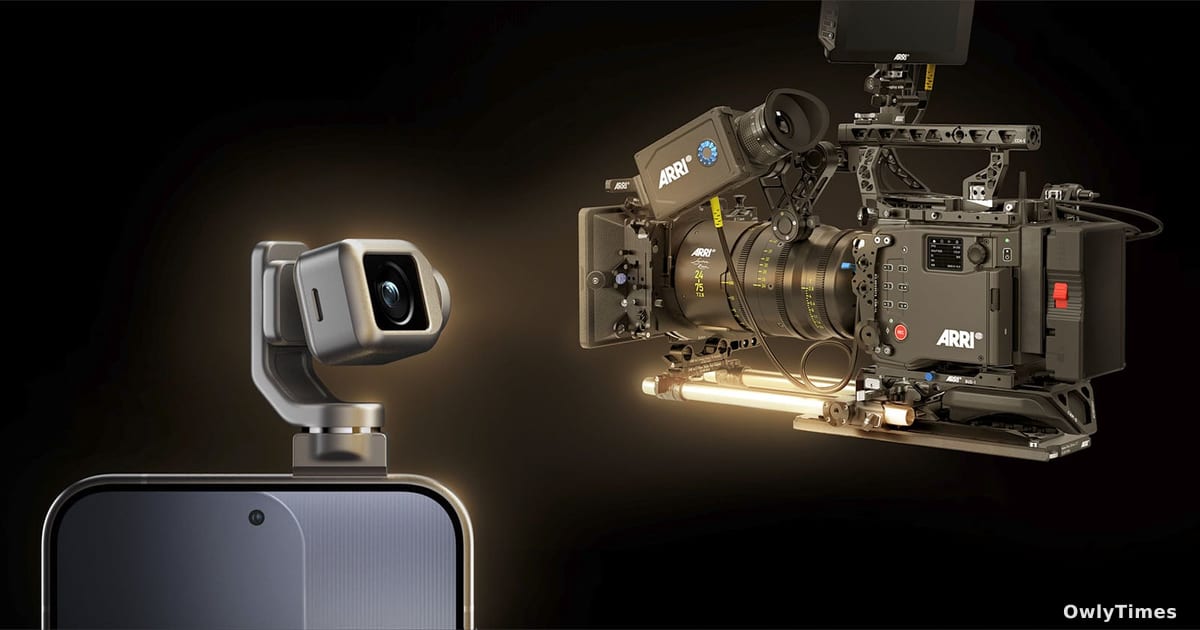

Is the future of cinema…in your pocket? That’s the question swirling around Barcelona after Arri, the legendary camera company responsible for filming everything from 2001: A Space Odyssey to Dune, announced a partnership with smartphone maker Honor. The real story here isn't about a camera company making a phone – it’s about the desperate search for relevance in a world where the line between professional filmmaking and casual smartphone video is dissolving faster than a celluloid negative.
For decades, Arri occupied the apex of the filmmaking world, selling cameras and lighting rigs that cost more than most houses. But the industry is shifting. Last year, whispers of a potential sale of Arri circulated, followed by facility closures as the company faced “increasing challenges in a very competitive and difficult cinema landscape.” This isn’t a story of technological superiority; it’s a story of economic pressure. The democratization of filmmaking – fueled by increasingly capable smartphone cameras – has eroded the market for high-end cinema equipment. Arri isn’t suddenly interested in becoming a phone company; it’s trying to stay afloat by adapting to a world where everyone is a filmmaker.
Source material: petapixel.com.
The partnership, unveiled at MWC 2026, centers around integrating Arri’s “Image Science” directly into Honor smartphones, starting with the upcoming “Robot Phone.” This isn’t about slapping a filter onto your photos. As David Bermbach, Managing Director at Arri, emphasized, image science is fundamental – it’s how an image is created at the sensor level. Arri’s expertise in color reproduction, dynamic range, and overall image aesthetic will be baked into the Honor phone’s core imaging architecture. This is a significant departure for Arri, even beyond their recent foray into consumer software with the Arri Film Lab plugin, which allows users to emulate the look of classic film stocks on any camera. Film Lab was a clever way to monetize their image processing expertise; the Honor deal is a full-scale bet on the mobile market.
The logic for Honor is equally clear. The Chinese smartphone market is notoriously cutthroat, and differentiating features are crucial. While a 200-megapixel sensor and three-axis gimbal stabilization (both features of the Robot Phone) are impressive specs, they’re becoming increasingly common. Partnering with Arri offers a unique selling point: the promise of “cinematic imaging capabilities.” Honor CEO James Li frames it as “pioneering a new era of mobile imaging,” but it’s also a shrewd marketing move. Consumers are increasingly sophisticated and crave authenticity. Associating their phone with a brand synonymous with cinematic quality is a powerful message.
However, translating cinematic principles to a smartphone isn’t simple. As Dr. Benedikt von Lindeiner, VP at Arri, points out, smartphones operate under vastly different constraints than professional cameras. Smaller sensors, integrated processors, and bandwidth limitations all present significant hurdles. The goal isn’t to replicate Arri’s hardware, but to distill its aesthetic – “natural color, gentle highlight roll-off, and a sense of depth” – into a compact, real-time mobile architecture. This is a monumental technical challenge, and the success of the partnership hinges on Arri’s ability to deliver on that promise. The fact that today’s consumer smartphones are already being used on blockbuster film sets underscores the urgency for Arri; they’re not trying to compete with smartphones, they’re trying to enhance them, and by extension, themselves.
The Honor Robot Phone, with its AI interaction and “robot-grade motion,” feels like a deliberate attempt to position itself as more than just a phone. It’s a content creation tool, a mobile filmmaking studio, and a statement about the future of visual storytelling. But the real test won’t be the specs or the marketing hype. It will be whether the images and videos captured on this phone genuinely feel different – whether they possess that elusive cinematic quality that Arri has spent decades perfecting.
Watch for this: in the next 18 months, we’ll see a surge in smartphone manufacturers chasing the “cinematic” look. The Arri partnership has raised the bar, and the race to replicate (or surpass) that quality will be fierce. The question isn’t if other brands will follow suit, but how they’ll attempt to bridge the gap between mobile imaging and professional filmmaking. And more importantly, will consumers actually care?