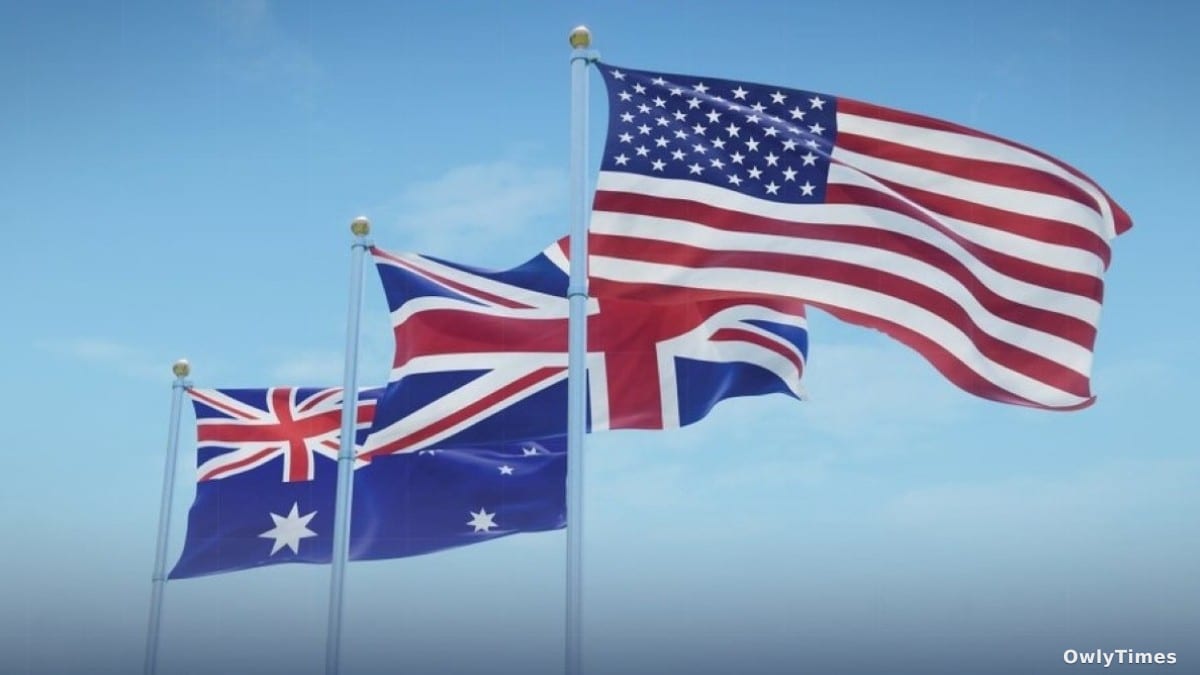

Is the AI arms race destined to repeat the mistakes of the Cold War? We’re seeing a frantic push for technological supremacy, mirroring the urgency of the Manhattan Project, but with a critical difference: this time, the US is building the arsenal and then deciding who gets to use it – and on what terms. The real story here isn't the ambitious Genesis Mission, designed to catapult American AI development forward – it’s the glaring disparity in access to the very infrastructure that makes that development possible, and the potential fracturing of the AUKUS security partnership as a result.
President Donald Trump’s Genesis Mission, launched with a November executive order, aims to win the AI race by giving American companies detailed access to federal supercomputers. The language surrounding the initiative evokes wartime urgency, yet the order offers international security partners a single, vague sentence about exploring collaboration “to the extent appropriate.” This isn’t accidental. It reflects a policy prioritizing American technological leadership, even if it means leaving allies to duplicate efforts and potentially fall behind. The Department of Defense’s January 2026 AI strategy champions allied collaboration, stating the need to “leverage the capabilities and insights of allies and partners to enhance our collective defense capabilities.” But the reality of Genesis partnerships – 24 American organizations, including giants like OpenAI, Google, and NVIDIA, receiving structured access through Cooperative Research and Development Agreements – paints a different picture.
The US currently controls a staggering 74 percent of global AI compute capacity. Genesis provides American industry with a clear pathway to exploit that capacity, while AUKUS allies – Australia and the United Kingdom – who are already investing billions in quantum and autonomous systems requiring this infrastructure, receive no equivalent mechanism. This isn’t a technical barrier; it’s a deliberate policy choice. Washington appears content to let allies leverage American companies, rather than integrate allied capacity. This approach overlooks a fundamental truth: every AI model developed separately is a wasted opportunity for synergy, every Australian quantum processor or British autonomous system trained on domestic infrastructure instead of Genesis represents a capability the US either unilaterally funds or simply foregoes.
The situation is particularly ironic given the stated goals of AUKUS Pillar II, focused on quantum computing, autonomous systems, and defense AI. As Peter Dean and Alice Nason argued in June 2025, Pillar II risked becoming regulatory reform without delivering actual capabilities. They were right. Genesis isn’t a defense program – it’s a Department of Energy initiative, and Pillar II was never designed to bridge that institutional divide. But the technologies Pillar II prioritizes demand the computational scale only Department of Energy infrastructure can provide. Consider Australia’s recent successes in funding quantum machine learning processors and trialing quantum clocks for satellite navigation. Where do they validate performance at scale? Where do they train the AI models these systems require? The answer, overwhelmingly, is in Department of Energy laboratories inaccessible to their partners.
This article draws on reporting from warontherocks.com.
Training defense AI isn’t like tweaking a chatbot. These are foundation models needing to process complex data – sonar readings, weapon recommendations in contested environments – and operate autonomously. This demands exascale computing power, the kind found in a handful of facilities globally, now integrated within Genesis. Allies face three inadequate options: build their own infrastructure (the United Kingdom’s roadmap targets an exascale system by 2027, a costly and time-consuming endeavor), rely on commercial cloud services (like Amazon Web Services, chosen by Australia for a Top Secret cloud scheduled for 2027, requiring bespoke security arrangements), or hope for ad hoc access to American facilities – a prospect with no established frameworks for compute allocation, data handling, or intellectual property protection. None of these options align with the strategic logic of AUKUS: integrating allied innovation to deliver advanced capabilities at unprecedented speed.
The solution, surprisingly, is already embedded within the executive order itself. Section 5(c) establishes Cooperative Research and Development Agreements – a mechanism with decades of precedent for managing intellectual property, controlling technology transfer, and maintaining security. Extending these authorities to AUKUS allies, with tiered access and pre-approval for key defense technologies, would be conceptually straightforward. Concerns about data sovereignty are manageable through existing security protocols, and intellectual property rights can be protected through established technology transfer controls. Models trained with allied datasets would remain allied property, subject to existing regulations like the International Traffic in Arms Regulations.
However, significant hurdles remain. Reciprocal security clearance recognition between the US and Australia is lacking, creating bureaucratic bottlenecks. Concerns about political interference in research collaborations, data collection initiatives, and intelligence-sharing also loom large. Australian companies like Q-CTRL and Diraq, navigating complex dual-funding streams, face additional compliance burdens. This isn’t just about Genesis; it’s about the entire “digital value chain” – datasets, cloud environments, and development operations. Genesis addresses the compute piece, but a successful partnership requires a holistic approach.
The Cold War model of American dominance and selective technology transfer is obsolete. Today’s technology competition demands integrated allied innovation ecosystems. Australia’s quantum technology leadership demonstrates the power of this approach, but it requires infrastructure. If the US builds Genesis-scale compute platforms while allies lack equivalent resources, the partnership risks becoming an asymmetric dependency. The window for action is closing as the Department of Energy signs industry agreements.
Congress should mandate the Department of Energy to extend Cooperative Research and Development Agreement authorities to AUKUS partners. Otherwise, Genesis will become another example of a partnership undermined by an infrastructure gap the US had the power to close, but chose not to. Watch for this: by the end of 2026, we’ll see whether the US prioritizes genuine collaboration or continues down a path of technological isolation, potentially jeopardizing the future of AUKUS and the balance of power in the AI arms race.