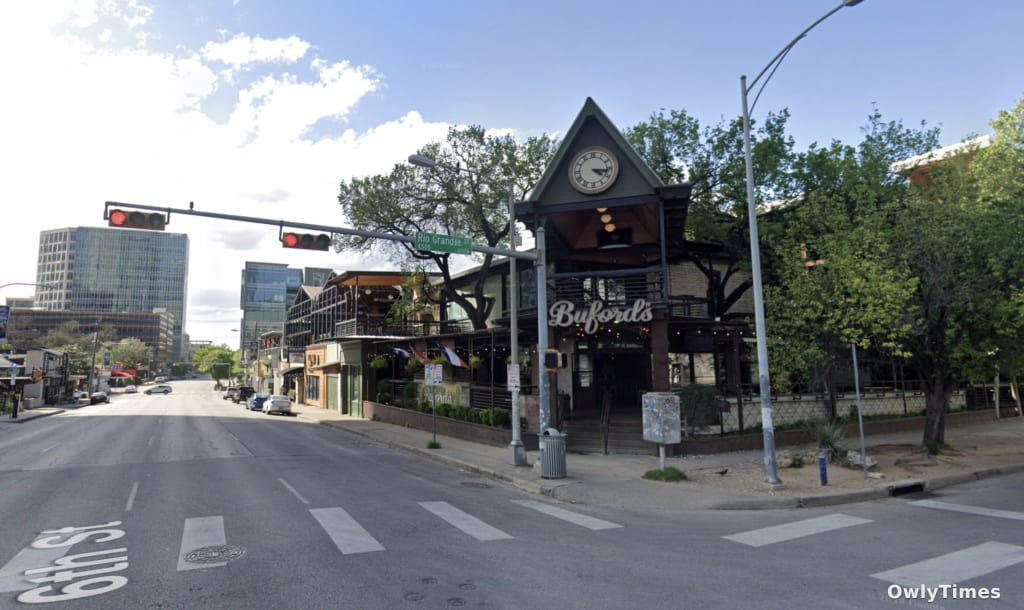

The chipped Formica of the bar top still held the ghost of condensation rings from the night before, a mundane detail starkly juxtaposed against the bullet holes now peppering the brick facade of the 9th Street venue in Austin. Sunday morning brought not the usual brunch crowd, but a swarm of police, paramedics, and the grim realization that another American weekend had been shattered by gun violence. But this shooting, leaving two dead and fourteen wounded, feels different, doesn’t it? It’s not just the familiar horror, but the unsettling iconography – a sweatshirt proclaiming “Property of Allah” layered beneath a shirt bearing the Iranian flag – that’s forcing a national conversation about motive, identity, and the ever-blurring lines between domestic extremism and international tensions.
A Deliberate Act, or a Cry for Something Else?
Ndiaga Diagne, the 53-year-old identified as the shooter, was a naturalized U.S. citizen originally from Senegal, arriving in the country in 2006. This detail, initially buried in reports, is crucial. It complicates the narrative being rapidly constructed around the shooting, one that immediately jumped to potential terrorism. The FBI is investigating the incident as such, a designation that carries immense weight in a post-9/11 America. But framing this solely as an act of terror risks obscuring the individual story of Diagne, a man who, according to those briefed on the investigation, lived a relatively quiet life before unleashing this violence. Austin Police Chief Lisa Davis described a deliberate attack: Diagne repeatedly drove past the bar before opening fire with a pistol from his SUV, then exiting the vehicle with a rifle to continue the assault. This wasn’t a spontaneous outburst; it was planned, executed, and laden with symbolic clothing choices. The question isn’t simply if this was terrorism, but what kind of terror fueled this act. Was it religiously motivated? A political statement? Or something far more personal, cloaked in the language of ideology?
Original reporting: PBS.
The Weight of Symbols in a Fractured World
The clothing choices are undeniably provocative. The “Property of Allah” sweatshirt, while potentially indicative of religious extremism, also carries a history of appropriation within certain subcultures, sometimes used ironically or as a statement of defiance. The Iranian flag shirt is equally layered. Iran has been a focal point of American foreign policy for decades, and the image evokes ongoing geopolitical anxieties, particularly in light of the PBS News Special Report on a potential war with Iran that circulated immediately after the shooting. This isn’t to suggest a direct link to the Iranian government, but to highlight how easily symbols can be weaponized in the current climate. We’re living in an era where visual shorthand carries outsized meaning, where a single garment can instantly trigger pre-conceived notions and anxieties. The speed with which these symbols were seized upon by media and politicians speaks to a collective vulnerability, a readiness to interpret ambiguity as threat. In 2025, mass shootings in the US already claimed over 600 lives – a 12% increase from the previous year, according to the Gun Violence Archive. This latest incident, however, feels qualitatively different because of the deliberate presentation of these symbols.
Beyond the Headlines: The Search for Understanding
The rush to label this as terrorism, while understandable, risks shutting down a more nuanced investigation. We need to understand what led Diagne to this point, what grievances he harbored, and what meaning he attached to the symbols he chose to wear. The anonymity of sources within law enforcement, while protecting the integrity of the investigation, also creates a vacuum for speculation. The fact that Diagne was a naturalized citizen is being amplified, subtly reinforcing a narrative of “outsider threat” that has plagued American discourse for years. This echoes the rhetoric surrounding previous attacks, often leading to increased scrutiny and discrimination against immigrant communities. It’s a dangerous pattern, one that prioritizes fear over understanding. The focus should be on identifying the root causes of radicalization, whether they stem from religious extremism, political grievances, or mental health issues. Simply labeling the act as terrorism doesn’t address the underlying conditions that allowed it to occur.
A Turning Point for Security and Scrutiny?
This shooting in Austin isn’t just another statistic in the grim tally of American gun violence; it’s a potential inflection point. It’s forcing a reckoning with the complexities of identifying and preventing attacks motivated by ambiguous ideologies. The FBI’s investigation will undoubtedly lead to increased surveillance of individuals and groups perceived as potential threats, raising concerns about civil liberties and the potential for profiling. The question now is whether this incident will lead to more effective security measures, or simply to a further erosion of trust and an intensification of existing biases. Will we see a renewed focus on mental health resources, or a doubling down on restrictive immigration policies? More importantly, will we be able to move beyond the immediate shock and outrage to engage in a meaningful conversation about the forces that are driving individuals to commit such acts of violence? The answer to that question will determine whether Austin becomes a symbol of tragedy, or a catalyst for change.