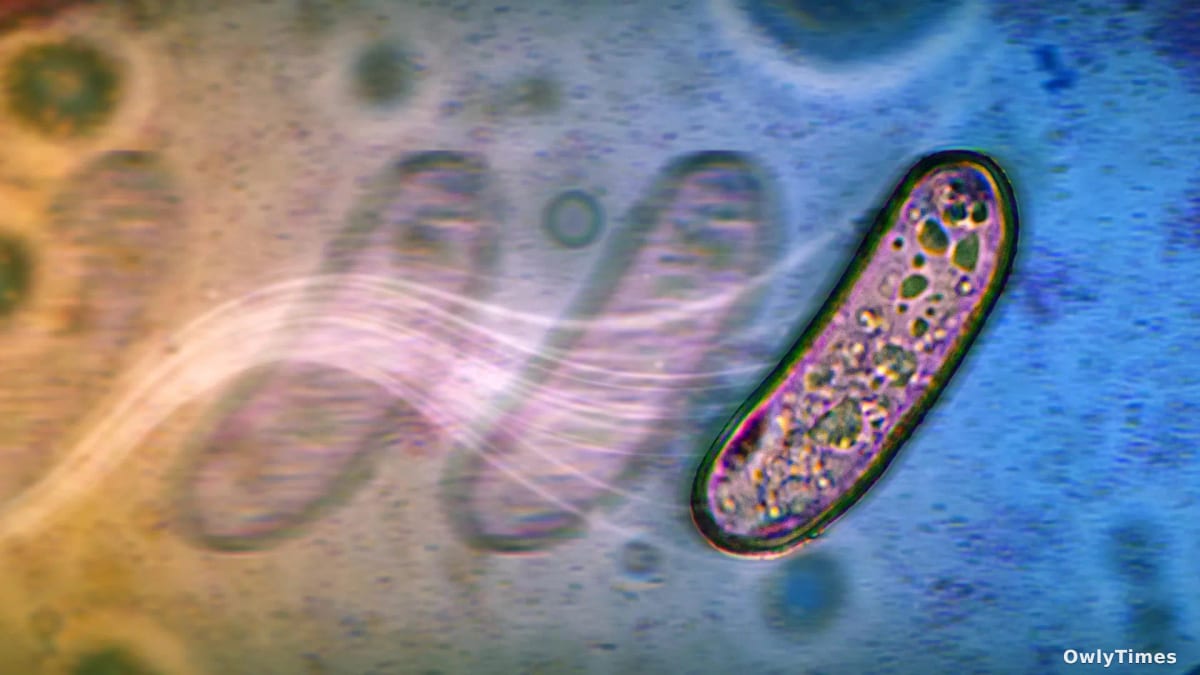

The persistent image of bacteria as simple, passively drifting organisms is undergoing a fundamental shift, and the implications extend far beyond microbiology textbooks. Recent work from Arizona State University isn’t simply adding to our understanding of how bacteria move, but challenging the very assumptions about bacterial agency and adaptability – qualities we once considered the domain of more complex life. While headlines proclaim “bacteria move without flagella,” the story is far more nuanced, revealing a spectrum of previously unknown mechanisms that allow these microbes to navigate their environments with surprising sophistication. This isn’t just about academic curiosity; it’s about understanding how pathogens spread, how biofilms form, and ultimately, how we combat bacterial infections.
Beyond the Whip: The Mechanics of ‘Swashing’
For decades, the dominant understanding of bacterial motility centered on flagella – the corkscrew-like appendages that propel bacteria through liquids. But a team led by Dr. Konrad Stadnicki at ASU discovered that certain bacteria, specifically E. coli and Salmonella, exhibit movement even without these flagella. Their research, published in PNAS, details a process they’ve termed “swashing.” This isn’t random diffusion, but a directed movement fueled by the bacteria’s own metabolic activity. The bacteria ferment sugars present on moist surfaces, creating localized gradients in fluid flow – essentially, tiny currents that carry them forward.
Source material: sciencedaily.com.
The team meticulously demonstrated this by observing bacterial movement on agar surfaces coated with varying sugar concentrations. They found that bacteria consistently moved towards areas of higher sugar concentration, not because they were swimming, but because their fermentation process generated a self-propelled flow. This is a significant departure from the traditional view of bacterial movement as requiring external forces or dedicated appendages. To quantify this, the researchers measured bacterial displacement over time, finding that swashing allowed for movement rates up to 10 times faster than passive diffusion alone. This speed is crucial; it explains how bacteria can rapidly colonize surfaces and establish infections, even in the absence of flagella.
A Molecular Gearbox for Reversing Course
While swashing explains movement across surfaces, another ASU team, working with a different set of bacteria, uncovered a mechanism for directional control in liquid environments. Led by Dr. Timothy Hammond, this group identified a microscopic “gearbox” within the bacterial cell that allows for rapid reversals in movement. This gearbox, composed of a complex arrangement of proteins, effectively acts as a clutch, switching the direction of rotation of the bacterial motor. The findings, published in Nature Microbiology, reveal that this isn’t a simple on-off switch, but a finely tuned mechanism capable of precise control.
The researchers used cryo-electron microscopy to visualize the gearbox in action, observing how the protein components reconfigure to change the direction of rotation. This allows the bacteria to respond quickly to changes in their environment, moving towards attractants and away from repellents with remarkable agility. This is particularly relevant for bacteria like Vibrio cholerae, which use this mechanism to navigate towards intestinal cells. Previous estimates of bacterial turning speed relied on flagellar rotation; this new research suggests bacteria can change direction without relying on flagella, and potentially much faster than previously thought.
Limitations to Consider: Context and Complexity
It’s crucial to avoid overstating these findings. The “swashing” mechanism, for example, has so far been demonstrated primarily with E. coli and Salmonella on specific agar surfaces. Whether this behavior is universal across all bacteria, or even prevalent in different environmental conditions, remains to be seen. The sugar concentrations used in the experiments were also relatively high; it’s unclear how effective swashing would be in environments with limited nutrient availability. Similarly, the molecular gearbox identified by Dr. Hammond’s team is currently understood in only a handful of bacterial species. The complexity of bacterial systems suggests that other, yet undiscovered, mechanisms of motility likely exist.
Furthermore, these mechanisms aren’t mutually exclusive. Bacteria may employ a combination of flagellar propulsion, swashing, and gearbox-driven reversals depending on the circumstances. Disentangling these interactions will be a major challenge for future research. The current studies were largely conducted in vitro – in a controlled laboratory setting. Translating these findings to the complex and dynamic environment of a living organism, or a natural ecosystem, will require further investigation.
The Future of Bacterial Control: Targeting Motility
These discoveries open up exciting new avenues for controlling bacterial behavior. If we can understand the precise mechanisms driving swashing and gearbox function, we might be able to develop novel antimicrobial strategies that disrupt bacterial movement, preventing them from colonizing surfaces or reaching their targets. Imagine a coating for medical implants that inhibits swashing, or a drug that jams the molecular gearbox, rendering bacteria immobile.
The next critical step is to investigate the genetic regulation of these motility mechanisms. What genes control the production of the proteins involved in swashing and gearbox function? How do bacteria respond to environmental cues by altering their motility strategies? Answering these questions will require a combination of genetic, biochemical, and biophysical approaches. Perhaps most importantly, researchers need to determine how these newly discovered mechanisms interact with existing models of bacterial motility. Will understanding these interactions lead to a paradigm shift in how we approach infection control? That remains to be seen, but the work at Arizona State University has undeniably laid the groundwork for a new era in bacterial research.