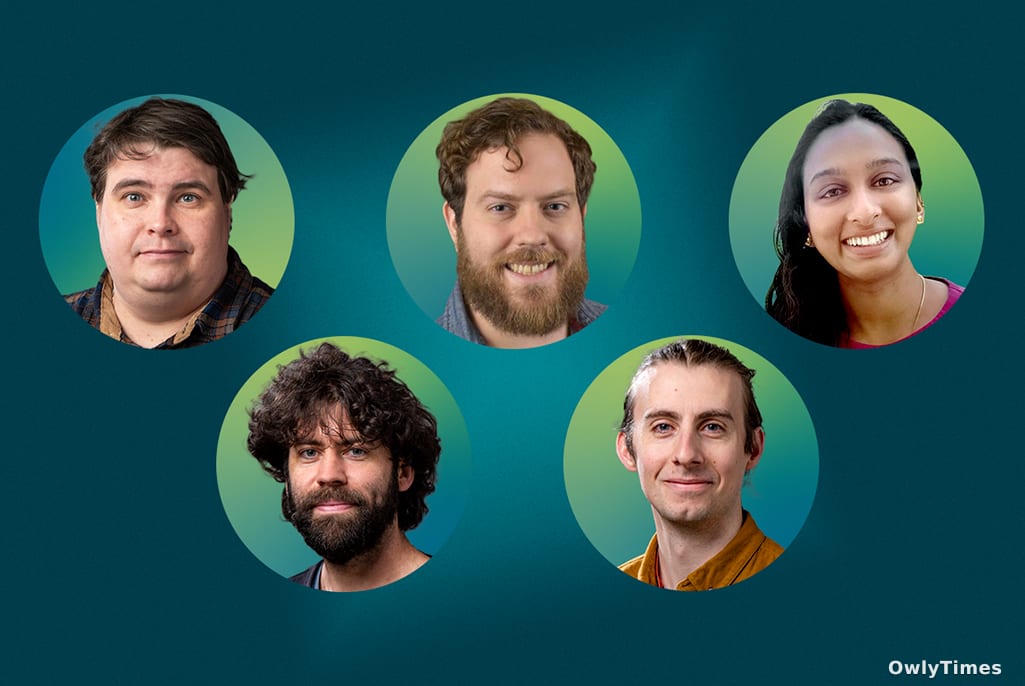

The pursuit of fundamental knowledge isn’t always about grand, sweeping revolutions. Often, it’s a painstaking process of refining our ability to see – to measure the universe with ever-increasing precision. That’s the underlying theme connecting five researchers at Lawrence Berkeley National Laboratory (Berkeley Lab) who have just been awarded Early Career Research Program (ECRP) grants from the Department of Energy. While headlines might focus on the search for dark matter or cleaner energy, the core of these projects is about building the tools, both physical and computational, that will allow scientists to tackle these challenges in the first place. This isn’t simply about funding promising individuals; it’s a strategic investment in the infrastructure of discovery.
The ECRP, now in its 16th year, provides substantial funding – approximately $875,000 over five years for university-based researchers and $2,750,000 for those at national labs like Berkeley Lab – to scientists within ten years of earning their doctorate. The program’s premise is straightforward: the most innovative ideas often come from those early in their careers, and providing dedicated resources at this stage can yield disproportionately large returns. But the awards also reflect a deliberate effort to support research areas deemed critical to national interests, from high-energy physics to geothermal energy. This year’s cohort at Berkeley Lab exemplifies that focus.
Timon Heim, a staff scientist in the Physics Division, is tackling a fundamental limitation in particle physics experiments. Current detectors at facilities like the Large Hadron Collider (LHC) excel at tracking particle trajectories and momentum, but struggle to pinpoint when a particle arrived. This temporal ambiguity becomes a major bottleneck when analyzing the debris from particle collisions, where numerous interactions occur simultaneously. Heim’s project aims to develop a “4D tracking detector” – one that captures position in three dimensions and time – with unprecedented precision: 50-micrometer spatial resolution and 50-picosecond temporal accuracy, handling a staggering 1 billion particles per second per square centimeter. It’s easy to read “better detectors” and assume incremental improvement, but the leap in precision Heim is proposing is essential for future colliders like the Muon Collider or Future Circular Collider, where the density of particle interactions will be exponentially higher.
Another project, led by Harrison Lisabeth in the Energy Geoscience Division, shifts the focus from the subatomic to the subterranean. Geothermal energy, often touted as a clean and sustainable resource, remains underutilized despite the potential to generate ten times the energy needed to power the entire U.S. grid. Lisabeth’s research addresses a key obstacle: understanding the stresses within deep underground rock formations where geothermal wells are drilled. By combining laboratory experiments simulating rock behavior under pressure with machine learning models, he hopes to predict geological strain and improve the stability and longevity of geothermal wells. The integration of AI isn’t simply a buzzword here; it’s a necessity for processing the complex data generated by these experiments and identifying patterns that would be impossible for humans to discern.
Based on the original newscenter.lbl.gov report.
The common thread linking Heim and Lisabeth’s work – and the projects of Daniel Carney, Callum Wilkinson, and Aditi Krishnapriyan – is the reliance on advanced computational techniques. Carney is building a quantum mechanical sensor to detect faint signals obscured by “quantum noise,” while Wilkinson is applying machine learning to analyze the massive datasets generated by the Deep Underground Neutrino Experiment (DUNE). Krishnapriyan, based at UC Berkeley but affiliated with Berkeley Lab, is developing machine learning methods that can handle increasingly large datasets, a challenge that plagues many scientific disciplines. These aren’t isolated efforts; they represent a broader trend towards data-intensive science, where the ability to extract meaningful insights from complex information is paramount.
However, it’s crucial to acknowledge the limitations inherent in these projects. While the proposed technologies are promising, translating laboratory results into real-world applications is rarely straightforward. Heim’s 4D detector, for example, will require overcoming significant engineering challenges to operate reliably in the harsh radiation environment of a particle collider. Lisabeth’s geothermal models will need to be validated with extensive field testing, and the accuracy of his predictions will depend on the quality of the input data. Machine learning algorithms, while powerful, are only as good as the data they are trained on, and can be susceptible to biases. The ECRP awards provide the initial funding to address these challenges, but substantial further investment will be needed to realize the full potential of these projects.
Looking ahead, the next five years will be critical for these researchers. The success of these projects won’t be measured solely by publications or presentations, but by their ability to lay the groundwork for future breakthroughs. Specifically, we should watch for the development of functional prototypes of Heim’s 4D detector and Carney’s quantum sensor, and the validation of Lisabeth’s geothermal models in real-world field tests. More broadly, the question is whether these investments in fundamental research will translate into tangible benefits – a deeper understanding of the universe, a more sustainable energy future, and a stronger scientific workforce. The ECRP isn’t just about funding science; it’s about betting on the future, and the next chapter will reveal whether that bet pays off.





