
The intersection of rigorous scientific inquiry and narrative storytelling is often treated as a delicate balancing act, yet new data suggests it is becoming a foundational pillar for independent cinema. SFFILM has announced a total of $115,000 in grants and awards through its Sloan Science in Cinema Initiative, a move that signals a deepening institutional commitment to grounding fiction in the realities of technical discovery. While headlines often frame such grants as mere financial support for artists, the underlying methodology of this program suggests a more deliberate strategy: integrating researchers into the earliest stages of the screenwriting process.
Bridging the Gap Between Screenplay and Science
The initiative, now in its tenth year, operates on the premise that science is not merely a plot device but a structural element of storytelling. Since its launch with the Alfred P. Sloan Foundation in 2015, the program has supported 40 artists, contributing to a broader, nationwide ecosystem that has fostered over 850 science-related film projects. According to Anne Lai, executive director of SFFILM, the goal is to move beyond superficial depictions of technology. Instead, the program prioritizes screenplays where real scientific processes dictate the narrative arc, ensuring that accuracy and creativity are developed in tandem rather than as competing interests.
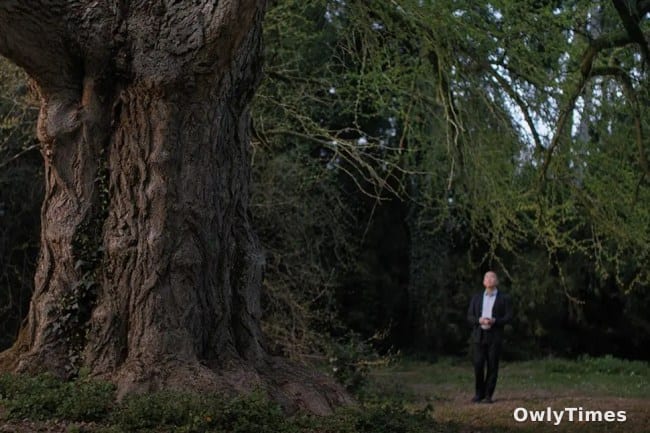
This year’s awards include the Sloan Science on Screen Award, which grants $5,000 to Ildikó Enyedi’s 2025 Venice premiere, Silent Friend. Starring Tony Leung Chiu-wai, Léa Seydoux, and Luna Wedler, the film explores connections across a century centered on an ancient ginkgo tree. The award selection is intentionally timed; it is presented at the moment a film transitions from the private workspace of the creator to the public experience of the audience. By pairing the screening with an onstage conversation—such as the upcoming April 26 event featuring Enyedi and Benjamin Blackman, an associate professor in the Departments of Plant & Microbial Biology and Integrative Biology at UC Berkeley—the festival aims to demystify the scientific labor behind the art.
The Limitations of Narrative Fiction
It is important to maintain a clear distinction between these supported projects and scientific communication. While the initiative succeeds in bringing scientific themes to wider audiences, the medium remains inherently subjective. The "accuracy" referenced by Masashi Niwano, director of artist development at SFFILM, is an interpretative goal rather than a clinical one. For example, the funded project Hello Neighbor by Lane Unsworth uses the hypothetical logistics of a NASA first-contact announcement as an "emotional spine" for a story. This highlights a limitation: the science serves the narrative's emotional requirements, not the other way around. Viewers should view these films as tools for scientific literacy and engagement, rather than as instructional resources.
Assessing Future Impact
The success of this initiative is measured by its growth and the increasing technical specificity of the projects it supports. Beyond Silent Friend, the 2025 Sloan Science in Cinema Fellowship recipients—Destiny Macon for Talk Black and Justin Kim WooSŏk for The Green Corridor—received $35,000 each to develop screenplays centered on engineering ethics and sound ecology. Meanwhile, the Sloan Stories of Science Development Fund awarded up to $20,000 to Lane Unsworth, Sid Gopinath, and Aditya Joshi to explore astrobiological discovery.
The trajectory of these projects will be tracked through the continued development of the filmmakers within SFFILM’s creative hub, the FilmHouse. The next reading of the initiative’s impact will come as these screenplays transition into production, revealing whether the infusion of scientific perspective at the development stage translates into a measurable shift in how complex technical topics are perceived by general audiences. For those interested in the current output, Silent Friend opens in theaters on May 8, providing a tangible case study in how the program's collaborative model functions on the screen.





