
Is our obsession with "getting the shot" for social media making us blind to the physics of a multi-ton fighter jet screaming over our heads? We love to capture the spectacle of elite flight, but the line between a jaw-dropping air show maneuver and a potential disaster is thinner than the fabric of a beach umbrella.
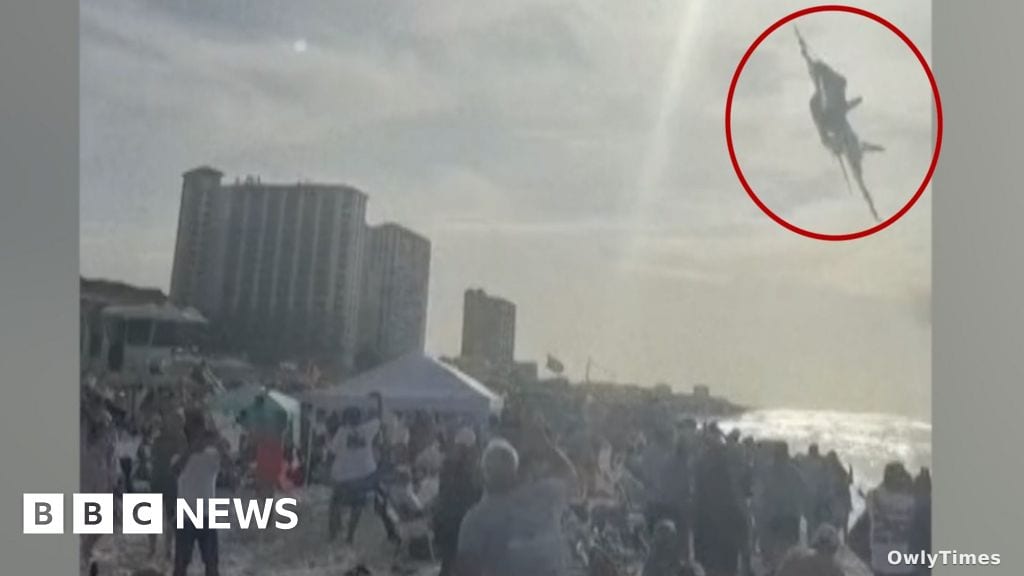
The real story here isn't the viral footage of a Blue Angels jet sending chairs and tents tumbling across Pensacola Beach; it’s the friction between military precision and the unpredictable nature of public spectacle. On Wednesday, during the annual “Breakfast with the Blues” event, a pilot executed an arrival maneuver that officials later admitted was lower than standard profiles, according to the BBC.
When the "wow" factor meets reality
While spectators described the experience as “amazing” and something they would remember for the rest of their lives, the mechanics of the event tell a more chaotic story. According to The Independent, the jet's low-altitude pass generated enough force to send beachgoers scrambling to retrieve their belongings. The CBS News report adds the detail that the jet banked sideways, intensifying the wind blast that flattened the setup of beach tents and chairs.
Despite the chaos, there is a consensus among reporting outlets that no injuries occurred. However, the military’s reaction highlights just how far outside the "normal" operating window this flight actually was. The U.S. Navy Flight Demonstration Squadron confirmed they are conducting a formal safety review to ensure operations adhere to both Navy and Federal Aviation Administration (FAA) standards.
High-altitude politics
The incident has triggered a strange reaction from high-level officials, reflecting a shift in how the military manages its public image. While the official line from the squadron focuses on safety, Defense Secretary Pete Hegseth took to social media to signal a lighter touch, tweeting, “The flyovers will continue until morale improves.” CBS News notes that Sean Parnell, assistant to the Defense Secretary, echoed this sentiment by posting a photo of the flyover with the caption, “CARRY ON PATRIOTS.”
This comes in the wake of other recent, high-visibility low-altitude maneuvers. CBS News points to a July 4th incident in South Carolina where four Apache helicopters flew low over crowds, leading to a temporary suspension of pilots. That maneuver, much like the one in Pensacola, was initially met with scrutiny before being smoothed over by higher-ups.
The cost of the spectacle
For the average beachgoer, these flyovers are a core part of the American air show experience. Formed in 1946, the Blue Angels operate with Boeing F/A-18E/F Super Hornets and Lockheed Martin’s C-130J Super Hercules, performing about 60 shows annually, as detailed by The Independent. The technical skill required to fly these machines is immense, yet the margin for error at such low altitudes is practically non-existent.
The irony isn't lost on the fans. One observer, Samantha Mayne, noted that the jet was so large and close she initially mistook it for "Fat Albert," the team's support plane. While the community seems to have embraced the "thrill and magic" of the incident, the internal safety review is the only thing standing between a viral social media moment and a catastrophic equipment failure.
The next signal to watch for is the conclusion of the squadron’s internal safety review; if the team alters its standard arrival profiles for future public demonstrations, we will know the military has prioritized public safety over the sheer intensity of the "wow" factor.