
The scent of pine and the crackle of a campfire are once again drifting across the American landscape, but the echoes they carry are far more complex than the nostalgia of the 1970s. As Netflix debuts its high-profile reimagining of Laura Ingalls Wilder’s Little House on the Prairie on July 9, the series arrives not merely as a reboot, but as a lightning rod for the cultural anxieties of a nation marking its 250th birthday.
While the original NBC series starring Melissa Gilbert remains a bedrock of television history, the new production—a joint venture between Netflix and CBS Studios—is making a deliberate pivot toward the "whole truth" of the frontier. According to CBS News, executive producer Joy Gorman Wettels identified a guiding principle in a quote from Wilder herself: "All that I told is true, but it is not the whole truth." This philosophy informs a narrative that, as noted by The Guardian, acknowledges the displacement of Native populations and the harsh realities of land theft that the mid-century version largely omitted.
A Frontier Through a Modern Lens
The creative vision for this iteration comes from showrunner Rebecca Sonnenshine, who pitched the project as a deeply personal "origin story." Speaking to Variety, Sonnenshine emphasizes that the series is not an attempt to erase the past, but to expand the frame. Central to this expansion is the introduction of the Mitchell family—William (played by Meegwun Fairbrother), White Sun (Alyssa Wapanatâhk), and Good Eagle (Wren Zhawenim Gotts). These characters, developed with the guidance of story consultant Robert Warrior, serve as a parallel to the Ingalls family, grounding the show in the reality of the Osage territory where the pioneers settled.
Despite the show’s focus on historical nuance, it has not escaped the friction of contemporary culture wars. Variety reports that the project faced public criticism as early as January 2025, with commentator Megyn Kelly threatening to "ruin" the project if it were "woke-ified." In a defense that bridged the generational divide, Melissa Gilbert took to Threads, pointing out that the 1974 series was already tackling "racism, addiction, nativism, antisemitism, misogyny, rape, spousal abuse" decades ago.
The Humanity Behind the Myth
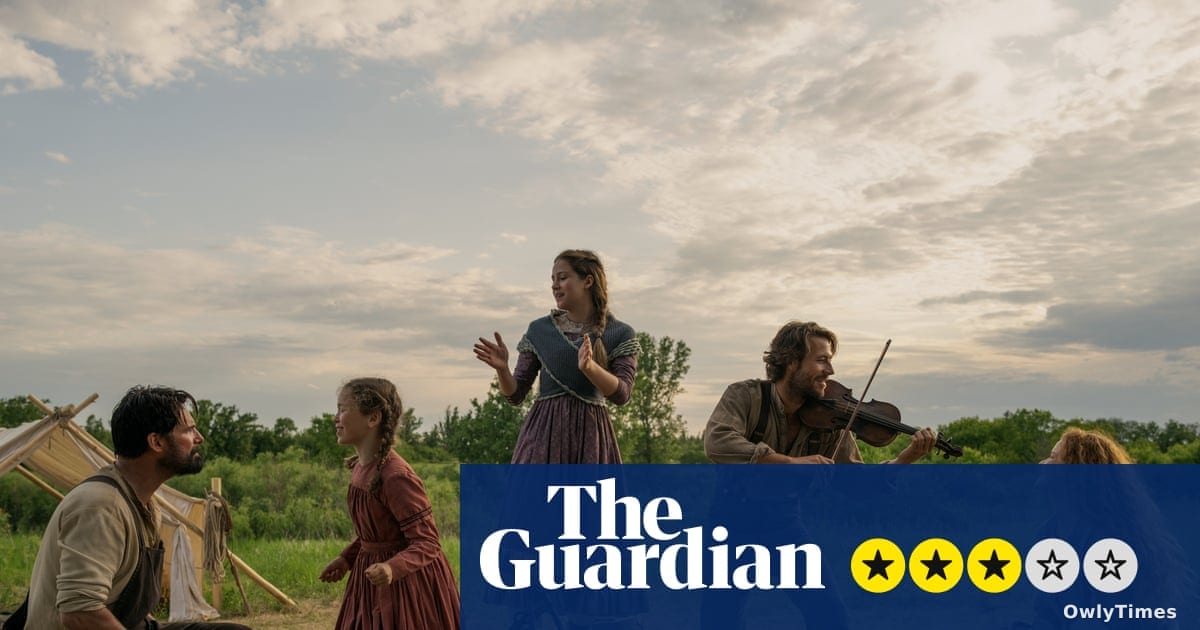
Behind the headlines, the production is a study in character-driven drama. The cast, featuring Luke Bracey as Charles Ingalls, Crosby Fitzgerald as Caroline, Skywalker Hughes as Mary, and Alice Halsey as Laura, leans into the emotional weight of their situation. CBS News highlights how the music in the show acts as an anchor for the family, with Fitzgerald noting that songs were "one of the only things they have" on the desolate prairie.
Critics have responded to this "precision-tooled" approach with a mix of warmth and caution. The Guardian describes the series as a "well-oiled machine" that successfully portrays the Ingalls children as multifaceted individuals rather than mere archetypes. While the vibe remains tethered to the promise of "faith, hope, and the American way," the show is arguably more grounded in the psychological tolls of the era than its predecessor.
Why This Moment Matters
The significance of this reboot lies in its timing. By reimagining a cornerstone of American literary myth during the nation's 250th anniversary, the industry is testing whether audiences can hold two conflicting ideas at once: a love for the traditional frontier spirit and a requirement for historical accountability. The commitment from the streamer is already substantial; according to Variety, Netflix has already ordered a second season, signaling that they believe this "new lens" has the staying power to define the next generation’s relationship with the American West.