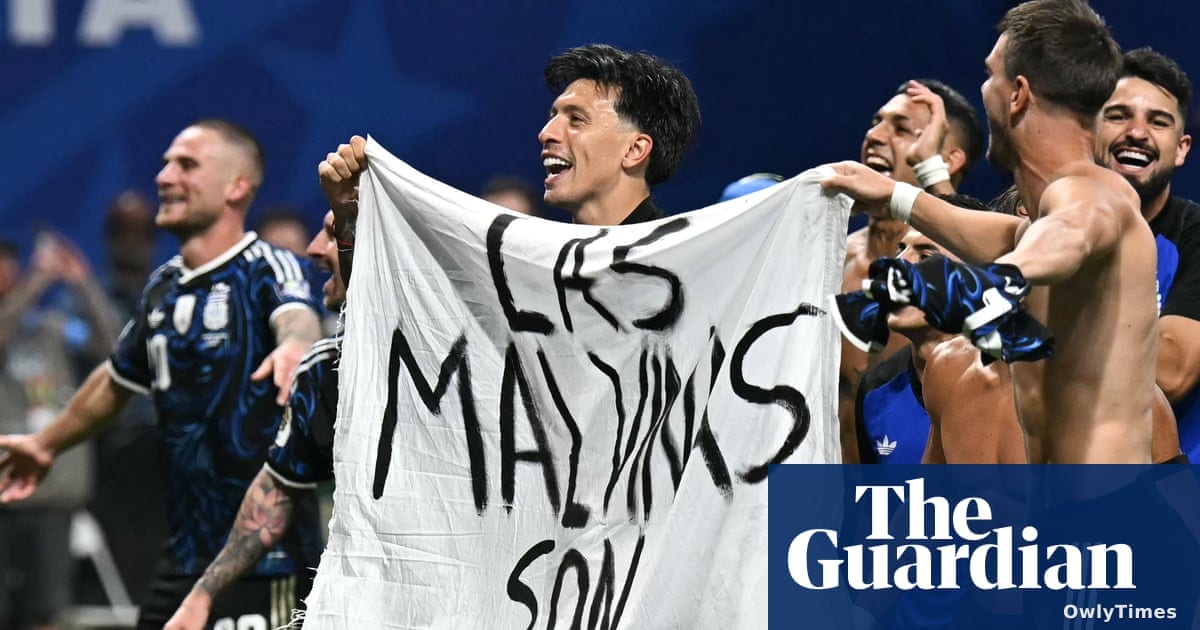

The grass at Atlanta Stadium was still cooling under the Georgia night air on Wednesday when the weight of history and the sting of a tactical collapse collided. As Argentina’s players jubilantly unfurled a banner reading “Las Malvinas son Argentinas,” the geopolitical tension of a 44-year-old conflict briefly eclipsed the beautiful game, casting a long shadow over the World Cup semifinals. For the reigning champions, the victory was a rallying cry, with Lisandro Martínez and Giovani Lo Celso posing with the flag in a moment that quickly ignited debate far beyond the pitch, according to The Guardian.
While the banner—referencing the 1982 conflict that claimed the lives of 649 Argentinians and 255 Britons—drew eyes to the stands, the true drama had unfolded in the final ten minutes of play. England, holding a 1-0 lead thanks to a 55th-minute goal from Anthony Gordon, appeared to have one foot in their first World Cup final since 1966. Instead, a series of defensive substitutions by England manager Thomas Tuchel invited a relentless Argentine surge, ultimately resulting in a 2-1 defeat that has left the English football establishment reeling, as reported by the BBC.
The tactical shift saw Tuchel swap Reece James for Dan Burn and Declan Rice for Nico O’Reilly in the 82nd minute, a move intended to build an impenetrable wall. However, Al Jazeera notes that these changes backfired, leaving England’s defense exposed to the genius of Lionel Messi. Messi, acting as the ultimate maestro, set up Enzo Fernandez for an 85th-minute equalizer before delivering the decisive cross for Lautaro Martinez to head home the winner in the 92nd minute.
The post-match analysis has been nothing short of scathing. Former England captain Wayne Rooney, speaking to the BBC, labeled the performance "too passive" and a "coaching catastrophe," noting that the team "crumbled" under the pressure of their own defensive strategy. While Tuchel defended his choices, citing a need to counter Argentina’s aerial threat and relentless crossing, critics like Chris Sutton questioned how a team of England’s caliber could concede 88% of possession after taking the lead. The statistics provided by the BBC confirm this decline, marking a stark contrast to the aggressive pressure England had successfully applied earlier in the tournament against teams like Norway and DR Congo.
Beyond the tactical autopsy, the presence of the Malvinas banner brings a complex layer of security concerns to the final. Argentina’s security minister, Alejandra Monteoliva, confirmed that 1,600 officers have been designated for the tournament’s upcoming stages, explicitly noting that the entry of provocative political or racial material is prohibited, per The Guardian. FIFA’s own stadium code of conduct strictly bans such paraphernalia, though they have yet to issue a formal statement regarding this specific incident.
As Argentina prepares to face Spain this Sunday at the New Jersey stadium, the narrative is split between the brilliance of a team that refuses to lose and the simmering political sensitivities that follow them. For England, the loss serves as a bitter reminder of the thin line between defensive prudence and tactical paralysis. This moment matters not just for the scoreline, but as a testament to the volatility of the modern game, where one manager’s attempt to "hold on" can unravel decades of hope, while the ghosts of history remain ever-present in the rafters of the world’s biggest stadiums.