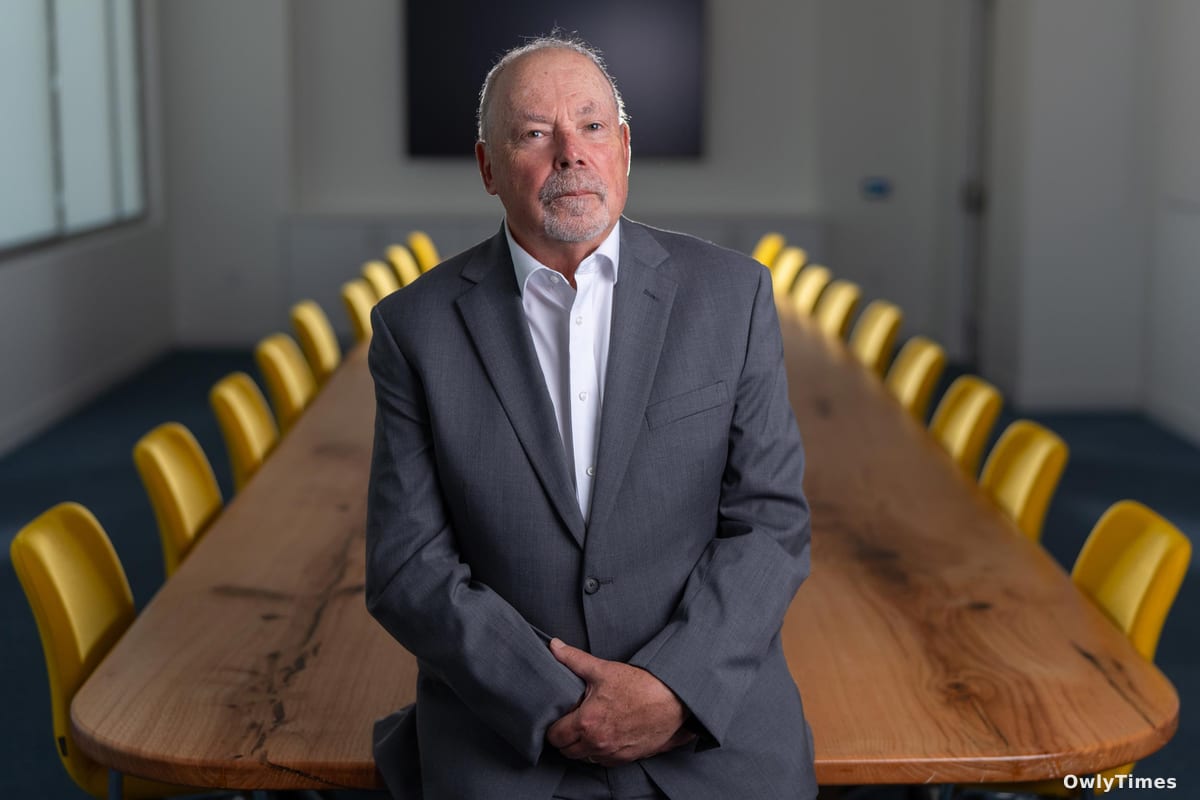

Beyond the Building: The Enduring Legacy of Phil Bourne and the Rise of Data Science as a Collaborative Force
The passing of Philip E. Bourne on Sunday marks not simply the loss of a university dean, but the end of an era in how we conceptualize academic disciplines themselves. Bourne, founding dean of the University of Virginia’s School of Data Science, died at 72 after a battle with mesothelioma. While headlines rightly acknowledge his pivotal role in establishing UVA as a leader in data studies, the true significance of his work lies in his insistence that data science isn’t about a place, but a practice – a way of approaching problems across all fields. This wasn’t merely rhetorical; it fundamentally shaped the school’s structure, and its continued success will depend on preserving that initial vision.
See the original news.virginia.edu story for the full account.
Bourne arrived at UVA in 2017 already a respected figure, having spent years applying data analytics across academic, industry, and government sectors. He quickly recognized a critical need: the burgeoning field of data science required more than just new courses; it demanded a new academic framework. The launch of the School of Data Science in 2019 – the first stand-alone school of its kind nationally – was a direct response. Crucially, this wasn’t intended to create a silo. As Arlyn Burgess, the Data Science Institute’s first employee, recalls, Bourne’s initial concepts centered on partnerships, believing that “the strongest institutions…are built from shared building blocks – openness, collaboration and trust.” This philosophy manifested in what he termed the “school without walls,” a deliberate effort to integrate data science into existing disciplines and amplify UVA’s public service mission.
The narrative often focuses on the physical manifestation of this vision – the impressive new building in the Emmet-Ivy Corridor, made possible by a landmark gift from alumnus Jaffray Woodriff of the Quantitative Foundation. Woodriff himself emphasized that Bourne “knew data can be universally transforming,” and that his legacy lies in recognizing the field’s potential to transcend traditional boundaries. However, the building, while significant, represents the outcome of Bourne’s vision, not the vision itself. It’s a testament to the power of collaborative funding and a physical anchor for a distributed intellectual endeavor. The danger now is conflating the structure with the spirit – assuming that simply having a dedicated space guarantees the continued emphasis on interdisciplinary application.
The school’s rapid growth is undeniable. From its inception, bolstered by endowments from Scott and Beth Stephenson, it quickly became a hub for cutting-edge research and a magnet for top talent. Bourne’s own academic record speaks to this impact; with over 100,000 citations, he ranks among UVA’s most frequently referenced faculty members. Yet, the very success of the school presents a challenge. As data science becomes increasingly mainstream, the temptation to define itself as a distinct discipline – to build walls around the “school without walls” – will grow. Maintaining the emphasis on collaborative application, particularly in areas like public health and policy, will require deliberate effort and continued investment in cross-departmental initiatives.
It’s also important to acknowledge the limitations of assessing impact so soon after a leader’s passing. While the initial trajectory is promising, the long-term effects of Bourne’s leadership will unfold over decades. His influence extended beyond the Data Science School, as noted by UVA President Scott Beardsley, who described him as a friend and a visionary. The anecdote about “Hell’s Administrators” – Bourne’s motorcycle rides with fellow deans Ian Solomon and John Unsworth – reveals a personality that valued both intellectual rigor and a healthy dose of rebellion. This spirit of challenging conventional thinking will be crucial as the field navigates increasingly complex ethical and societal implications.
The next critical step for the School of Data Science, now under the interim leadership of Jeffrey Blume, is to demonstrate that the “school without walls” can thrive with walls. Will the institution prioritize collaborative projects that actively involve researchers from other disciplines? Will funding mechanisms continue to incentivize interdepartmental work? And, perhaps most importantly, will future leadership champion the same spirit of openness and collaboration that defined Phil Bourne’s tenure? The answers to these questions will determine whether his legacy is simply a building on campus, or a truly transformative force in the future of higher education.





