
The fundamental challenge facing modern artificial intelligence is not necessarily a lack of computational power, but a deficit of human trust. As we integrate machine learning into safety-critical sectors like autonomous transportation and healthcare, the "black box" nature of these systems—where even developers struggle to interpret how a specific conclusion was reached—remains a significant barrier to widespread adoption. Addressing this, Rowan University has reached a pivotal institutional milestone, graduating its first Ph.D. in data science, a move that signals the school's aggressive pursuit of R1 status as a public research institution.
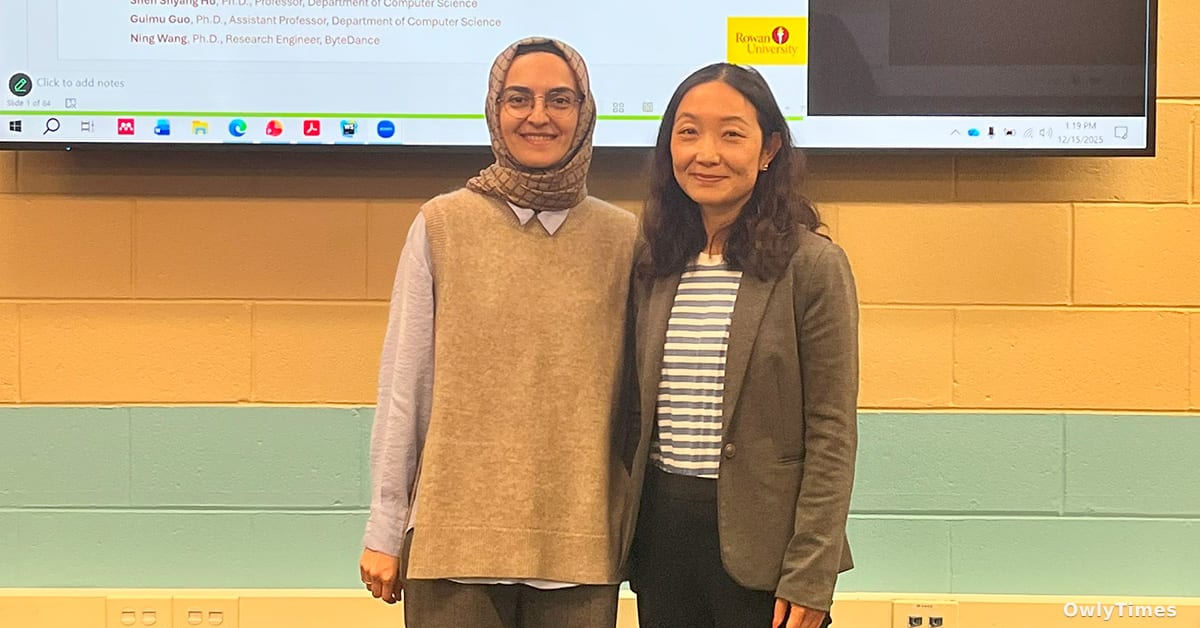
The inaugural graduate, Gulsum Alicioglu, focused her dissertation, “A Visual Exploration Framework for Explainable Deep Reinforcement Learning,” on the mechanics of AI transparency. While media reports have framed this as a simple administrative milestone for the university, the underlying research addresses a technical reality: AI models are frequently capable of high-level predictive accuracy while remaining opaque in their methodology. Alicioglu’s work replaces this opacity with visual analytics, allowing human end-users to parse the decision-making process and identify the specific training statistics that drive an AI’s output.
Alicioglu, who moved to the United States nearly seven years ago from Ankara, Turkey, initially entered the university's electrical and computer engineering program. She eventually transitioned to the College of Science & Mathematics’ newly launched data science program at the advice of her advisor, Dr. Bo Sun, an associate professor of computer science. This pivot allowed her to move away from early work in traffic injury prediction—where the "black box" problem prevented the adoption of her models—toward the broader field of explainable AI.
It is important to distinguish between the promise of "explainability" and the reality of algorithmic fallibility. As Alicioglu noted, there is a tendency for the public to place implicit, often misplaced trust in automated systems. Her research does not claim to make AI infallible; rather, it creates a diagnostic bridge that allows experts to observe both the successes and the errors of an agent. By visualizing the "training details," her framework provides a measurable way to audit AI behavior, a necessary step before these systems can be safely deployed in public infrastructure.
The limitations of this research, as with many early-stage academic frameworks, lie in the scalability of these visual tools. While Alicioglu’s model effectively demystifies reinforcement learning for specific research applications, integrating these visual audit trails into high-speed, real-time industrial systems remains a hurdle for the broader field. Her transition to a role as an artificial intelligence engineer for Turkey’s defense industry suggests that the next phase of this work will likely move from academic simulation to real-world deployment under high-stakes conditions.
The success of this program is also a testament to the specific pipeline established by university leadership, including Gokhan Alkanat, the associate provost for international education, who shared the initial program announcement that drew Alicioglu to the university. Having successfully defended her dissertation in December and participated in the May 8 recognition ceremony, Alicioglu’s trajectory offers a clear metric for the success of Rowan’s interdisciplinary approach.
The next reading of the university’s research output and the continued professional contributions of its inaugural data science cohort will indicate whether this new program can effectively bridge the gap between theoretical computer science and the urgent, real-world demand for transparent, trustworthy AI systems.