
The surge in campaign spending in Brazos County isn’t about enthusiasm – it’s about securing access and influence over a county poised for significant growth and, potentially, major infrastructure projects. While statewide races draw headlines, the real battle for control is unfolding at the county level, evidenced by the stark financial disparities between races for Commissioners Court and County Judge. The money isn’t simply fueling campaigns; it’s a down payment on future policy decisions, and a clear signal of where key stakeholders see opportunity – and risk.
Nowhere is this more apparent than in the race for Commissioners Court Precinct 2, where candidates have collectively spent over $250,000. This contrasts sharply with the Precinct 4 Democratic primary, where spending barely exceeds filing fees. This isn’t a reflection of differing levels of civic engagement, but a calculated investment by those anticipating a return – whether through development contracts, regulatory approvals, or simply favorable policy outcomes. The disparity reveals a fundamental power dynamic: one side has the resources to shape the narrative, the other is largely relegated to observing.
The County Judge race between Kyle Kacal and Mike Southerland exemplifies this dynamic. Kacal, transitioning from a state representative role, entered the race with a significant advantage, seeding his campaign with over $7,500 transferred from his previous fund. His donor list reads like a who’s who of Brazos Valley political power – State Sen. Charles Schwertner, Bryan Mayor Bobby Gutierrez, and figures connected to the 2024 statehouse race he vacated. This isn’t simply about personal endorsements; it’s about aligning with established networks capable of delivering votes and, crucially, future support. Kacal’s reliance on New York-based FiDi Media, a firm favored by Republicans, signals a strategy focused on broad-based messaging and voter mobilization. Southerland, meanwhile, is self-financing, relying on personal loans totaling nearly $28,000. This approach, while demonstrating commitment, limits his reach and dependence on a single source of funding.
See the original kbtx.com story for the full account.
The historical parallel here is instructive. Consider the post-war boom in Texas counties experiencing rapid population growth. Those counties where developers and business interests proactively funded local campaigns saw infrastructure projects – roads, utilities, zoning changes – aligned with their interests. Brazos County, with its proximity to Texas A&M and burgeoning population, is entering a similar phase. The current spending isn’t about winning an election; it’s about pre-positioning for the development wave that’s coming. The $4,000 catering bill from Readfield Meats and Deli for Kacal isn’t just a meal; it’s a gesture of goodwill towards a local business likely to benefit from future county decisions.
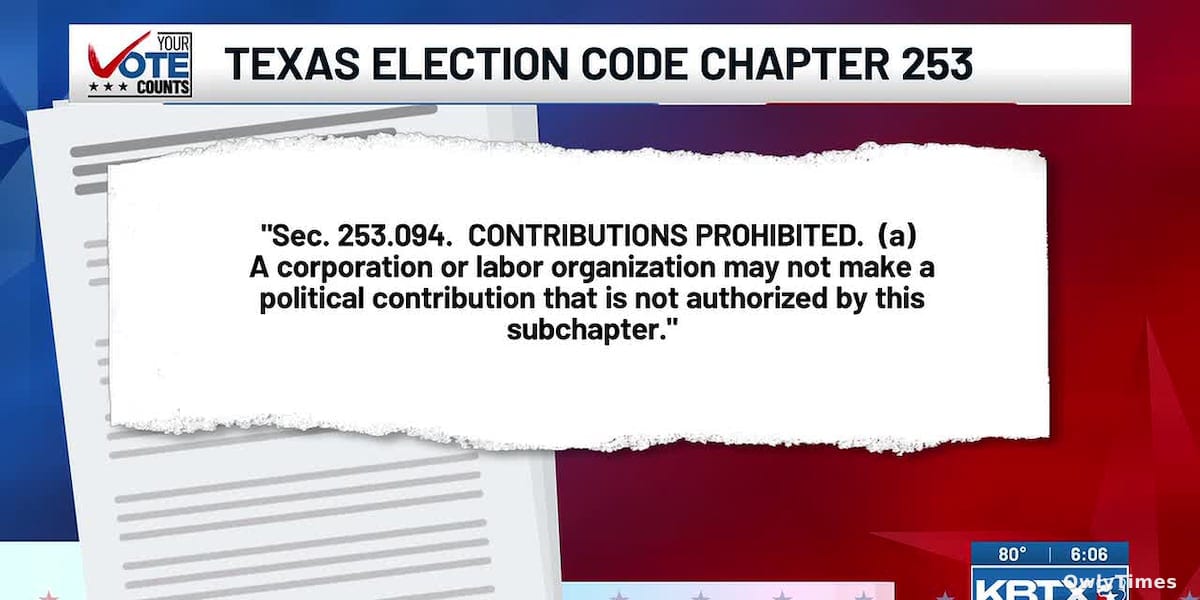
The Commissioners Court Precinct 2 race is even more revealing. Jordan Januse’s $140,000 expenditure, including over $60,000 to FiDi Media and significant investment in polling, demonstrates a sophisticated, data-driven campaign. His $50,000 loan from himself and his wife underscores a willingness to invest heavily in the outcome. However, Kyle Greenwood’s campaign raises serious questions. The acceptance of donations from businesses, potentially violating the Texas Election Code, suggests either negligence or a deliberate attempt to circumvent campaign finance regulations. While Greenwood has reimbursed some of these donations, the initial filings and the ongoing scrutiny from the Texas Ethics Commission and the Brazos County District Attorney highlight a disregard for transparency and legal compliance. This isn’t simply a campaign finance issue; it’s a question of integrity and whether a candidate is willing to operate within the bounds of the law.
The minimal spending in the County Commissioner 4 Democratic race, and the curious filings from candidates Peter Michelena and Andre Malone – initially ending their campaigns before seemingly restarting – suggest a lack of serious competition or a strategic decision to conserve resources for the general election. The incumbent, Wanda Watson, and challenger Prentiss Madison also exhibit minimal financial activity, indicating a low-intensity contest. This contrasts sharply with the Republican side, where candidates are actively courting donors and investing in advertising. The lack of Democratic engagement raises concerns about the party’s ability to mount a competitive challenge in November.
The District Clerk race, while seemingly less dramatic, also reveals interesting patterns. Gabriel Garcia’s consistent self-funding, with over $90,000 in outstanding loans to his campaign since 2018, demonstrates a reliance on personal wealth to maintain his position. His challengers, Wayland Van Nest and Rudy Schultz, are also largely self-funded, but Van Nest’s donor list, including prominent Republicans like former Sheriff Chris Kirk and current County Judge candidate Kyle Kacal, suggests a strategic attempt to appeal to a broader base of support.
The political chess move to watch next isn’t the outcome of Tuesday’s primary, but the subsequent actions of the winners. Will they prioritize the interests of their donors, or will they demonstrate independence and a commitment to serving the broader community? More specifically, how will the next Commissioners Court address the lingering questions surrounding the failed East Loop project, and what role will campaign contributors play in shaping the future of infrastructure development in Brazos County? The answers to these questions will reveal whether the money spent in this election was simply a means to an end, or a harbinger of a new era of influence peddling in Brazos Valley politics.





