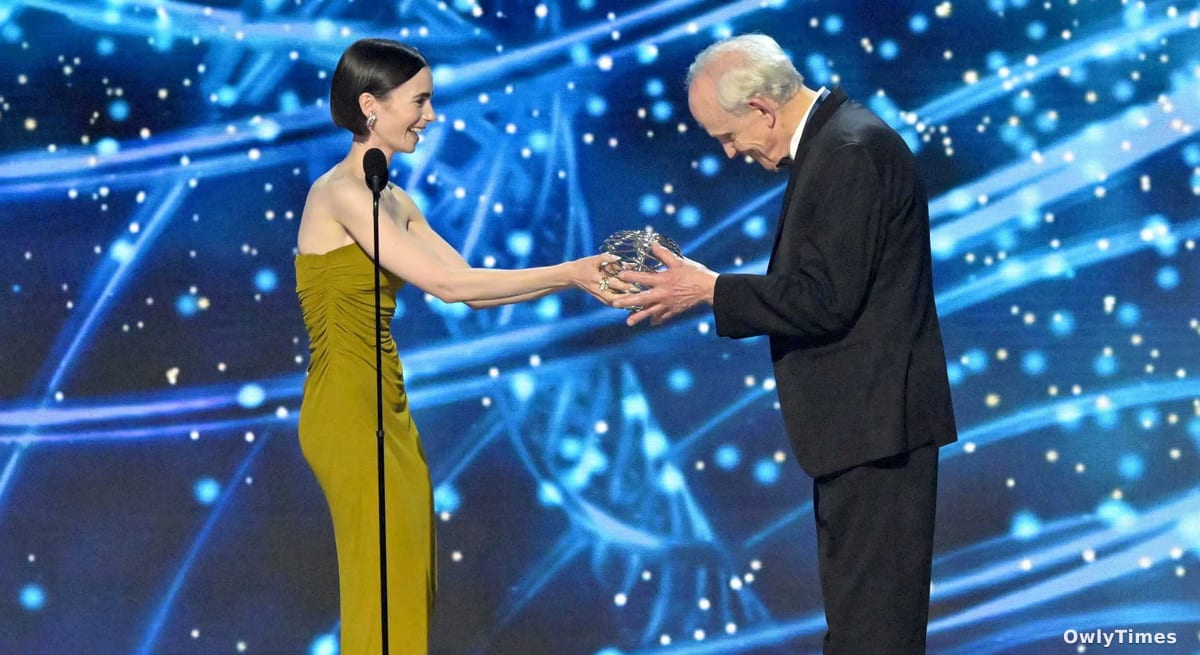

The pursuit of fundamental scientific discovery often occurs in quiet laboratories, far removed from the public eye. However, the 12th Breakthrough Prize Ceremony, held on April 18, 2026, at the Barker Hangar in Santa Monica, California, sought to invert this paradigm by bringing academic rigor to the center of a star-studded stage. While the gala, hosted by James Corden, is often dubbed the "Oscars® of Science," the underlying question remains: can high-profile recognition effectively bridge the gap between abstract theoretical physics and public appreciation for the long-term investment required to sustain it?
The Breakthrough Foundation awarded a total of $18.75 million to this year’s cohort, pushing the total lifetime distributions of the prizes to more than $340 million. Among the recipients was David J. Gross, a 2004 Nobel Prize winner and faculty member at UC Santa Barbara. Gross received the $3 million Special Breakthrough Prize in Fundamental Physics for a career defined by his work on the strong force and string theory. Crucially, his contributions—specifically the discovery of how the atomic nucleus functions—provide the mechanical bedrock for much of modern physics.
Headlines regarding such events often emphasize the celebrity status of the founders, such as Sergey Brin, Priscilla Chan, Mark Zuckerberg, Julia Milner, Yuri Milner, and Anne Wojcicki. However, the scientific substance of the awards reveals a focus on the next generation of inquiry. Yunqing Tang of UC Berkeley was honored with the New Horizons Prize in Mathematics for her work in Diophantine geometry. While the field itself emerged only in the latter half of the 20th century, Tang’s research is already reshaping how we approach number theory. Similarly, Benjamin Safdi of UC Berkeley and Berkeley Lab received the New Horizons Physics prize for his investigation into axion-like particles, which represent a leading theoretical candidate for the elusive dark matter that constitutes a significant portion of our universe.
A primary limitation to consider is the inherent disconnect between the immediate, headline-grabbing nature of a prize ceremony and the glacial pace of fundamental research. These awards celebrate breakthroughs that are often the culmination of decades of incremental, frequently unglamorous work. While the $18.75 million distributed this year provides substantial individual recognition, it is a fraction of the sustained, multi-generational funding required to maintain the "cathedral of knowledge" described by Yuri Milner.
The success of these laureates underscores the necessity of federal support in tandem with private philanthropy. The National Science Foundation has been a principal supporter of the Kavli Institute for Theoretical Physics—which Gross previously directed—since its founding in 1979. Without such consistent, long-term backing, the foundational discoveries honored at the Barker Hangar would likely never have reached the stage of maturation necessary for prize consideration.
As the Breakthrough Prizes move beyond their 14th year, the focus will shift toward the practical applications of these theoretical milestones. The next reading of national investment levels in the basic sciences will determine whether the pipeline that produced these UC faculty members—who have now secured 15 Breakthrough Prizes collectively—remains robust enough to support the next wave of discoveries in medicine, national security, and technology.





