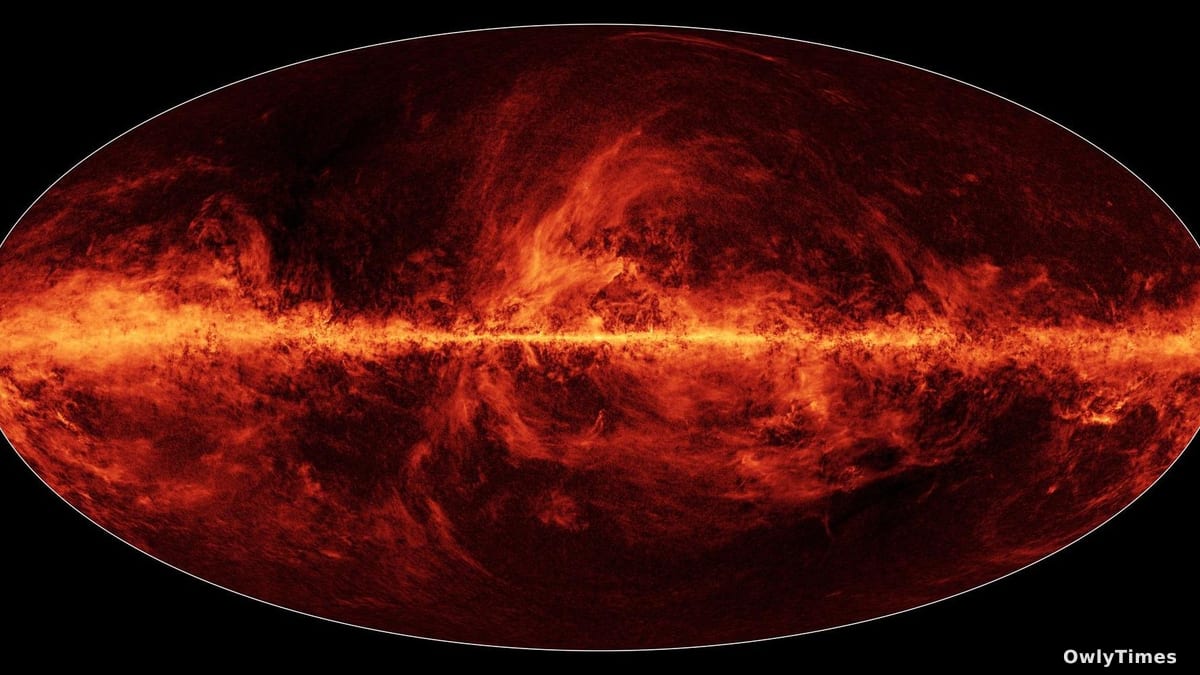

The history of our galaxy is written in the chemical signatures of the stars that call it home. While we often view the Milky Way as a stable, majestic spiral, the reality is that its current form is the result of a violent, chaotic assembly process that began shortly after the Big Bang. A central question in galactic archaeology is whether the remnants of these earliest, ancient building blocks still exist within the crowded, bustling neighborhoods of our galaxy’s disk, or if they have been completely assimilated into the vast spherical halo that surrounds us.
A new study published March 23 in the Monthly Notices of the Royal Astronomical Society offers a compelling answer. By analyzing 20 old, very-metal-poor stars orbiting unusually close to the galactic disk, researchers have identified what appears to be the ghost of a long-dead dwarf galaxy, nicknamed Loki.
Distinguishing Chemical Signatures from Galactic Noise
To understand why this finding matters, one must look at how astronomers define "metallicity." In the cosmos, the first stars consisted almost entirely of hydrogen and helium. As these stars lived and died, they seeded the universe with heavier elements—what astronomers call "metals." Consequently, the age of a star is often tied to its chemical composition; stars with very few metals are typically the oldest, dating back to the earliest epochs of the universe.
The study, led by F. Sestito, utilized high-precision data from the Gaia space telescope to track the trajectories of these 20 stars. Researchers then used a powerful spectrograph at the Canada-France-Hawaii Telescope to determine their chemical makeup. While the standard expectation for stars residing this close to the galactic disk is a high concentration of metals—similar to our sun—these 20 stars were distinctly metal-poor. Their presence in the inner region, rather than the expected halo, suggests they were deposited there during an ancient, chaotic merger event that occurred approximately 10 billion years ago.
The Loki Merger Hypothesis
Headlines might suggest that astronomers have simply "found" a hidden galaxy, but the reality is more nuanced. The study presents a model where a dwarf galaxy, estimated at 1.4 billion solar masses, collided with the young, lightweight Milky Way. Because the galaxy was still in its infancy and had not yet settled into its current rotating structure, the impact scattered these stars in a variety of orbits, including both prograde and retrograde paths.
This orbital diversity is a key finding that distinguishes the "Loki" stars from the rest of the disk’s population. It provides a rare look at the structural instability of the early Milky Way, which is suspected to have consumed a dozen or more dwarf galaxies over its 12-billion-year history.
Limitations to Consider
While the evidence is compelling, the researchers are cautious about overstating these findings. The primary limitation remains the sample size. Observing each star with high-resolution spectroscopy requires roughly four hours of dedicated telescope time, making large-scale data collection an arduous process. Anirudh Chiti, an astrophysicist at Stanford University who was not involved in the research, noted that it remains plausible these stars could belong to a previously unidentified substructure within the Milky Way rather than a distinct, merged dwarf galaxy. Without a larger comparative sample of stars, confirming the specific origin of the Loki system remains a work in progress.
Future Mapping of the Inner Galaxy
The next steps for this research involve expanding the search beyond the galactic halo. As astronomers gain access to more advanced spectroscopic facilities, they will be able to process hundreds of stars simultaneously, providing the chemical and orbital data necessary to confirm whether Loki was a singular event or one of many ancient mergers hidden in plain sight. Future readings of chemical abundance maps in the galactic disk will serve as the primary metric to determine if these primitive stellar populations are common throughout the inner galaxy or if they are truly rare, isolated remnants of a time long past.