
The Escalating Constitutional Battle Over Ballot Access
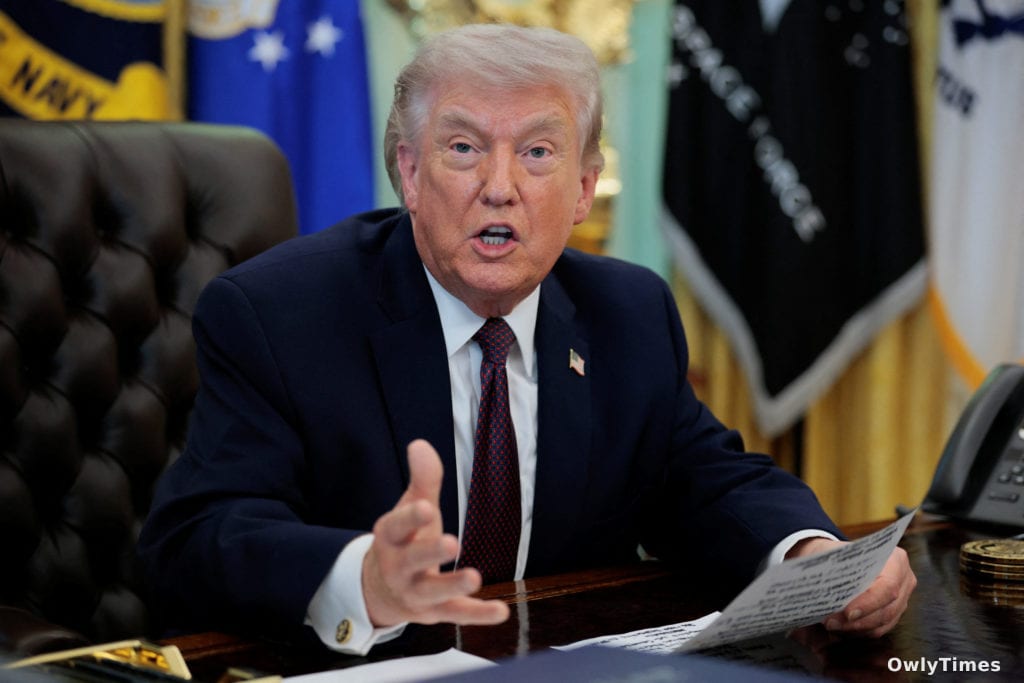
The timing of President Trump’s latest executive order restricting mail voting isn’t about election integrity – it’s a calculated pressure play designed to force a Supreme Court showdown and further solidify a narrative of electoral vulnerability ahead of November. Wednesday’s lawsuit filed by Democrats isn’t simply a defense of mail-in voting; it’s the opening salvo in a constitutional crisis deliberately manufactured to exploit existing anxieties about the legitimacy of the upcoming election. The strategic calculus is clear: by pushing the boundaries of executive power regarding election administration, the President aims to preemptively delegitimize potential election results unfavorable to his campaign, regardless of legal outcome. This isn’t a novel tactic, but the stakes are demonstrably higher given the current political climate and the President’s repeated claims of widespread voter fraud.
Source material: PBS.
A History of Executive Overreach and Electoral Control
This isn’t the first time a president has attempted to influence the mechanics of an election. Andrew Jackson’s attempts to dismantle the Second Bank of the United States in 1832, while ostensibly about economic policy, were widely understood as a maneuver to bolster his re-election chances by appealing to a populist base. More recently, Richard Nixon’s Committee to Re-Elect the President (CREEP) engaged in a systematic campaign of illegal activities, including voter suppression, to secure his victory in 1972. However, Trump’s approach differs in its direct challenge to the constitutional authority of states and Congress. Previous attempts at electoral manipulation were largely covert or focused on campaign tactics; this executive order is a blatant assertion of presidential power over a traditionally state-administered function. The fact that the President lost the first round of this battle last year, with multiple federal judges blocking his initial executive order, underscores the legal fragility of his position, yet also reveals a willingness to repeatedly test those boundaries.
Who Benefits and Who Loses From This Legal Fight?
The immediate beneficiaries of this legal battle are the legal teams on both sides, racking up billable hours, and the conservative legal networks poised to defend the executive order should it reach the Supreme Court. More broadly, President Trump benefits from the sustained media attention and the opportunity to rally his base around the narrative of a rigged system. The narrative itself, regardless of its factual basis, serves to energize his supporters and provide a pre-emptive excuse for potential defeat. Conversely, Democrats and voting rights advocates bear the cost of defending established electoral procedures, diverting resources from other campaign priorities. However, the potential long-term loser is the integrity of the electoral process itself. Each challenge to established norms erodes public trust in the system, regardless of the legal outcome. The most vulnerable are voters, particularly those relying on mail-in ballots, who now face increased uncertainty and potential disenfranchisement. The number of voters impacted is significant; mail-in voting surged in 2020, accounting for over 65% of all ballots cast, a figure that represents a nearly 40% increase from 2016.
The Constitutional Core of the Dispute
The Democrats’ lawsuit hinges on the Constitution’s explicit delegation of authority over election administration to states and Congress – specifically, Article I, Section 8, which grants Congress the power to “make rules for elections.” The President’s argument, as evidenced by the executive order, rests on a broader interpretation of executive power, citing the need to ensure election security and prevent voter fraud. This argument, however, lacks a strong constitutional foundation. While the President has a legitimate role in enforcing federal election laws, such as those prohibiting voter intimidation, he does not have the authority to unilaterally rewrite state election laws. The legal precedent overwhelmingly supports state control over the mechanics of elections, with federal intervention typically limited to ensuring equal access and preventing discrimination. The core question before the courts is whether the President can circumvent this established framework through executive action, and the answer, based on existing jurisprudence, is almost certainly no.
The Supreme Court’s Role and the Next Political Chess Move
The ultimate outcome of this legal battle will likely depend on the Supreme Court, now firmly tilted in a conservative direction following the appointments of Neil Gorsuch, Brett Kavanaugh, and Amy Coney Barrett. The Court’s decision will not only determine the fate of this particular executive order but will also set a precedent for future presidential actions regarding election administration. The political chess move to watch next isn’t simply the Court’s ruling, but rather the President’s reaction to that ruling. Will he abide by an unfavorable decision, or will he escalate the conflict by challenging the Court’s authority or attempting to circumvent its ruling through other means? The more pressing question is whether the President will use the legal proceedings as a platform to continue sowing doubt about the election’s legitimacy, regardless of the outcome. The real battle isn’t about the legality of mail-in voting; it’s about controlling the narrative and shaping public perception of the election’s fairness.