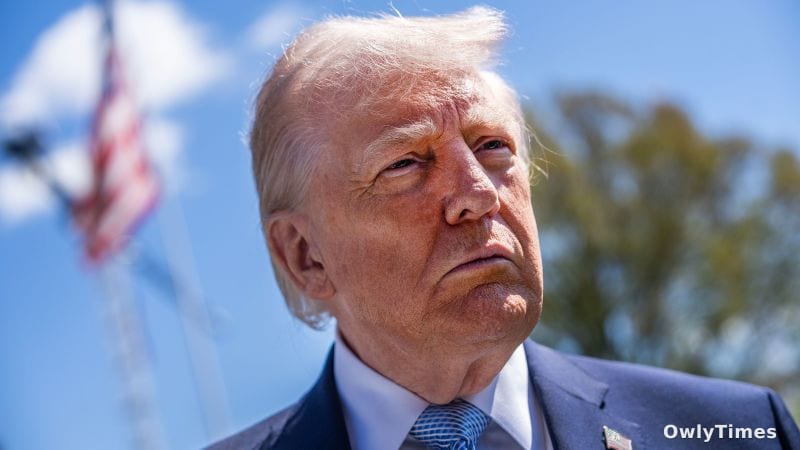

The sudden, bipartisan chorus demanding invocation of the 25th Amendment isn’t about a constitutional crisis – it’s a pressure campaign, a calculated attempt to constrain Donald Trump’s decision-making through the explicit threat of removal. The fact that voices spanning the ideological spectrum, from Alex Jones to Marjorie Taylor Greene, are now openly discussing a mechanism previously relegated to the fringes reveals a deeper anxiety: not simply disagreement with policy, but a fear that the President’s rhetoric is escalating beyond the bounds of acceptable risk. This isn’t a prelude to a likely ouster, but a demonstration of eroding trust, even among those who have historically defended him.
The immediate trigger was Trump’s Tuesday morning statement that “a whole civilization will die tonight” unless Iran capitulates, coupled with threats to strike Iranian infrastructure. While a two-week ceasefire was ultimately announced, the preceding 24 hours exposed a fracture line within the President’s orbit. The invocation of the 25th Amendment, requiring a majority of the Cabinet and the Vice President to declare the President unfit for office, is a high bar – and JD Vance, currently in Hungary and publicly supportive, shows no indication of shifting. However, the very discussion of the amendment serves as a warning, a signal that even loyalists are drawing lines regarding acceptable behavior. Who benefits from this public pressure? Primarily, those within the administration seeking to moderate Trump’s more extreme impulses, and international actors hoping to de-escalate the situation with Iran. Who loses? Trump’s perceived authority and freedom of action, and potentially, any political capital he hoped to gain from a hardline stance.
Drawn from CNN.
This moment echoes, albeit in a dramatically accelerated timeframe, the anxieties surrounding Richard Nixon during the Watergate scandal. In 1973, concerns about Nixon’s mental state and potential for reckless action, particularly regarding nuclear weapons, prompted quiet discussions among his staff about the 25th Amendment. However, unlike the current situation, those discussions remained largely concealed until after Nixon’s resignation. The key difference is the public nature of the current debate. The speed with which former allies like Anthony Scaramucci and even Tucker Carlson have turned critical, and the willingness of figures like Marjorie Taylor Greene to publicly express alarm, suggests a level of internal disquiet that is unprecedented. Carlson’s commentary, particularly his suggestion that Trump might be the “antichrist,” is a stark departure from his previous role as a staunch defender of the President.
The dynamic is further complicated by the political ambitions of potential rivals. J.B. Pritzker, the Illinois Governor and potential presidential contender, is among the Democrats openly calling for the 25th Amendment, a move that simultaneously positions him as a responsible leader and draws a contrast with Trump. However, his ability to initiate proceedings is currently nonexistent, highlighting the largely symbolic nature of these calls. The fact that even Ron Johnson, a consistently loyal GOP Senator, publicly stated he would “lose” Trump if civilian targets were attacked underscores the growing unease within the Republican party. This isn’t necessarily about a desire to remove Trump from office, but a calculated effort to protect themselves from political fallout should his actions escalate the conflict.
The significance of this moment isn’t the likelihood of Trump’s removal – that remains remote. It’s the demonstration of a collapsing consensus around his judgment. The 25th Amendment is being wielded not as a tool for immediate action, but as a threat, a constraint on future behavior. The question now is whether this pressure will be sufficient to moderate Trump’s actions, or whether he will perceive it as a challenge to his authority, potentially escalating the situation further. The next political chess move to watch is JD Vance’s public response to these calls – will he reaffirm his loyalty unequivocally, or will he subtly signal a willingness to act as a check on the President’s power? His answer will reveal the true extent of the fracture within the administration and the limits of Trump’s remaining control.