
Beyond Citation Counts: Why Interdisciplinary Exchange Matters for Future Science
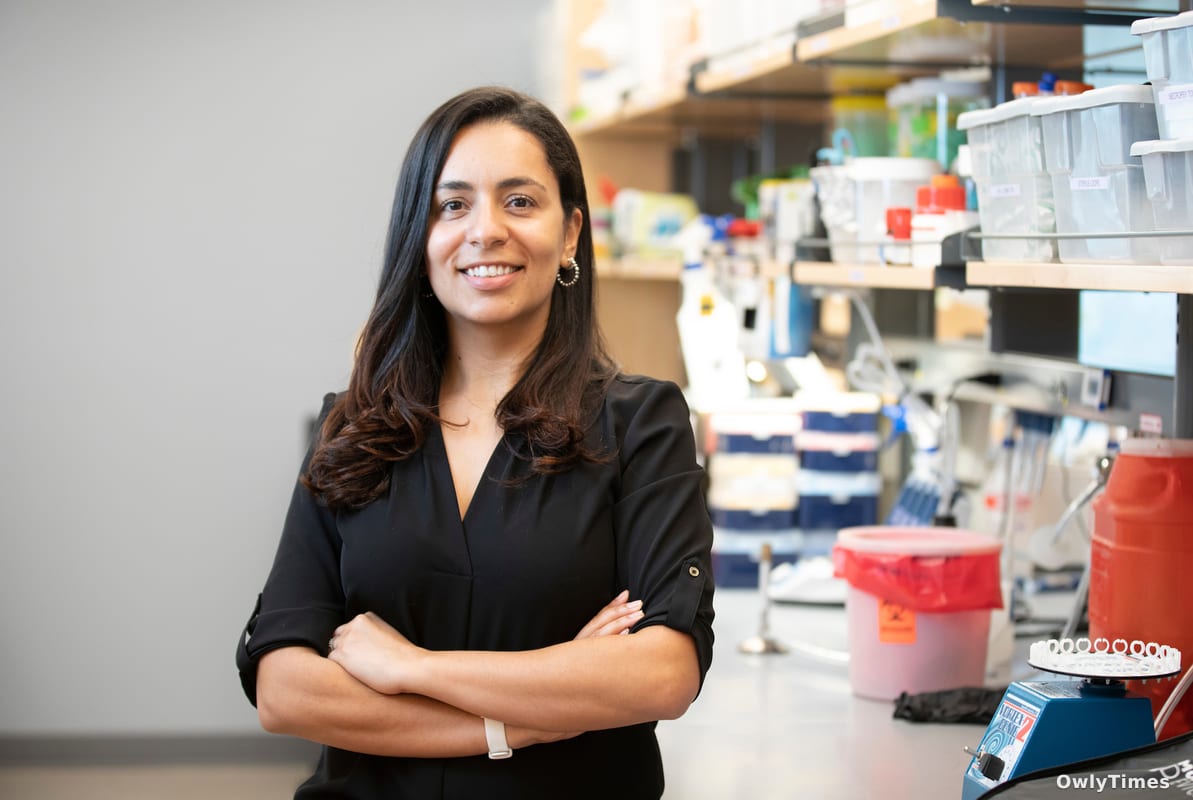
The sheer volume of scientific literature published daily can feel isolating, even for those actively contributing to it. A researcher can become deeply entrenched in the nuances of their specific field, losing sight of the broader scientific landscape and potential cross-pollination of ideas. This is precisely the challenge the National Academy of Sciences (NAS) aims to address with its Frontiers of Science program, and why the selection of Mariana Byndloss, DVM, PhD, as a 2026 Fellow is particularly noteworthy. It’s not simply recognition of past achievement – though her record is undeniably impressive – but an investment in her potential to shape the future of scientific inquiry by actively bridging disciplinary gaps. While headlines often focus on individual accolades, the true significance of Frontiers lies in its deliberate cultivation of a network designed to foster innovation at the intersections of knowledge.
Source material: news.vumc.org.
Byndloss, an assistant professor of Pathology, Microbiology and Immunology at Vanderbilt University, was chosen as one of 81 Fellows this year, a cohort described by the NAS as representing “the nation’s brightest young scientists.” This selection isn’t based on a single breakthrough, but a sustained pattern of impactful work. For the past five years, she’s been consistently recognized as a “Highly Cited Researcher,” meaning her publications are frequently referenced by peers – a strong indicator of influence within her field. However, her research itself is already inherently interdisciplinary, focusing on the complex interplay between the gut microbiota, host metabolism, and disease. She and her team investigate how disruptions to this delicate balance, caused by factors like diet or antibiotics, can contribute to conditions ranging from colorectal cancer to childhood obesity. This work necessitates expertise spanning microbiology, immunology, metabolic biology, and even nutritional science, positioning her well to benefit from the Frontiers program’s emphasis on cross-disciplinary dialogue.
A Network Built for Leadership, Not Just Research
The NAS Frontiers of Science program, established in 1989, isn’t a grant-funding mechanism or a traditional conference. It’s a carefully curated symposium series designed to cultivate leadership potential. More than 7,000 young scientists have participated since its inception, with a remarkable track record: 374 Fellows have subsequently been elected to the NAS itself, and 22 have gone on to win the Nobel Prize. This success isn’t accidental. The program deliberately assembles scientists from diverse backgrounds – industry, academia, and government – to engage in focused discussions on critical scientific challenges. The recent symposium, held March 5-7 in Irvine, California, exemplifies this approach. Byndloss expressed her enthusiasm for the opportunity to “connect with outstanding early-career faculty across various scientific fields” and explore “new collaborations that may guide my research in new directions.” This emphasis on collaboration is key; the program isn’t about presenting finished work, but about identifying shared questions and potential avenues for synergistic research.
The timing of this fellowship also coincides with a period of increasing recognition for Byndloss’ contributions. In addition to her consistent “Highly Cited Researcher” status, she recently received both a 2026 ASM Award for Early Career Basic Research and a 2024 FASEB Excellence in Science Award. Furthermore, her selection as a 2023 Freeman Hrabowski Scholar by the Howard Hughes Medical Institute and as a Burroughs Wellcome Fund Investigator underscores the breadth of her impact and the confidence placed in her future research trajectory. She also serves as co-director of the Vanderbilt Microbiome Innovation Center, demonstrating a commitment to translating microbiome research into tangible benefits for human health. These accolades, while individually significant, collectively paint a picture of a scientist poised to become a leader in her field.
Limitations to Consider: The “Rising Star” Phenomenon
While the NAS Frontiers program clearly identifies and supports promising scientists, it’s important to acknowledge the inherent limitations of any “rising star” selection process. Identifying potential for future impact is, by its nature, speculative. Success in academia is often influenced by factors beyond scientific merit, including institutional support, access to resources, and even luck. Furthermore, the program’s focus on early-career researchers, while valuable, means that the long-term impact of these fellowships won’t be fully realized for years, potentially decades. It’s also worth noting that the program’s selection criteria, while rigorous, may inadvertently favor certain research areas or approaches over others. The NAS committee, comprised of established scientists, may be more inclined to recognize work that aligns with their own perspectives and priorities.
The Future of Microbiome Research and Beyond
The next steps for Byndloss and her colleagues involve continuing to unravel the intricate connections between the gut microbiome and human health. Her work is particularly relevant in light of growing concerns about antibiotic resistance and the impact of modern diets on microbial diversity. But the broader question raised by her selection as a Frontiers Fellow is this: how can we proactively foster interdisciplinary collaboration to accelerate scientific discovery? As funding models increasingly emphasize specialized research, and as the sheer volume of data continues to grow, the need for scientists who can synthesize information across disciplines and identify novel connections will only become more critical. We should be watching for how Byndloss leverages the Frontiers network – and whether the program’s model can be scaled to address the increasingly complex challenges facing science today. Will this investment in cross-disciplinary exchange translate into tangible breakthroughs in the years to come, or will the pressures of specialization continue to dominate the scientific landscape?