
Beyond Recognition: What the AAAS Fellowships Signal About the Future of Interdisciplinary Science
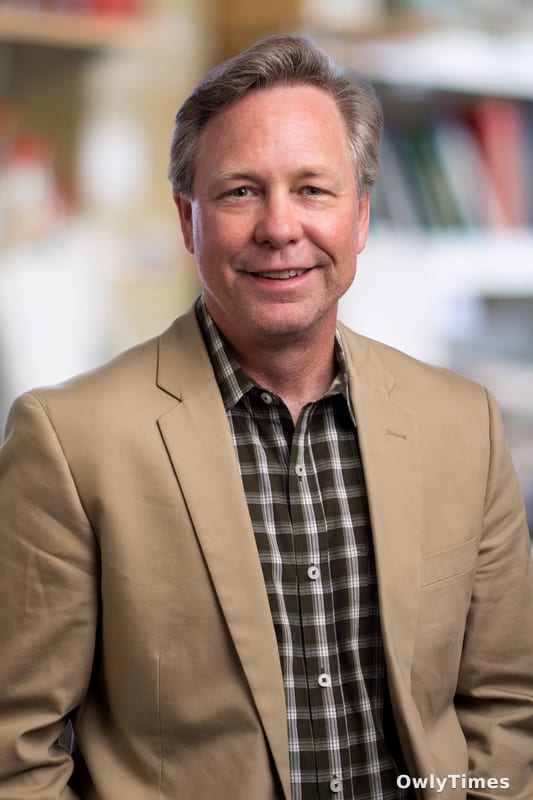
The election of two Salk Institute researchers, Gerald Shadel and Tatyana Sharpee, as Fellows of the American Association for the Advancement of Science (AAAS) isn’t simply an acknowledgement of past achievement; it’s a signal about where the most impactful scientific work is heading. While institutional press releases often frame these honors as accolades, the significance lies in who the AAAS chooses to elevate – and, increasingly, it’s scientists who blur traditional disciplinary lines. This isn’t about diminishing the importance of focused expertise, but recognizing that the most pressing questions in biology, medicine, and beyond demand a synthesis of approaches. The AAAS doesn’t just reward discoveries; it identifies future leaders capable of translating complex science into real-world solutions, and the dual recognition from Salk reflects a growing emphasis on that translational capacity.
Decoding Mitochondrial Stress and Neural Computation: The Specifics of the Recognition
Gerald Shadel, a molecular biologist, was recognized for his contributions to understanding mitochondrial dysfunction and its role in disease. His work focuses on how cells respond to stress within the mitochondria – often called the “powerhouses” of the cell – and how that response impacts overall health. This is a field experiencing rapid growth, driven by the increasing recognition that mitochondrial problems are implicated in everything from neurodegenerative diseases like Alzheimer’s to metabolic disorders and even cancer. The AAAS specifically cited Shadel’s work on “elucidating the molecular mechanisms governing mitochondrial stress responses and their impact on cellular function.” This isn’t just about identifying a problem; it’s about understanding the how and why at a fundamental level, which is crucial for developing targeted therapies. Meanwhile, Tatyana Sharpee’s election acknowledges her pioneering work in theoretical neuroscience, specifically her development of mathematical models to understand how the brain processes information. Her research focuses on the neural code – how neurons represent and transmit information – and how this code is affected by noise and variability. The AAAS highlighted her “innovative theoretical approaches to understanding neural computation and sensory processing.”
This piece references the salk.edu report.
The contrast between these two fields – molecular biology and theoretical neuroscience – is precisely the point. While seemingly disparate, both Shadel and Sharpee are tackling problems of information processing: one within the cellular machinery, the other within the brain itself. This convergence is increasingly vital, as understanding the brain’s vulnerabilities requires understanding the health of the cells that comprise it, and understanding cellular stress responses can be informed by the brain’s remarkable capacity for adaptation. It’s worth noting that approximately 3.6% of AAAS members are selected as Fellows each year, meaning this is a highly selective honor. In 2024, 564 individuals were named Fellows.
Beyond the Lab: The Role of a Science Spokesperson
The AAAS doesn’t simply bestow a title; it inducts scientists into a network of “national and global science spokespersons.” This is a critical, and often overlooked, aspect of the Fellowship. In an era of increasing scientific skepticism and misinformation, the AAAS is actively cultivating a cadre of scientists equipped to communicate complex ideas to the public and policymakers. This responsibility extends beyond publishing research papers and presenting at conferences. It requires engaging in public outreach, advising government agencies, and participating in informed debates about science-related issues. Dr. Shadel’s work on mitochondrial health, for example, has direct implications for understanding the long-term effects of viral infections and chronic diseases – topics of intense public interest. Similarly, Dr. Sharpee’s research on neural computation is relevant to discussions about artificial intelligence, brain-computer interfaces, and the future of cognitive enhancement. The AAAS is essentially investing in scientists who can not only do science but also explain it effectively.
Limitations to Consider: The Echo Chamber of Recognition
While the AAAS Fellowships are prestigious, it’s important to acknowledge potential limitations. The selection process, while rigorous, is still subject to inherent biases within the scientific community. Established researchers with strong networks are more likely to be nominated and selected than those from underrepresented groups or emerging fields. Furthermore, the AAAS, as a professional organization, may prioritize research that aligns with its own priorities and funding streams. This isn’t necessarily a negative, but it’s a factor to consider when interpreting the significance of the Fellowships. It’s also crucial to remember that recognition doesn’t guarantee future success. While these scientists are undoubtedly talented, their continued contributions will depend on sustained funding, collaborative opportunities, and a supportive research environment. The AAAS Fellowship is a milestone, not a destination.
The Next Frontier: Integrating Cellular and Neural Resilience
The election of Shadel and Sharpee prompts a crucial question: how can we leverage insights from both cellular and neural research to build more resilient biological systems? The next logical step is to explore the interplay between mitochondrial function and brain health. For example, how does chronic mitochondrial stress impact synaptic plasticity – the brain’s ability to adapt and learn? Could interventions that improve mitochondrial function enhance cognitive resilience in the face of age-related decline or neurodegenerative disease? Researchers are beginning to investigate these connections, but much work remains to be done. Watch for studies examining the effects of dietary interventions, exercise, and pharmacological agents on both mitochondrial health and cognitive performance. The convergence of these fields isn’t just an academic exercise; it holds the potential to unlock new strategies for preventing and treating a wide range of debilitating conditions.





