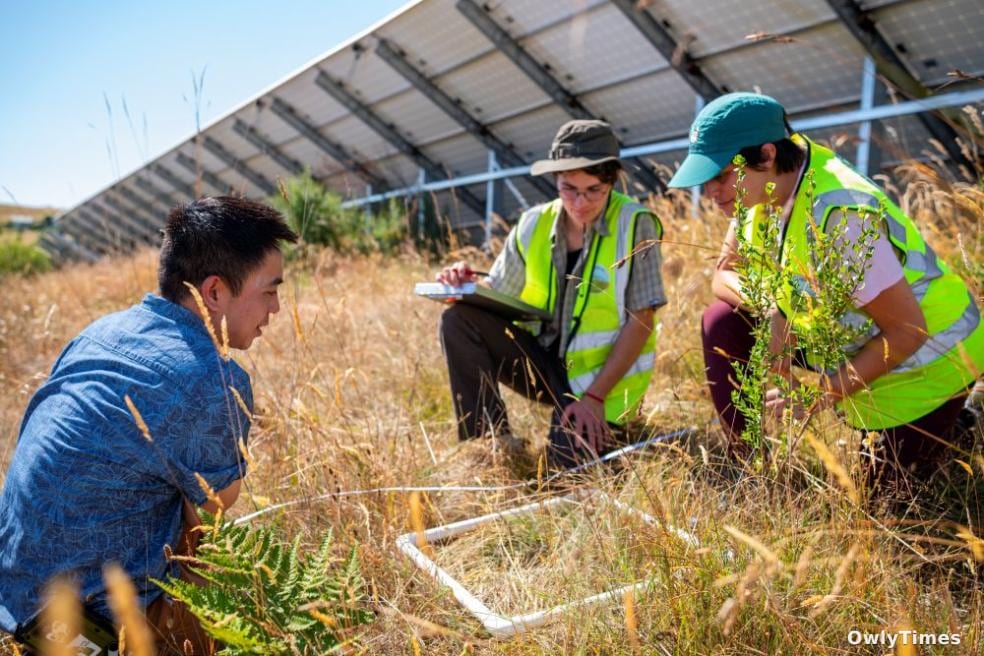

Beyond the Field Guide: What Humboldt’s Rangeland Students Reveal About Ecological Education
The ability to accurately identify a plant – not just its common name, but its precise taxonomic classification and ecological role – might seem a niche skill. Yet, the performance of students from Cal Poly Humboldt’s Rangeland Resource Science program at the 2026 Society for Range Management (SRM) competition suggests this capacity is a surprisingly potent indicator of a broader trend: a shift towards increasingly specialized, hands-on training in ecological sciences. While headlines celebrate Humboldt’s fifth-place overall finish and second-place ranking among U.S. universities, the real story lies in how they achieved this success, and what it signals about the future of land management education. This wasn’t a generalized ecology competition; it was a grueling test of botanical precision, demanding students identify 100 plant species – from grasses to trees – within a single minute per specimen, detailing family, genus, species, life history, and origin.
The SRM competition, held in Monterey this year, involved 22 universities across North America, with 11 students representing Cal Poly Humboldt. To understand the significance of their performance, consider the task itself. Identifying a plant to species isn’t simply memorization; it requires a deep understanding of plant morphology, evolutionary relationships, and habitat preferences. The one-minute time constraint adds a layer of pressure that simulates real-world conditions where quick, accurate assessments are critical – for example, in assessing rangeland health, identifying invasive species, or responding to wildfire damage. Todd Golder, a Rangeland Resource Science instructor, led the team through months of preparation, emphasizing not just identification, but the underlying ecological principles. He noted the event was “especially rewarding for our students, who showcase their technical knowledge and their strong foundation in plant science which this program is known for.” This isn’t simply about winning; it’s about validating a pedagogical approach.
Original reporting: now.humboldt.edu.
Accreditation as Validation: A California First
The timing of this success is particularly noteworthy. Just last fall, Cal Poly Humboldt’s Rangeland Resource Science program achieved a first in California: accreditation from the SRM. This isn’t a superficial endorsement. SRM accreditation signifies that the program meets rigorous standards in curriculum, faculty expertise, and practical training. It’s a signal to employers and graduate programs that Humboldt graduates possess a demonstrable skillset. Historically, rangeland science programs have been concentrated in states with extensive rangelands – think Montana, Wyoming, and Texas. For a California program to not only compete but excel, and to be the first in the state to earn this accreditation, challenges the geographic assumptions about where this expertise resides. California’s diverse ecosystems, from coastal grasslands to high-elevation forests, present unique rangeland management challenges, and Humboldt’s program appears to be uniquely positioned to address them.
Beyond Competition: The Practical Implications of Plant ID Expertise
The focus on plant identification might seem antiquated in an era of remote sensing and AI-powered species recognition. However, these technologies are only as good as the data they’re trained on, and ground-truthing – verifying data with on-the-ground observations – remains essential. A skilled botanist can identify subtle variations within a species, detect early signs of disease or stress, and recognize hybrids or rare variants that automated systems might miss. This level of detail is crucial for adaptive management, a strategy that emphasizes monitoring and adjusting management practices based on real-time conditions. Furthermore, the competition’s success builds on a consistent record of excellence; Golder highlighted past achievements, including first and second-place finishes in U.S. team events and individual student awards. This isn’t a one-time fluke, but a sustained commitment to high-quality education.
Limitations to Consider: Scale and Scope
While Humboldt’s performance is impressive, it’s important to acknowledge the limitations of drawing broad conclusions from a single competition. The SRM competition focuses heavily on plant identification, and while this is a core skill for rangeland managers, it’s not the only one. Effective rangeland management also requires expertise in soil science, hydrology, animal ecology, and socio-economic considerations. Additionally, the sample size – 11 students from one university – is relatively small. It’s difficult to determine whether Humboldt’s success is attributable to exceptional students, a particularly effective curriculum, or a combination of both. The program’s relatively small size compared to larger land-grant universities could also contribute to a more focused and personalized learning experience, but may limit the breadth of research opportunities.
Looking ahead, the next crucial step is to investigate how Humboldt’s curriculum fosters this level of botanical expertise. Are there specific teaching methods, field experiences, or mentorship opportunities that contribute to their success? Furthermore, researchers should explore how this emphasis on plant identification translates into real-world outcomes – are Humboldt graduates more effective at managing rangelands, restoring degraded ecosystems, or mitigating the impacts of climate change? The question isn’t just whether students can name a plant, but whether they can use that knowledge to make informed decisions about the future of our landscapes. Will other California universities respond by bolstering their own rangeland science programs, and will we see a broader shift towards more specialized, hands-on ecological education? That’s a development worth watching closely.





