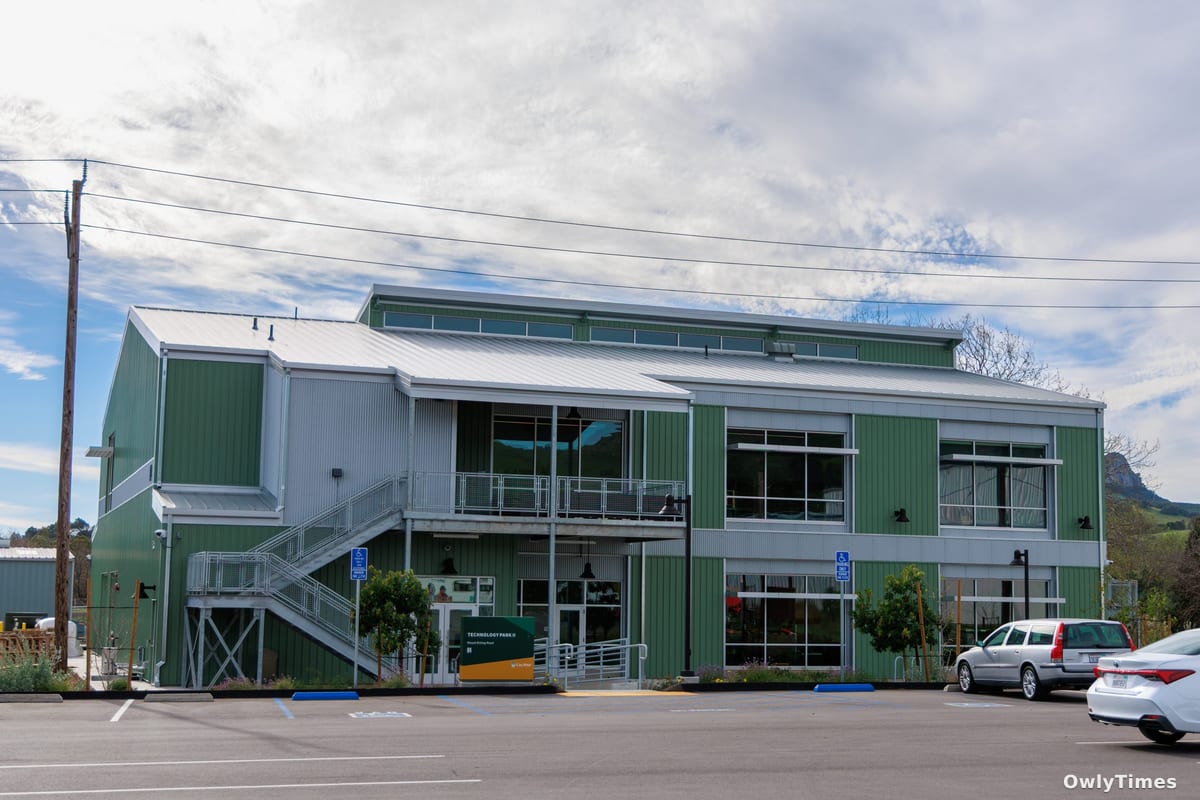

Is Silicon Valley’s obsession with “innovation districts” just a glorified land grab dressed up in STEM rhetoric? The opening of the second phase at Cal Poly’s Technology Park – a modest 16,200 square feet added to an existing 25,000 – feels less like a revolutionary step toward a tech-driven future and more like a catch-up game for regional universities. The real story here isn't the new building itself, it’s the painfully slow, funding-dependent reality of translating academic research into tangible economic benefit for students and communities.
The $12.2 million project, finally seeing tenants sign leases in November 2025, is a direct response to the pressure on universities to demonstrate “applied research and workforce development,” buzzwords that translate to: “show us how your grant money is creating jobs.” Jim Dunning, associate executive director of Real Estate Development & Services at Cal Poly Partners, frames the park’s purpose as “complementing student success with opportunities to get job experience.” That’s a worthy goal, but it’s also a defensive one. Universities are increasingly judged not on the quality of their research, but on its immediate economic impact.
This isn’t unique to Cal Poly. Across the country, universities are scrambling to build these “tech parks,” hoping to replicate the success of Stanford and MIT, which benefited from being located in the heart of the original Silicon Valley. But the conditions that fostered that initial boom – a confluence of defense spending, venture capital, and a uniquely risk-tolerant culture – aren’t easily replicated. Cal Poly’s expansion, delayed for years due to funding hurdles, highlights this. They only became eligible for EDA funding after disaster declarations for wildfires and floods, a grim reminder that “resiliency” is now a key justification for tech investment. As Dunning put it, building space for tech companies “builds the economic base to provide resiliency that helps us through times of natural disasters.” It’s a pragmatic argument, but it also reveals a shift in priorities: tech isn’t just about progress, it’s about damage control.
Reporting from mustangnews.net informs this analysis.
The focus on LEED certification – aiming for at least Silver Level, as mandated by the California State University system – is another telling detail. Sustainability is, of course, important. But it’s also a box-ticking exercise, a way to signal virtue and attract tenants who are increasingly under pressure to demonstrate environmental responsibility. Building 83 offers spaces ranging from 200 to 3,000 square feet, a deliberate attempt to accommodate a diverse range of companies. Currently, around 20 tenants operate within the park, with the hope of expanding to 75. The current mix – including SLO County Fire/CAL FIRE, the U.S. Geological Survey California Water Science Center, and a couple of consulting firms – is…practical. It’s not exactly the next generation of disruptive tech startups.
The claim that “at least one student per tenant” is involved with the park is a positive sign, but it’s also a low bar. Is that student working on a meaningful research project, or just filing papers? The blueprints for a further 30,000 square feet of expansion are already prepared, but remain on hold pending fundraising. This cycle of planning, waiting, and fundraising is the defining characteristic of these university-led innovation initiatives. They’re perpetually in a state of becoming, rather than being.
The real challenge isn’t building the physical space, it’s creating a genuine ecosystem where academic research can flourish and translate into real-world solutions. Cal Poly’s Technology Park is a step in the right direction, but it’s a cautious one. Don’t expect a sudden influx of venture capital or a wave of groundbreaking startups. Instead, watch for whether Cal Poly can consistently secure funding – not just for construction, but for the programs and initiatives that will actually connect students with industry. Specifically, in the next 18 months, keep an eye on whether they can leverage the disaster resiliency narrative to unlock further federal grants. If they can’t, Building 83 might end up as a well-intentioned, but ultimately underutilized, monument to the limitations of the innovation district model.