
4.1%: That’s the profit margin for the entire Chinese automotive sector in 2025, a figure that paints a stark picture of an industry struggling under the weight of price wars and escalating costs. While total revenue reached 11.18 trillion yuan, with expenses nearing 9.85 trillion yuan, net profit barely scraped 461 billion yuan – the lowest level in a decade. But within this landscape of shrinking returns, one company is charting a distinctly different course: Xiaomi. Follow the money, and it reveals a strategic playbook that’s not just surviving the downturn, but thriving in it.
The paradox of China’s automotive market in 2025 is that output is up while profitability is demonstrably down. December alone saw profit margins plummet to 1.8%, a concerning trend that underscores the intense pressure on automakers. This isn’t simply a cyclical downturn; it’s a structural challenge driven by prolonged price competition, fluctuating raw material costs, and the massive investments required for research and development in electric vehicles and autonomous driving technologies. The industry’s collective struggle to translate volume growth into earnings is a clear signal that the old rules no longer apply.
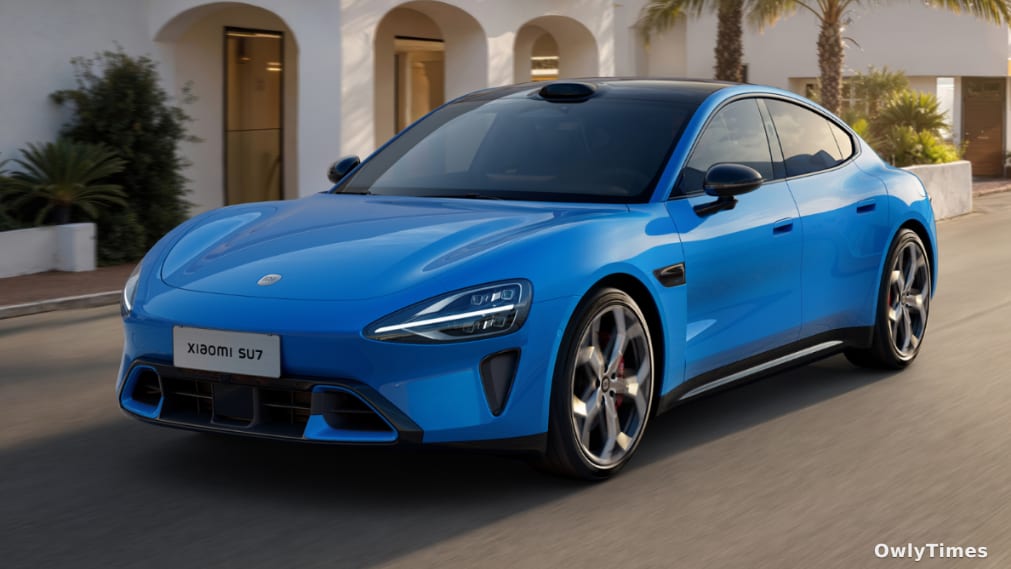
Yet, on March 24th, Xiaomi reported full-year 2025 results that defied this trend. Total revenue hit 457.3 billion yuan, a 25% year-over-year increase, and adjusted net profit soared 43.8% to 39.2 billion yuan. But the real story lies within its smart EV and AI-driven innovation segment. Revenue surged 223.8% to 106.1 billion yuan, and, crucially, the division achieved its first annual operating profit of 900 million yuan. This performance is particularly striking considering the company’s first model, the Xiaomi SU7, only launched in March 2024. The segment’s gross margin climbed to 24.3%, a 5.8 percentage point increase year-over-year – a figure that dwarfs competitors like BYD (17.6%) and Tesla (15.4%).
Reporting from autonews.gasgoo.com informs this analysis.
How did Xiaomi, a relative newcomer to the automotive world, achieve this level of profitability in a market where established players are struggling? The answer lies in a deliberate strategy focused on a premium product mix and relentless supply chain discipline. Unlike competitors prioritizing volume at lower price points, Xiaomi has strategically positioned itself in higher-value segments. The SU7 Ultra, priced at 529,900 yuan, and the YU7 SUV, starting at 253,500 yuan, have lifted the company’s average selling price above 260,000 yuan. This is a critical distinction: the margin from a single high-end vehicle can often exceed the combined margins from multiple entry-level models. Coupled with 411,082 vehicle deliveries – a number that helps dilute fixed costs – and the leveraging of existing supply chain efficiencies from its established smartphone business, Xiaomi has built a foundation for robust margins.
This isn’t simply luck; it’s a transfer of operational expertise. Xiaomi has effectively imported the cost control and efficiency principles honed over years in the consumer electronics industry into automotive manufacturing. This includes leveraging established supplier networks, rapidly scaling production, and maintaining tight cost controls – a formula that has yielded a distinctive cost advantage. The company’s gross profit margin of 25.5% in the third quarter of 2025, significantly outpacing peers, underscores this unusual resilience. This is a key differentiator, as the competitive landscape among China’s NEV startups – XPENG, NIO, Li Auto, and Xiaomi – has shifted, with all four achieving quarterly profitability, but along vastly different trajectories.
Xiaomi’s approach is markedly different. While Li Auto focused on precise product positioning and extended-range technology, and NIO prioritized premium services and user loyalty, Xiaomi has essentially transplanted the logic of consumer electronics into the automotive business. This means reshaping cost structures, using high-spec models as pricing anchors, and leveraging its smartphone-era supply chain expertise. The success of the SU7 – China’s best-selling sedan above 200,000 yuan in 2025 – and the YU7, which led the mid-to-large SUV segment for seven consecutive months, demonstrates the effectiveness of this strategy. The recent launch of the updated SU7 generated over 15,000 confirmed orders within 34 minutes, and surpassed 30,000 units within three days, further validating consumer demand.
However, Xiaomi’s automotive business is entering a more challenging operating environment in 2026. During the company’s earnings call, Lu Weibing cautioned that the reduction of purchase tax incentives by half will likely force automakers to offer their own consumer subsidies, potentially squeezing margins. He also acknowledged the intensely competitive nature of the Chinese EV sector, predicting that consolidation is unlikely in the near term. Consequently, Xiaomi doesn’t anticipate its automotive gross margin in 2026 to exceed 2025 levels. These comments highlight three key challenges: pricing pressure from subsidy rollbacks, intensifying competition in key segments (premium sedans and mid-to-large SUVs), and the need to balance investment in the capital-intensive auto business with softer performance in its traditional smartphone and IoT divisions.
What this means for your wallet: The success of Xiaomi – and whether it can sustain it – will directly impact the price and availability of EVs in China. If Xiaomi can maintain its profitability despite the headwinds, it could signal a shift towards more sustainable pricing models, preventing a further race to the bottom. However, if the company falters, expect increased price competition and potentially lower quality as automakers scramble to maintain market share. The key question for consumers and investors alike is this: can Xiaomi replicate its 2025 performance in 2026, or was it a fleeting moment of advantage in a rapidly evolving market? Watch closely for order flow, margin trends, and competitive responses in the coming quarters – the answers will reveal whether Xiaomi is a true disruptor or simply a temporary outlier.





