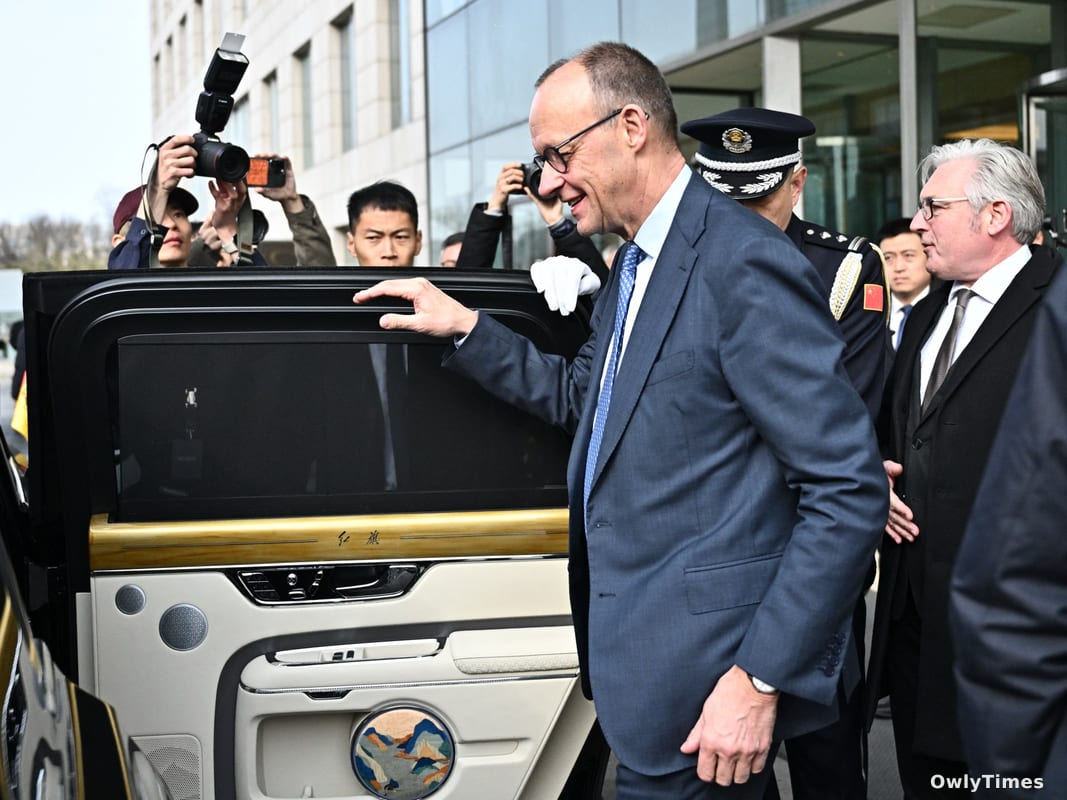

€89 Billion Deficit Drives German Pivot to China
A trade deficit of €89 billion – a figure 23% higher than the previous year’s €72.5 billion – is the quiet engine driving German Chancellor Friedrich Merz’s high-stakes visit to China. While framed as a strengthening of decades-old ties amidst disruption from US tariffs, the Chancellor’s trip to Hangzhou and Beijing is fundamentally about recalibrating a relationship increasingly tilted in China’s favor. The flurry of meetings with President Xi Jinping and commitments like the purchase of up to 120 Airbus aircraft aren’t simply gestures of goodwill; they’re attempts to secure tangible economic wins to offset a rapidly worsening trade imbalance. This isn’t merely a diplomatic mission, it’s a calculated response to a quantifiable economic pressure point.
This piece references the Al Jazeera report.
The Trump Effect and the Search for Alternatives
The timing of Merz’s visit is inextricably linked to the trade policies of the Trump administration. The imposition of tariffs, currently at 10% with potential increases to 15%, has demonstrably fractured established trade relationships, prompting a scramble for alternatives. The wave of Western leaders – including UK Prime Minister Keir Starmer, French President Emmanuel Macron, and Canadian PM Mark Carney – descending on Beijing in recent months isn’t coincidental. Each is assessing the viability of deepening economic engagement with China as a hedge against US protectionism. However, Germany’s situation is particularly acute. As China became Germany’s largest trading partner last year, the reliance on that partnership is significantly higher than for many other nations, making the impact of US tariffs and the need for a Chinese response more pressing.
Hangzhou: A Showcase for Strategic Investment
The choice of Hangzhou as a key destination is telling. The city isn’t just a tech hub housing giants like Alibaba and DeepSeek; it’s a deliberate signal of Germany’s interest in future-facing industries. Merz’s tour of companies like Siemens Energy and Unitree, a humanoid robot manufacturer, underscores a desire to move beyond traditional manufacturing and into higher-value sectors. This isn’t about simply selling more cars – though executives from Volkswagen, BMW, and Mercedes accompanied the Chancellor – it’s about securing access to the Chinese market for German technology and fostering collaborative innovation. The fact that Merz tested a self-driving vehicle at a Mercedes plant highlights this strategic focus. The implicit message is: Germany offers advanced technology, and China offers scale and market access.
Geopolitical Concerns and Limited Leverage
While economic concerns dominate the narrative, Merz’s discussions with Xi Jinping also touched on geopolitical hotspots – Ukraine and Taiwan. His appeal for China to leverage its influence with Russia to end the war in Ukraine, while framed as a plea for peace, reveals a limited hand. Europe’s frustration with China’s perceived neutrality is palpable, but Beijing holds few incentives to actively pressure Moscow. Similarly, Merz’s insistence that any “reunification” with Taiwan must be peaceful is a statement of principle, but carries limited weight given China’s unwavering stance on the issue. The joint statement released after the talks, emphasizing a ceasefire in Ukraine and fair competition, is diplomatic language that masks fundamental disagreements. The underlying tension is clear: Germany needs China economically, but has limited ability to influence its geopolitical decisions.
What This Means for Your Wallet
The implications of this diplomatic and economic recalibration are far-reaching. For German consumers, a continued reliance on the Chinese market could mean access to competitively priced goods, but also increased vulnerability to supply chain disruptions and geopolitical risks. More broadly, the shift towards China signals a potential weakening of transatlantic economic ties and a reshaping of global trade flows. Watch for a surge in German investment in Chinese tech companies, particularly in AI and robotics, over the next 18 months. The key question is whether Merz can translate these high-level meetings into concrete agreements that demonstrably reduce the €89 billion trade deficit – and whether those agreements come at the cost of further dependence on Beijing.