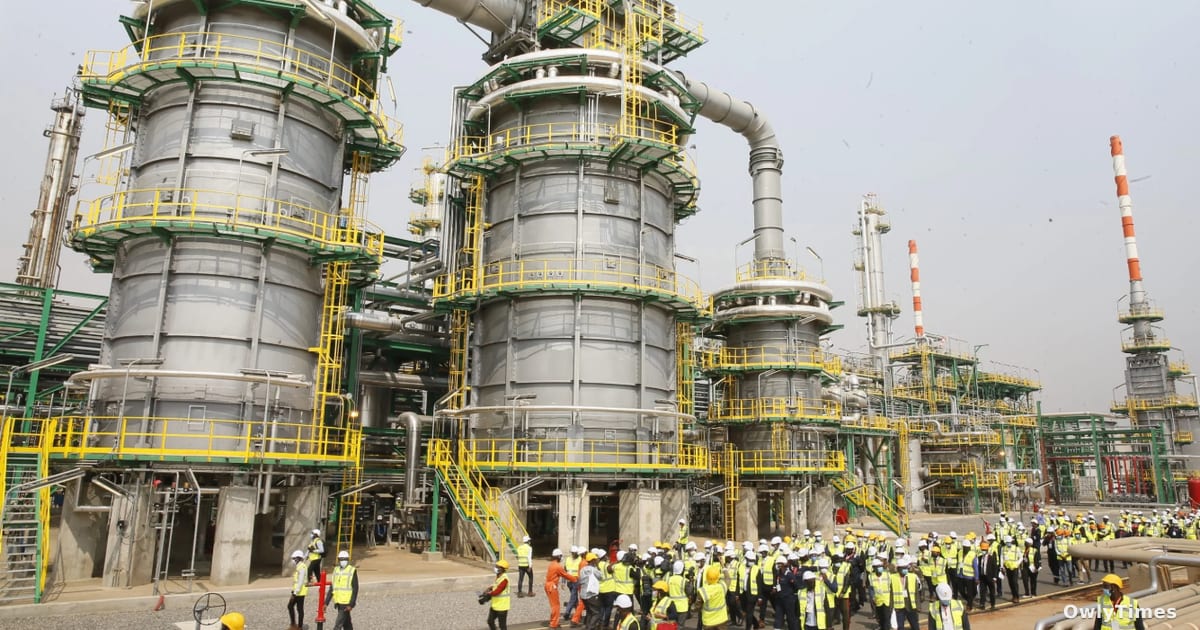

$66.1 Billion Tells the Story: China’s Grip on African Energy and What It Means for Global Power
$66.1 billion. That’s the sum China has invested in Africa’s energy sector between 2000 and 2024, a figure that doesn’t simply represent capital flow – it signifies a fundamental shift in the continent’s energy landscape and a calculated expansion of Beijing’s geopolitical influence. While Western nations debate the merits of “green” financing and governance conditions, China has consistently deployed capital into large-scale projects, from oil and gas infrastructure to hydroelectric dams, establishing itself as the dominant external financier and, crucially, the partner of choice for many African nations prioritizing rapid development. This isn’t charity; it’s a strategic play for resource access and market share, and the numbers reveal a clear pattern of cause and effect.
Original reporting: africa.businessinsider.com.
Angola’s Oil-Backed Ascent and the Uneven Distribution of Funds
The concentration of Chinese energy financing is striking. Angola alone has received $27.3 billion in 41 loans, more than six times the amount secured by the next highest recipient, South Africa at $4.5 billion. This disparity isn’t accidental. Angola’s loans are overwhelmingly tied to oil production and refinery infrastructure, frequently structured as oil-backed financing deals – China provides capital, and Angola repays through future crude oil deliveries. This model, while efficient for China in securing a stable energy supply, creates a dependency loop for Angola and raises questions about debt sustainability. The sheer scale of investment in Angola, compared to other nations, demonstrates a prioritization of securing direct access to resources over broader, more evenly distributed development.
Beyond Fossil Fuels: China’s Diversified Energy Portfolio in Africa
While often characterized as a funder of fossil fuels, China’s $66.1 billion investment isn’t monolithic. Ethiopia has secured $3.4 billion in loans for hydroelectric dams, aiming to become a regional energy exporter, while Zambia’s $3.1 billion in financing focuses on hydropower critical for its mining operations. Uganda’s $2.6 billion is linked to both oil development and electricity expansion, signaling a pragmatic approach to meeting diverse energy needs. This diversification, however, is still weighted towards infrastructure supporting resource extraction. The overall $180.9 billion in total Chinese loans to Africa since 2000 – encompassing infrastructure, mining, transport, and power – underscores that energy financing is a key component of a larger strategy to control the supply chain, from raw materials to finished goods.
The West’s Retreat and Russia’s Niche: A Competitive Landscape
The rise of Chinese financing in Africa hasn’t occurred in a vacuum. Western institutions like the World Bank and European lenders have increasingly emphasized renewable energy and governance-linked financing, often imposing stricter conditions on loan disbursement. This has created an opening for China, willing to fund projects Western institutions deem too risky or politically sensitive. Russia, meanwhile, has carved out a niche focusing on nuclear energy partnerships and upstream oil and gas development, offering an alternative strategic partner. This competitive dynamic is intensifying, turning Africa’s energy sector into a key geopolitical battleground. The contrast is stark: China offers speed and scale, while the West prioritizes sustainability and accountability – a trade-off African nations are actively navigating.
The Debt Question and the Future of African Energy Independence
The long-term implications of this financing model are complex. While Chinese loans have undoubtedly fueled infrastructure development and economic growth, they’ve also contributed to rising debt levels in several African countries. Angola, for example, faces significant debt obligations tied to its oil-backed loans, potentially limiting its future policy options. The question isn’t simply whether Africa needs energy infrastructure, but on what terms it receives it. The concentration of financing in a few key countries – Angola, South Africa, Sudan, Ethiopia, and Zambia account for over half of the total – also raises concerns about regional imbalances and potential geopolitical leverage.
What this means for your wallet: Expect continued volatility in global energy prices as Africa’s energy production increases, but under the significant influence of Chinese investment. Watch closely for renegotiations of loan terms, particularly in oil-producing nations, and whether African governments can leverage their energy resources to negotiate more favorable deals – or if they become increasingly reliant on Beijing’s terms. The next five years will reveal whether this influx of capital translates into genuine energy independence for African nations or a new form of economic dependency.




