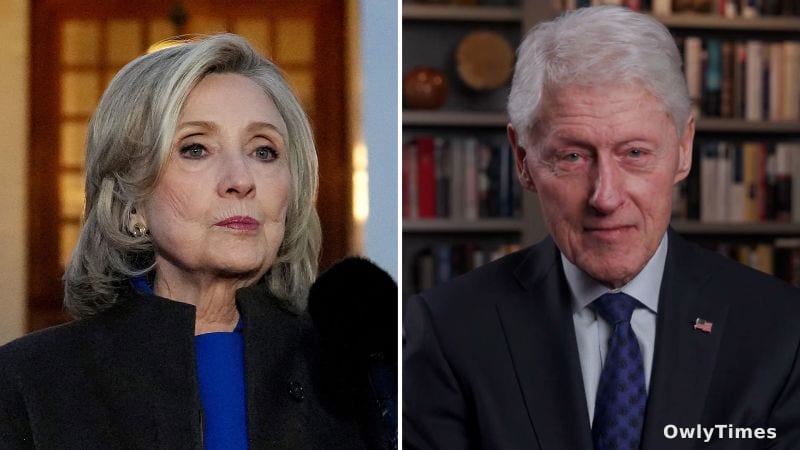

The release of depositions from Bill and Hillary Clinton regarding their ties to Jeffrey Epstein wasn’t about uncovering new facts; it was a calculated power play by House Republicans to demonstrate control of the investigative narrative and force a public reckoning, however limited, with a politically damaging association. The strategic calculus is clear: keep the Epstein story alive, not necessarily to indict the Clintons, but to weaponize the scandal against a prominent Democratic couple and, by extension, the Biden administration. The depositions themselves, while yielding some notable exchanges, largely served as a stage for pre-existing accusations and partisan grandstanding, a dynamic that reveals more about the current state of congressional politics than about Epstein’s crimes themselves.
The immediate outcome is a clear delineation of winners and losers. House Republicans, particularly those aligned with the more conservative wing, benefit from appearing to aggressively pursue accountability, fulfilling a promise to their base. Lauren Boebert and Nancy Mace, despite drawing criticism for their lines of questioning, elevated their profiles through nationally televised moments. Conversely, the Clintons, while avoiding contempt of Congress, endured a public airing of uncomfortable details and were forced to defend their past associations. The broader Democratic party loses ground by being forced to address the issue, and the narrative control shifts, however slightly, to the right. The media, predictably, amplifies the spectacle, further cementing the association in the public consciousness.
Original reporting: CNN.
This tactic of leveraging scandal for political gain is hardly novel. The late 19th and early 20th centuries were rife with congressional investigations designed to smear political opponents, often relying on innuendo and unsubstantiated claims. The Teapot Dome scandal of the 1920s, for example, wasn’t solely about corruption within the Harding administration; it was a tool used by Democrats to discredit the Republican party. Similarly, the Army-McCarthy hearings of the 1950s, ostensibly about communist infiltration, were fundamentally about Joseph McCarthy’s ambition and his attempts to consolidate power through fear and accusation. The current situation echoes these historical precedents, demonstrating a consistent pattern of using investigations as instruments of political warfare.
Bill Clinton’s calm, if visibly strained, demeanor and denials regarding his “brief acquaintance” with Epstein stand in stark contrast to Hillary Clinton’s more combative responses. His insistence that he didn’t recall specific encounters, despite documented evidence of 17 White House visits by Epstein, raises questions about the limits of his memory or the strategic value of appearing oblivious. The exchange regarding the hot tub photo, where he claimed to have sat for “five minutes or whatever it was,” feels deliberately dismissive, a tactic designed to minimize the appearance of impropriety. This contrasts sharply with Hillary Clinton’s fury when confronted with questions about her husband’s behavior and the sharing of a photo of her during the deposition – a breach of House rules that she rightly condemned, even as it underscored her defensiveness.
The most revealing moment, however, wasn’t a specific denial or accusation, but Hillary Clinton’s outburst over the leaked photo. Her frustration wasn’t simply about the violation of House rules; it was about the loss of control over the narrative. The Clintons initially resisted a public deposition, fearing precisely this kind of ambush. Her demand for a public hearing, framed as a desire for transparency, was, in reality, a plea to regain control of the message. This highlights a fundamental tension: the desire for accountability versus the strategic imperative to manage public perception. The fact that Lauren Boebert was the source of the leak further complicates the dynamic, adding a layer of personal animosity and partisan rivalry.
The GOP’s focus on the “Pizzagate” conspiracy theory, resurrected by Boebert, is particularly telling. It’s not about genuine investigation; it’s about signaling to a specific segment of the electorate – those who believe in fringe theories and distrust mainstream institutions – that Republicans are willing to entertain even the most outlandish claims. This tactic, while alienating to moderate voters, serves to solidify support among the party’s base. The fact that Hillary Clinton felt compelled to directly address and debunk the conspiracy theory underscores its enduring power and the challenges of combating disinformation.
The next political chess move to watch is not further depositions of the Clintons, but the Republican strategy regarding Donald Trump’s own documented connections to Epstein. Bill Clinton’s recollection of a conversation with Trump about a falling-out over a real estate deal provides an opening for further inquiry. Will Republicans pursue this line of questioning with the same vigor they applied to the Clintons, or will they selectively apply scrutiny based on political expediency? The answer to that question will reveal the true intent behind this entire investigation: genuine accountability, or simply a partisan weapon.





