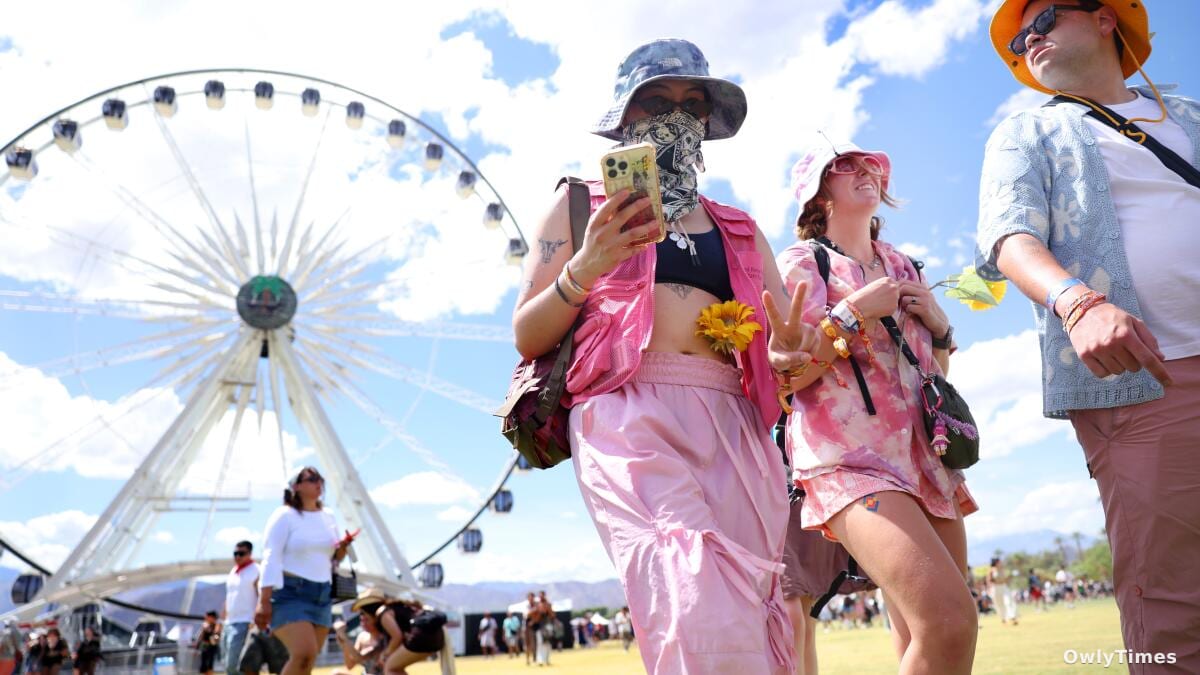

The desert heat of Indio, California, does more than just shimmer over the horizon at Coachella; it intensifies a pressure cooker of financial decision-making that has little to do with the music and everything to do with the modern cost of cultural belonging. As the sun beats down on the 125,000 attendees expected each day, the festival has evolved into a high-stakes arena where the price of admission often demands more than just a savings account—it requires a tactical, almost professionalized approach to personal finance.
The Resale Reality Check
While general admission passes for the 2026 edition of the festival initially retailed at $649 and $549, those figures are merely entry-level benchmarks for a lucky few. For the majority who missed the initial window, the market transformed into a volatile stock exchange. In the frantic days leading up to Weekend 1, resale prices on Stubhub soared to between $4,000 and $5,000 for a single general admission pass.
This volatility has birthed a class of "thrift store" veterans like Khai Edwards, a 35-year-old bartender who has attended the festival for two decades. Edwards views the hyper-inflated market with a cynical eye, noting that for those willing to wait until the last possible moment, the market often corrects itself. As people drop out due to life shifts—a new job, a pregnancy, or an illness—the secondary market sees a influx of supply, driving down prices that were previously marked up to astronomical levels.
A Mirage of Accessibility
The financial hurdle isn't limited to the wristband. Once inside the gates, the "hidden" costs mount rapidly: shuttle passes range from $130 to $180, on-site camping adds $150 to $400+, and service fees tack on another $50 to $100. For those seeking refuge outside the festival grounds, the local economy exerts its own pressure. During the second weekend, Indio Airbnb listings hit an average of $1,200 a night—a staggering 109% premium over standard rates.
This creates a stark divide between the "influencer" archetype and the reality of the average attendee. With more than 60% of general admission ticketholders now relying on payment plans to manage the costs, the festival has become a testament to the "buy now, pay later" culture that defines modern middle-class consumption. For nurses like Daphne Okoreeh and Vanessa St. Clair, the financial commitment—reaching upwards of $6,000 for St. Clair—is a deliberate choice to prioritize a "once in a lifetime" experience, even if it forces them to weigh the cost against a trip to Europe.
The "Very Important Pooper" Economy
The hierarchy of the festival is explicitly codified in the VIP experience, though its utility is often debated by those who pay for it. Tara Dactyl-Fox, a 48-year-old teacher who has attended 26 times, jokingly refers to her VIP access as the "Very Important Pooper" pass, citing the bathroom facilities as the primary draw. Despite having free access for life after winning the 2008 Carpoolchella contest, Dactyl-Fox remains a realist about the industry, noting that the magic of the festival has changed significantly since her first experience in 2001, when a single-day ticket cost just $150.
Her perspective highlights the shifting soul of the event: the transition from an indie music gathering to a global megafest where the logistics often outweigh the spontaneous joy of discovery. Yet, for thousands, the "mecca" remains worth the financial gymnastics. Whether it is through rigorous budgeting or the serendipity of buying a ticket from a friend on a PlayStation network, attendees are finding ways to bypass the corporate price tags.
As the festival continues to set records for sell-out speeds, the industry will be watching the next reading of the payment plan utilization rate, which serves as a definitive metric for whether the middle-class fan base can continue to sustain these rising costs. For now, the desert remains a place where fans are willing to work extra shifts and cut back on dining out, all to ensure they are present for the next headliner’s set.