
Is the ocean’s capacity to absorb our mistakes truly limitless? We’re quick to celebrate technological advancements, but rarely confront the long-term consequences of what we leave behind – especially when it involves nuclear materials. The recent report on the Soviet submarine K-278 Komsomolets, sunk in the Norwegian Sea since 1989, isn’t a story about imminent disaster, but about a slow, creeping uncertainty that should give anyone relying on “out of sight, out of mind” solutions pause. The real story here isn't the leak itself – it’s the unsettling realization that we’re conducting a decades-long, real-world experiment in deep-sea radioactive decay with unknown ecological ramifications.
A Cold War Relic’s Ongoing Decay
The Komsomolets tragedy, which claimed the lives of 42 sailors, wasn’t just a loss of life; it was the creation of a submerged, radioactive time bomb. The submarine went down carrying a nuclear reactor and two nuclear torpedoes, a chilling combination even by Cold War standards. While initial fears focused on a catastrophic release of plutonium from the torpedoes – thankfully averted by successful sealing efforts in 1994 – the reactor itself has been steadily degrading for over 30 years. Justin Gwynn of the Fram Centre’s Norwegian Radiation and Nuclear Safety Authority led a comprehensive survey using the remotely operated vehicle (ROV) Ægir 6000 in 2019, the results of which were published in PNAS in 2026. The data confirms what intermittent monitoring had suggested: the reactor is leaking.
Source material: ScienceAlert.
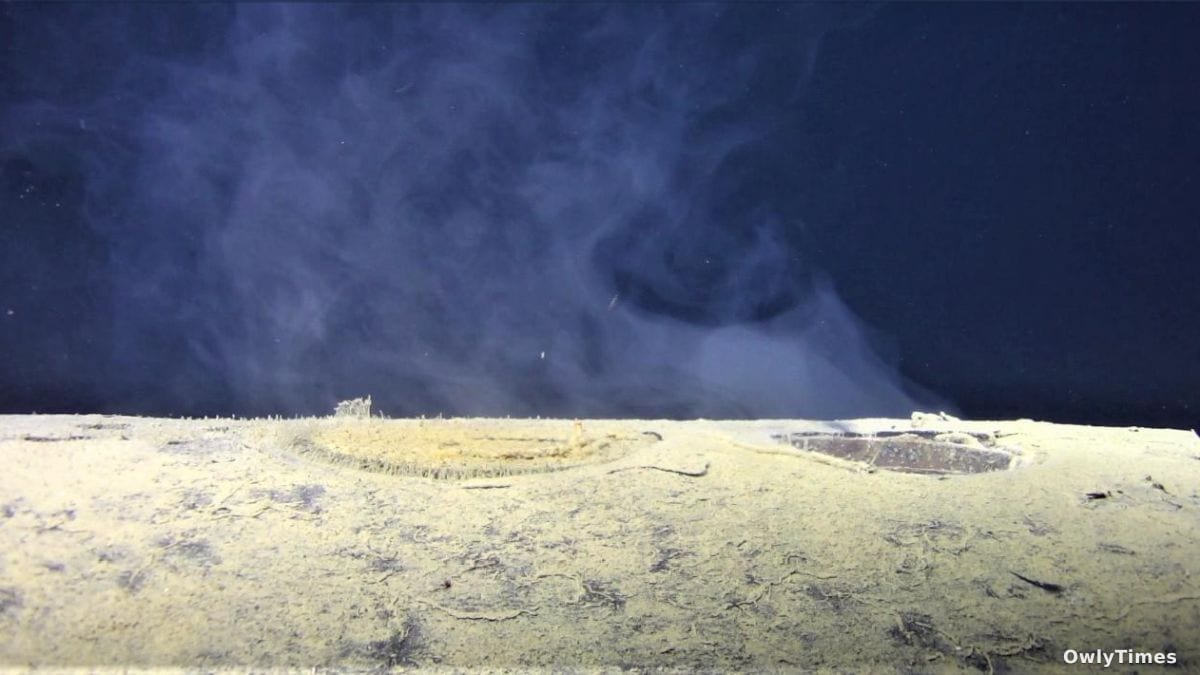
The leak isn’t a sudden gush, but a series of sporadic bursts from points along the hull, including a ventilation pipe and around the reactor compartment itself. The ROV even captured video of visible plumes of radioactive material seeping into the frigid waters 1,680 meters (5,510 feet) below the surface. Near the wreck, levels of strontium and cesium are a staggering 400,000 and 800,000 times higher than typical levels in the Norwegian Sea. That’s not a statistic to casually dismiss. It’s a stark illustration of concentrated contamination, even if the immediate surrounding environment appears to be mitigating the spread.
Dilution Isn’t a Solution, It’s a Delay
What’s particularly striking is the rapid dilution of these radionuclides as you move just a few meters away from the Komsomolets. The researchers found that the released material disperses quickly in the surrounding seawater, preventing significant accumulation in the immediate vicinity. This has led to a somewhat optimistic interpretation – that the environmental impact has been minimal so far. But this isn’t a cause for celebration; it’s a temporary reprieve. Dilution isn’t a solution, it’s a postponement of the problem.
We’re essentially relying on the vastness of the ocean to absorb the fallout, a strategy that ignores the potential for bioaccumulation in the food chain and the long-term effects on deep-sea ecosystems we barely understand. The samples taken from sponges, corals, and anemones growing on the wreck showed slightly elevated levels of cesium, but no obvious signs of damage. But these are hardy organisms, and the effects of chronic, low-level radiation exposure can be subtle and take generations to manifest. We’re talking about an environment where life moves slowly, and evolutionary responses are measured in centuries, not years.
The Arctic’s Growing Nuclear Shadow
The Komsomolets isn’t an isolated incident. The Arctic is becoming a focal point for nuclear risks, both historical and emerging. The Soviet Union routinely dumped nuclear waste in the Arctic Ocean during the Cold War, and as climate change melts the ice, these submerged hazards are becoming more accessible – and potentially more destabilized. The ongoing war in Ukraine has also raised concerns about the safety of nuclear facilities in the region. Gwynn and his team rightly point out that the Komsomolets wreck provides a “unique opportunity” to study the risks associated with sunken reactors, informing our response to potential future accidents.
But “opportunity” feels like a euphemism when the stakes are this high. We’re learning about the consequences of nuclear decay by observing it firsthand, in one of the most fragile and least understood ecosystems on the planet. This isn’t responsible risk management; it’s a gamble with potentially catastrophic consequences. The fact that the 1994 repairs to the torpedo compartment are still holding is a small victory, but it doesn’t negate the larger, looming threat.
What happens when the hull of the Komsomolets finally gives way completely? The current monitoring regime is robust, but it’s reactive. We need to shift towards proactive strategies – developing technologies for remote remediation and investing in a deeper understanding of deep-sea ecosystems before another nuclear incident occurs. Watch for increased international collaboration in Arctic monitoring, and a growing debate about the ethics of relying on the ocean as a radioactive waste repository. The silence of the deep sea is not consent.