
Beyond the Headlines: How a Cold War Relic is Guiding Artemis II Back to the Moon
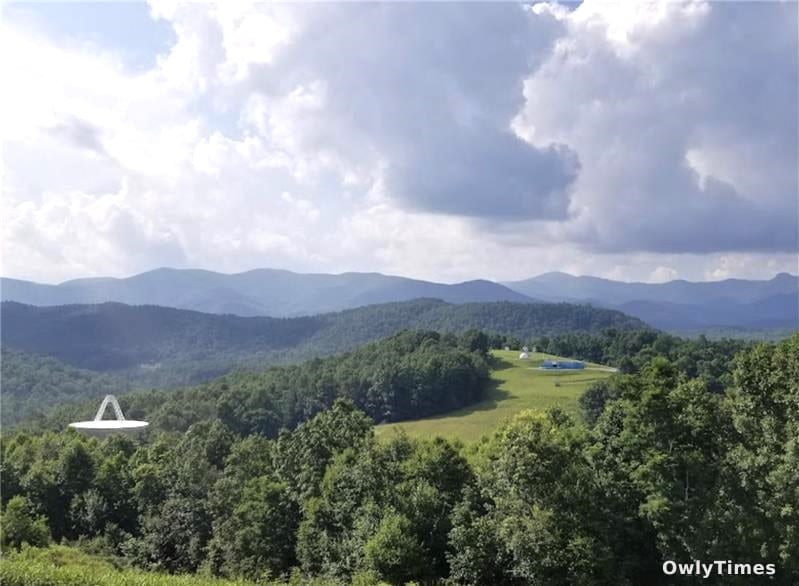
The upcoming Artemis II mission, slated to launch from Kennedy Space Center at 6:24 p.m. EDT on Wednesday, is being framed as a triumphant return to crewed lunar exploration. While the spectacle of a new generation spacecraft orbiting the moon is undeniably captivating, a less-publicized element of the mission reveals a quiet resurgence of infrastructure with a surprisingly complex history: the Pisgah Astronomical Research Institute (PARI) in Rosman, North Carolina. It’s not simply that PARI is helping track the Orion spacecraft – it’s that the very ground beneath its 26-meter radio telescopes holds layers of Cold War secrecy and a testament to citizen-led scientific preservation. The story isn’t just about NASA’s return to the moon, but about repurposing existing resources, and the critical, often unseen, role of ground-based tracking in the age of increasingly congested space.
Source material: bpr.org.
PARI’s involvement stems from a selection process that identified 34 organizations globally capable of supporting the Artemis II mission. But to understand the significance of this selection, one must rewind to 1962, when NASA first activated the Rosman Satellite Tracking Station. This facility was integral to the Apollo program, a period of intense national investment in space exploration. However, in 1981, the site’s function dramatically shifted as the National Security Agency took control, transforming it into a highly classified intelligence-gathering operation. The station remained shrouded in secrecy until its closure in 1995, at which point it faced imminent demolition. This isn’t a narrative of seamless progress; it’s a story of a facility repeatedly redefined by shifting national priorities, nearly lost to bureaucratic neglect.
The rescue of the site by a Greensboro couple, and their subsequent establishment of PARI as a non-profit dedicated to science research and education, is a crucial detail often absent from initial reports. Timothy DeLisle, PARI’s director of software engineering and head of education, emphasizes the personal resonance of NASA’s return: “This site being involved with this kind of work again after so many years is really exciting. It kind of brings us back to our roots.” But the “roots” aren’t simply a nostalgic connection to the Apollo era. They represent a unique confluence of public and private investment, and a commitment to maintaining a vital, if aging, piece of scientific infrastructure. The Artemis II mission isn’t just using PARI; it’s validating the decades of work to preserve and modernize a facility that could easily have been lost.
The technical contribution PARI will make centers on precise tracking of the Orion spacecraft using the Doppler shift of radio waves. As DeLisle explained to Blue Ridge Public Radio, accurately monitoring the spacecraft’s trajectory is paramount. This isn’t a passive observation; PARI staff will work in rotating shifts, making real-time adjustments to the 60-year-old telescopes. The fact that these instruments are “a little cranky,” as DeLisle puts it, underscores the challenge. It’s a testament to the dedication of PARI’s engineers that they can continue to extract meaningful data from equipment designed decades ago. This also highlights a growing concern: the increasing demand on existing ground infrastructure. DeLisle points to a rapidly growing number of spacecraft in orbit exceeding the current capacity of ground stations, suggesting PARI’s success with Artemis II could unlock further opportunities for the facility.
However, it’s important to consider the limitations of this single mission. While PARI’s participation demonstrates the viability of repurposing existing infrastructure, it doesn’t address the broader systemic issues of funding and modernization for space tracking networks. The Artemis II mission is a high-profile event, attracting significant resources. Sustaining PARI’s role beyond this mission will require ongoing investment and a clear articulation of its value proposition to NASA and other potential partners. Furthermore, the data collected by PARI will be integrated into a larger network of tracking stations; its contribution, while vital, is one piece of a complex puzzle. The success of Artemis II doesn’t automatically guarantee a long-term future for PARI, but it does provide a crucial opportunity to demonstrate its capabilities and advocate for continued support.
Looking ahead, the question isn’t simply whether PARI will be involved in future missions, but whether the model of citizen-led scientific preservation can be replicated elsewhere. As the space economy expands, and the number of satellites in orbit continues to grow, the demand for ground-based tracking will only increase. Will we prioritize investing in new infrastructure, or will we seek to revitalize and repurpose existing facilities like PARI? The Astronomy Club of Asheville’s public talk with DeLisle on April 2nd offers a valuable opportunity to engage with these questions, and to understand how a small facility in the Pisgah National Forest is playing a critical role in humanity’s return to the moon – and beyond.