
Beyond the Headlines: How a Cold War Relic is Guiding Artemis II Back to the Moon
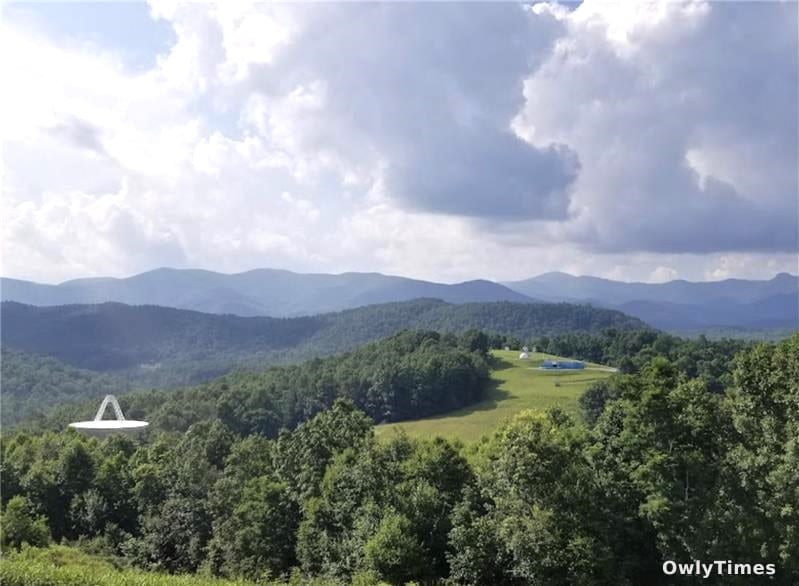
The upcoming Artemis II mission, slated to launch from Kennedy Space Center at 6:24 p.m. EDT on Wednesday, is being framed as a triumphant return to crewed lunar exploration. While the spectacle of human spaceflight understandably dominates public attention, a less visible, yet equally crucial, component of the mission is unfolding in the Pisgah National Forest of North Carolina. There, the Pisgah Astronomical Research Institute (PARI) – a facility with a surprisingly complex history – is poised to play a vital role in ensuring the Orion spacecraft reaches its destination safely. This isn’t simply a story of NASA reactivating an old facility; it’s a demonstration of how existing, often overlooked infrastructure can be leveraged to address the growing demands of a rapidly expanding space environment, and a testament to the power of community-led preservation.
See the original wunc.org story for the full account.
The narrative often presented focuses on the technological marvel of the Space Launch System rocket and the courage of the four astronauts. However, successful space travel isn’t solely about powerful rockets; it’s about precise navigation and constant monitoring. NASA has selected PARI as one of 34 global organizations to track the Orion spacecraft, utilizing its 26-meter radio telescopes to monitor the mission’s trajectory. This tracking relies on a principle called the Doppler shift – measuring changes in the frequency of radio waves to determine the spacecraft’s speed and position. As Timothy DeLisle, PARI’s director of software engineering and head of education, explained in an interview with Blue Ridge Public Radio, “One of the really important things when you’re sending a spacecraft somewhere is to make sure it’s moving the way you want it to move.” This seemingly simple statement underscores a fundamental truth: even the most sophisticated spacecraft requires constant, ground-based verification.
The significance of PARI’s involvement extends beyond its technical capabilities. The site’s history is a fascinating blend of Cold War urgency, scientific ambition, and local preservation efforts. Originally constructed in 1962 as the Rosman Satellite Tracking Station, it supported the Apollo program and other early space missions. In 1981, the National Security Agency took control, transforming it into a highly classified intelligence gathering facility. Abandoned in 1995, the station faced demolition until a local couple purchased the property, establishing PARI as a non-profit dedicated to science research and education. This transition – from top-secret military installation to public science resource – is a remarkable story in itself. It highlights the potential for repurposing existing infrastructure, rather than constantly building anew, a strategy increasingly relevant as space activity intensifies.
This Artemis II mission isn’t just a symbolic return for NASA; it’s a practical demonstration of PARI’s capabilities. DeLisle notes a critical imbalance: “There’s more stuff out there that needs to be communicated with than there are currently ground stations to do the work.” The proliferation of satellites, both governmental and commercial, is straining existing tracking networks. PARI’s participation in Artemis II serves as a proving ground, a chance to demonstrate its value and potentially secure a larger role in future missions. The facility’s aging infrastructure – the telescopes are 60 years old – presents ongoing challenges, requiring constant maintenance and real-time adjustments during operations, as staff will be working in rotating shifts throughout the mission.
Beyond its contributions to space exploration, PARI functions as a unique educational resource for Western North Carolina, hosting summer camps, stargazing nights, and school field trips. The campus boasts exhibits including NASA Space Shuttle artifacts and a collection of historical astronomical glass plate negatives. This dual function – cutting-edge research alongside public outreach – is central to PARI’s mission. The organization isn’t simply tracking spacecraft; it’s fostering a new generation of scientists and space enthusiasts. As the number of objects in orbit continues to grow, and the complexities of space traffic management increase, the need for facilities like PARI – capable of both technical expertise and public engagement – will only become more acute. The question now is whether this successful demonstration with Artemis II will translate into sustained investment and a broader role for PARI in the future of space exploration, and whether other similarly underutilized facilities can be brought back online to meet the growing demands of our increasingly space-dependent world.