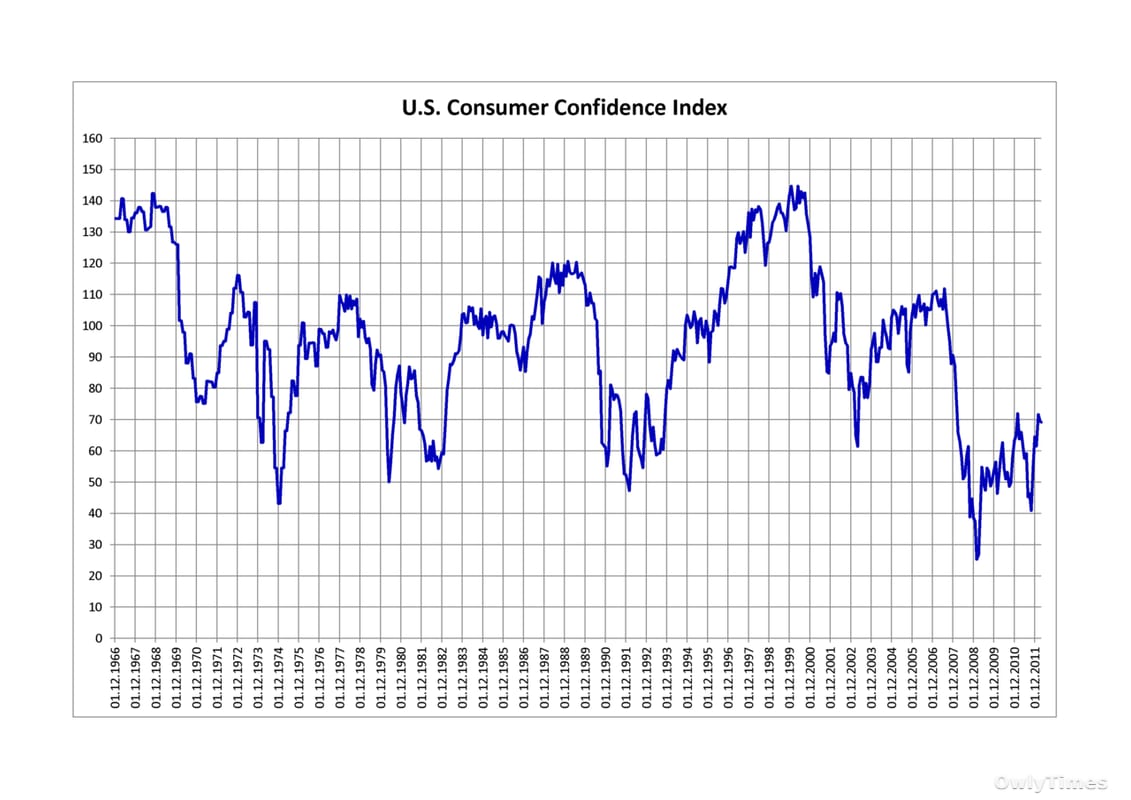

The chipped Formica of the diner booth felt cold under my elbows as I scrolled through the headlines. Another dip in consumer confidence. Another day where the price at the pump seemed to mock the promises of a stable economy. It wasn’t the numbers themselves – a final March reading of 55.3, the lowest of the year for the University of Michigan survey – but the feeling behind them that hung heavy in the air. This wasn’t just about spreadsheets and GDP; it was about the quiet anxieties creeping into kitchen table conversations across the country, fueled by the escalating conflict with Iran and the specter of rising inflation. The market reacted predictably, but the real story isn’t the immediate sell-off, it’s what this plummeting confidence reveals about a fundamental fracture in the American economic psyche.
The Weight of Uncertainty: Beyond the Numbers
The 55.3 reading isn’t an isolated data point. It’s a stark reversal from the tentative optimism of earlier in the year, and a significant drop considering consumer sentiment averaged 69.4 throughout 2023. What’s particularly unsettling is who is losing faith. The University of Michigan report specifically noted that pessimism was “particularly pronounced among middle and higher-income households,” a demographic typically considered more insulated from economic shocks. This suggests the war in Iran isn’t just impacting those directly affected by geopolitical instability, but is triggering a broader sense of unease about the future, even among those who previously felt secure. Consumers are now anticipating an average inflation rate of 3.8% over the next 12 months, a surge that underscores the fear that recent price stability is illusory. This isn’t simply about gas prices, though spiking energy costs are certainly a major contributor; it’s about a loss of control, a feeling that forces beyond individual agency are dictating financial well-being.
Drawn from stockstory.org.
Travel Troubles: Airlines and the Confidence Crisis
The immediate impact was visible in the stock market, with companies reliant on discretionary spending taking a hit. American Airlines (NASDAQ:AAL) fell 4.4%, Viking (NYSE:VIK) dropped 4.4%, and MGM Resorts (NYSE:MGM) saw a 3.6% decline. These aren’t isolated incidents. American Airlines, for example, has experienced 25 moves of greater than 5% in the last year, a testament to its volatility and sensitivity to global events. The previous significant drop, just 15 days prior, was also triggered by the war with Iran, pushing oil prices back above $100 a barrel. The correlation is undeniable: geopolitical instability equals economic anxiety, and economic anxiety equals a pullback in travel and leisure spending. But framing this as simply a “buying opportunity,” as some analysts suggest, feels tone-deaf. It ignores the very real anxieties driving the market downturn.
The numbers paint a grim picture for long-term investors. American Airlines is down 33.4% since the beginning of the year, trading 36.6% below its 52-week high. An investment of $1,000 five years ago would now be worth just $450.24. While volatility can create opportunities, it also highlights the inherent risks in a sector so heavily reliant on consumer confidence and global stability. The question isn’t just “is now the time to buy American Airlines?” but whether the underlying conditions that have eroded investor confidence are likely to improve in the near future.
The Search for Alternatives: A Shift in Investor Focus
Interestingly, while established tech giants like Amazon, Google, and Meta are mentioned as examples of companies that dominated ignored markets, the article pivots to promoting three “hidden platforms” growing at a faster rate. This feels less like insightful analysis and more like a blatant attempt to capitalize on the fear and uncertainty. It speaks to a broader trend: a growing distrust in traditional investment vehicles and a desperate search for the “next big thing.” Investors, rattled by market volatility and geopolitical instability, are increasingly drawn to alternative platforms promising outsized returns, even if those platforms lack the established track record of established companies. This isn’t necessarily irrational – diversification is a sound investment strategy – but it underscores the level of anxiety driving investment decisions.
Beyond the Dip: A New Era of Economic Anxiety?
This isn’t just a market correction; it’s a symptom of a deeper malaise. The decline in consumer sentiment, coupled with surging inflation expectations, suggests we may be entering a new era of sustained economic anxiety. The war with Iran is a catalyst, but the underlying vulnerabilities – stagnant wages, rising healthcare costs, and a widening wealth gap – were already present. The question now is whether policymakers can address these systemic issues before the erosion of consumer confidence leads to a self-fulfilling prophecy of economic slowdown. Will the Federal Reserve prioritize controlling inflation, even at the risk of triggering a recession? Will Congress enact policies to address income inequality and provide economic security for working families? The immediate fate of stocks like Frontdoor (NASDAQ:FTDR) and Caesars Entertainment (NASDAQ:CZR) – which also saw declines of 4.1% and 3.8% respectively – is less important than the broader trajectory of the American economy. We need to watch not just the stock ticker, but the kitchen table, and see if confidence can be rebuilt before it’s too late.