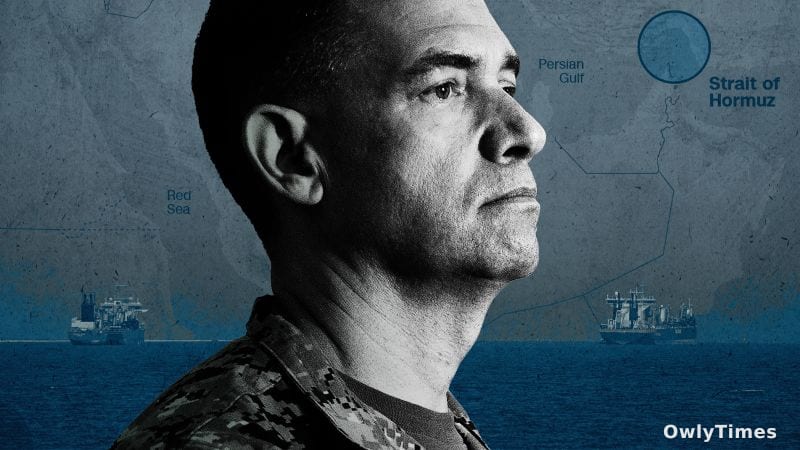

The calculus behind the current US military campaign against Iran wasn’t born in the White House Situation Room, but in the Red Sea two years ago. While headlines focus on escalating tensions and retaliatory strikes, the strategic impetus for this conflict traces back to a seemingly contained crisis of maritime security – and the assessment of one naval officer, Brad Cooper. The summer of 2024 saw Houthi rebels disrupting global shipping, sinking two vessels and killing crew members despite US and UK intervention. This wasn’t simply a regional issue; it was a stress test of US power projection and a harbinger of the broader confrontation now unfolding. The initial failure to deter the Houthis, and the subsequent need for a comprehensive response, laid the groundwork for Cooper’s ascent to leading the joint US-Israeli war effort, and ultimately, the execution of long-planned military options against Iran.
Cooper’s trajectory – from assessing the Red Sea threat firsthand to briefing Donald Trump on military options – reveals a pattern of strategic positioning. In August 2024, as Vice Adm. and Deputy Commander of US Central Command, Cooper proactively immersed himself in the crisis, sailing with the crews facing Houthi attacks, a move described by Dan Shapiro, a former Defense Department official, as demonstrating an understanding of “the connection between the real-time details on the ground and the strategy.” This wasn’t merely about gathering intelligence; it was about establishing credibility and ownership of the problem. Who benefits and who loses from this approach? Cooper gains influence, the Pentagon gains a commander with intimate knowledge of the region, and the Navy gains a champion for its priorities. The potential loser is bureaucratic inertia – a commander who demands direct experience challenges established reporting structures. This echoes the approach of previous CENTCOM commanders like Norman Schwarzkopf and David Petraeus, who prioritized battlefield immersion, but with a crucial difference: Cooper’s early focus on maritime security foreshadowed the current conflict’s reliance on controlling key waterways.
The appointment of Cooper as head of CENTCOM in August 2025, two months after strikes on Iran’s nuclear facilities, wasn’t accidental. He is the second Navy admiral to lead the command, signaling a shift in emphasis towards naval power and control of sea lanes. This is a direct response to the lessons learned in the Red Sea, where the vulnerability of global trade was starkly exposed. The stakes have escalated dramatically: thirteen American service members killed, 140 wounded, and the closure of the Strait of Hormuz, roiling global markets. Yet, the underlying strategic logic remains consistent – securing freedom of navigation and deterring Iranian aggression. Cooper’s deep ties to Israel, cultivated during his tenure as commander of the Navy’s Fifth Fleet, are also critical. A current Israeli military official notes that Cooper visited Israel so frequently he knew many Israeli colonels by name, fostering a level of trust and coordination rarely seen between the two militaries. This pre-existing relationship proved invaluable in the rapid joint response to Iran’s April 2024 missile and drone attacks.
See the original CNN story for the full account.
However, the current operation is not without contradictions. While CENTCOM releases videos showcasing strikes on Iranian targets, like those on Kharg Island, bipartisan lawmakers are demanding answers regarding the strike on an Iranian girls’ school that resulted in 168 civilian deaths. This dissonance highlights the inherent challenges of waging war while minimizing collateral damage, and the political fallout from unavoidable tragedies. Cooper’s leadership style, described as more politically attuned than his predecessor, retired Army Gen. Michael “Erik” Kurilla, is also noteworthy. While Kurilla was a “brilliant operator” with a commanding presence, Cooper is characterized as a “politician” who excels at building relationships and navigating the corridors of power in Washington. This shift in personality reflects a recognition that a successful military campaign requires not only battlefield prowess but also skillful political management. The increased political messaging from CENTCOM, with frequent references to Trump and echoing the language of Defense Secretary Pete Hegseth, underscores this emphasis on political alignment.
The question now is not whether Cooper can deliver a “decisive battlefield victory” – a goal that increasingly appears elusive – but whether he can manage the escalation and maintain a semblance of control until a political resolution is reached. His ability to navigate the complex interplay between military objectives, political constraints, and allied interests will be crucial. Cooper’s past experience, particularly his role in securing veteran’s jobs under the Obama administration and his legislative affairs work, suggests a capacity for political maneuvering. But the current situation is far more volatile and fraught with risk. The political chess move to watch next isn’t a military operation, but Cooper’s next interaction with the White House. Will he present options for de-escalation, or will he continue to advocate for a more aggressive posture? The answer to that question will determine whether this conflict spirals further out of control, or whether a path towards a negotiated settlement can be found.





