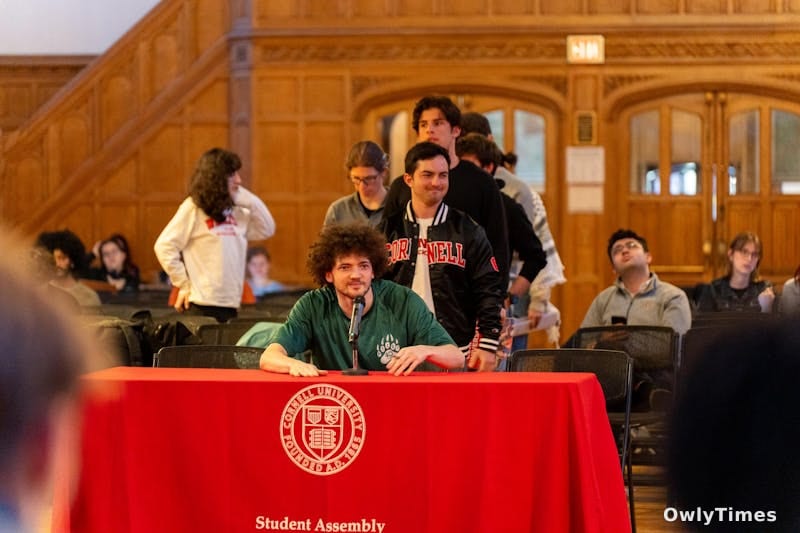

Is the modern university now a battleground for geopolitical disputes? That’s the question simmering beneath the surface of a packed Student Assembly meeting at Cornell University this week, where students debated resolutions targeting the school’s ties to both military technology and individuals accused of war crimes. The real story here isn't about campus activism – it’s about the increasingly impossible position universities find themselves in, squeezed between demands for ethical consistency and the realities of global partnerships and academic freedom.
Two resolutions, 55 and 61, ignited the debate. Resolution 61 calls for severing Cornell Tech’s partnership with the Technion-Israel Institute of Technology, alleging the Technion’s involvement in developing military technologies used in human rights violations. The resolution points to the Joan and Irwin Jacobs Technion-Cornell Institute – an “applied sciences campus” in New York City – as a focal point for concern, arguing that such collaborations are fundamentally at odds with Cornell’s stated values. It’s a bold claim, demanding divestment and greater transparency, but it taps into a growing sentiment that universities shouldn’t profit from, or legitimize, technologies with potentially devastating consequences. The argument isn’t new – student protests against defense industry funding have been a fixture of campus life for decades – but the scale and intensity feel different now, fueled by real-time coverage of global conflicts.
Based on the original cornellsun.com report.
The second resolution, 55, takes aim at the University’s practice of hosting speakers accused of war crimes, specifically referencing Tzipi Livni, a former Israeli foreign minister, who participated in a “Pathways to Peace” event in March 2025. The event itself saw 17 pro-Palestinian protesters arrested, a detail that underscores the volatile atmosphere surrounding these discussions. While proponents of the resolution argue that platforming individuals facing war crime allegations “endanger[s] student well-being,” opponents worry about stifling debate and selectively targeting certain viewpoints. This is where the core tension lies: how do you balance the pursuit of knowledge with the ethical implications of providing a platform for potentially harmful ideologies? It’s a question that goes far beyond the Israeli-Palestinian conflict, touching on issues of academic freedom and the limits of free speech.
The debate wasn’t confined to the resolutions themselves. Graduate student Hannah DeFelice rightly pointed out the inherent imbalance in the process, noting that the undergraduate Student Assembly isn’t representative of the graduate students who are most directly impacted by decisions regarding Cornell Tech. This highlights a broader issue within university governance: the tendency to prioritize undergraduate concerns while overlooking the needs and perspectives of graduate students, who often bear the brunt of research funding cuts and policy changes. Meanwhile, Adriana Vink, a student leader with both Students for Justice in Palestine and Progressives at Cornell, framed the issue as a fundamental moral choice: “whether you believe the institution…should use its institutional power to prop up more crimes and more criminals.” It’s a stark framing, but it reflects the urgency felt by many students who see their university as complicit in global injustices.
Opponents, like Levi Schmuel, raised legitimate concerns about the resolutions’ scope and potential for bias, arguing that they appear to selectively target Israeli affiliations. This isn’t simply a matter of differing opinions; it speaks to a broader anxiety about the weaponization of ethical concerns to silence dissenting voices. The most chilling moment of the meeting came from Hasham Khan, who connected the Technion’s technology to violence in Kashmir, his home region, and issued a direct challenge to the Assembly. It was a raw, emotional plea that cut through the academic debate and exposed the very real human cost of these seemingly abstract policy decisions. The Assembly ultimately moved both resolutions to a third reading, delaying a final vote and prolonging the uncertainty.
The fact that these resolutions even reached this stage is significant. It demonstrates a growing willingness among students to challenge the status quo and hold their universities accountable for their ethical choices. But the outcome remains uncertain. What happens next isn’t about whether Cornell terminates its partnership with the Technion or changes its speaker policy. The real question is whether universities will proactively develop clear, transparent ethical frameworks for evaluating international partnerships and speaker invitations before they are forced to respond to student protests and public pressure. Expect to see more campuses grappling with these issues in the coming year, and a growing demand for universities to demonstrate that their values extend beyond fundraising and prestige.