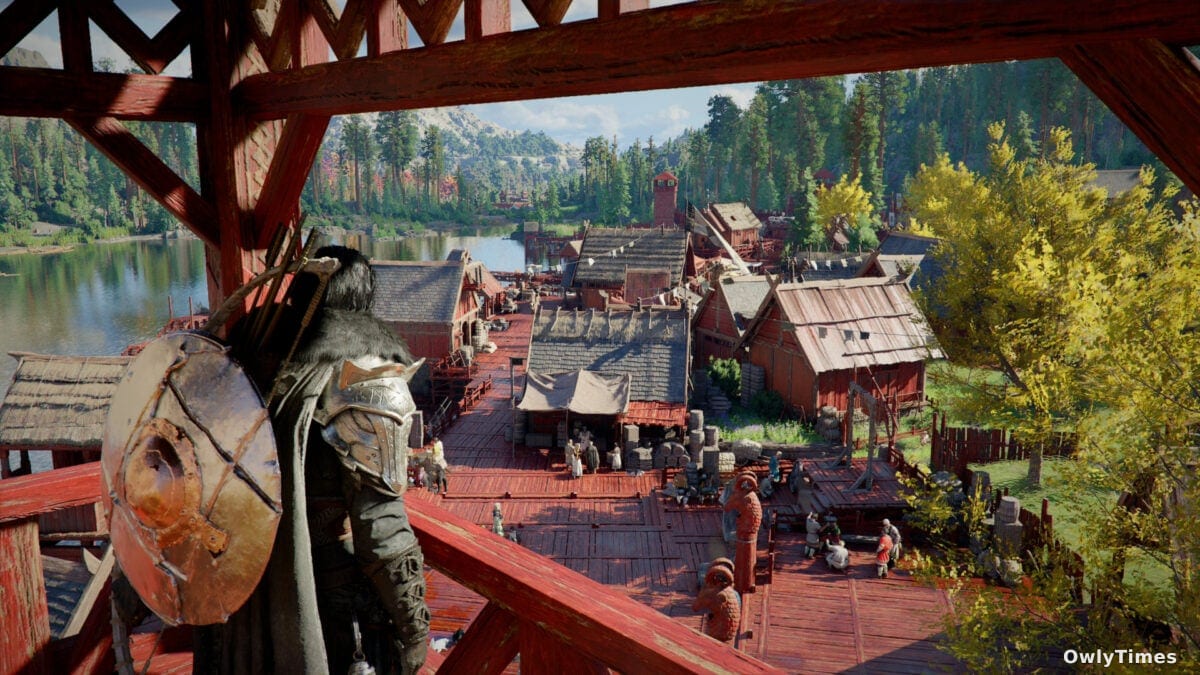

Is the traditional "finished" video game a relic of a bygone era? We have been conditioned to view a single-player, open-world title as a static monument—a product you buy, beat, and shelve. But the relentless post-launch cadence of Crimson Desert suggests that the line between a boxed adventure and a persistent, evolving digital ecosystem has all but vanished.
The real story here isn't just the sheer volume of new content being pushed to players—it's that Pearl Abyss is applying the high-velocity development cycle of a live-service MMO to a traditional medieval sandbox. Just one week after their largest update to date, the studio pushed Patch 1.05.00, proving that their internal roadmap is accelerating rather than slowing down. For the average player, this means the game’s "endgame" is no longer a destination; it is a moving target.
Artificial Conflict in a Liberated World
The core design tension in any open-world game is the "liberation loop." Once a player clears a region of threats, the world becomes safer, which paradoxically makes it more boring. Pearl Abyss has addressed this by introducing a feature that allows users to manually refill the map with strongholds.
According to the patch notes, the developers recognized that as regions of the continent were liberated, combat opportunities naturally became less frequent. To solve this, the "Re-blockade" toggle now allows players to revert a cleared map to a state of active war. This system involves 13 different factions carrying out operations across 23 different forts and quarries. By injecting these synthetic power struggles back into a conquered world, the developers are effectively gamifying the maintenance of their own map.
The Cost of Perpetual Development
This aggressive update schedule has left fans questioning the sustainability of the studio’s output. The question surfacing on community forums—"Do they even sleep?"—points to the visible strain of maintaining a single-player experience with the intensity of an MMO.
The incentive structure behind this labor is becoming increasingly public. The South Korean publication MTN recently reported that developers at the studio were awarded $2.5 million in bonuses following the milestone of 5 million copies sold. This financial alignment suggests that for the studio, the post-launch support isn't just about player retention; it is a core revenue strategy tied to the game's long-term commercial performance.
Refilling the Endgame Tank
For the player, the immediate benefit of these updates is a deeper interaction with the game world. Patch 1.05 also introduces the ability to challenge 69 defeated bosses, including options for higher difficulty settings. While these encounters provide no new loot, the removal of consumable penalties during these rematches suggests a shift toward pure skill-based engagement rather than resource grinding.
Other additions, such as the ability to keep the Iron Eagle and Hyacinth Macaw as pets and the fix for previously unobtainable Crude Gold Bars—now valued at 5 Silver—indicate a focus on granular quality-of-life improvements. The team has stated that this update serves as the foundational system for future content, promising a progressively refined world.
The next reading of the game's patch frequency and player engagement metrics will show whether this high-pressure development cycle can maintain its momentum without burning out the very team currently powering the expansion of Pywel.