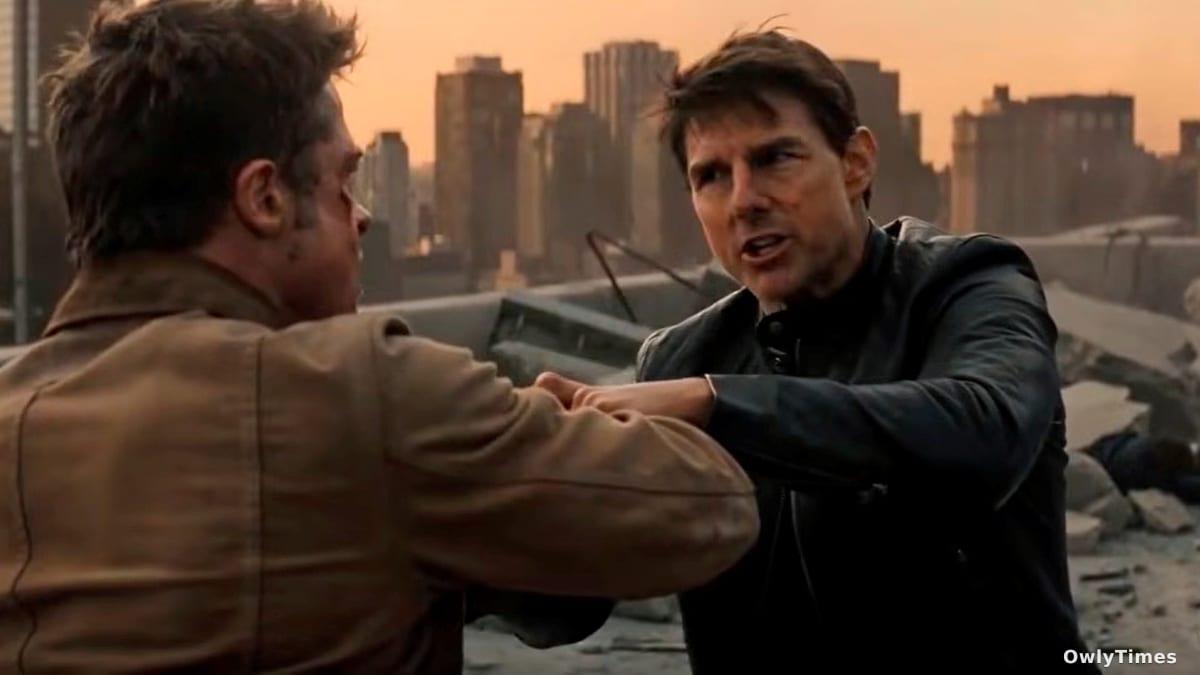

The vision of a digital dystopia where cold, unfeeling machines replace the human heart of cinema—a narrative solidified by the 1984 release of "The Terminator"—no longer feels like a relic of science fiction. It is the urgent, messy, and rapidly evolving reality of modern Hollywood. Earlier this year, the industry stared into the abyss when an Irish filmmaker utilized a Chinese AI model to produce a video of Tom Cruise and Brad Pitt locked in a brutal struggle on a crumbling freeway overpass. The result was stunningly convincing, prompting one filmmaker to tell The New York Times, "I just think it’s nothing short of terrifying." Beyond the headlines of flashy tech demos, the industry is grappling with a profound existential tension: is AI the ultimate tool for creative liberation, or is it the architect of our cultural obsolescence?
The Mechanics of the Mirage
At its core, the current AI boom is a triumph of predictive mathematics. As Steven Skiena, associate director of Stony Brook University’s AI Innovation Institute, aptly puts it, "They’re kind of amazingly good at it." Whether through large language models like ChatGPT or diffusion-based visual generators, the technology operates by scanning billions of data points to guess the next logical sequence. It is a process of refinement, where random visual noise is stripped away to reveal a recognizable image. While the computing power behind these models is unprecedented, the underlying ambition is age-old: to automate the tasks that once defined human labor.
The Cost-Cutting Calculus
For major studios, the appeal of AI is rarely about artistic purity; it is about the balance sheet. According to a recent report from the consulting group McKinsey & Co., the widespread adoption of AI could result in a redistribution of "up to $60 billion of annual revenue within five years." We are already seeing this in practice, from the subtle enhancement of Adrien Brody and Felicity Jones’ accents in the Oscar-nominated film "The Brutalist" to Netflix’s use of AI-generated sequences in the Argentine series "The Eternaut." Co-CEO Ted Sarandos justified the move to investors in July, noting that the cost of traditional production for a collapsing building scene simply "wouldn’t have been feasible for a show in that budget."
The Battle for the Human Spark
The backlash against this shift is as fierce as the innovation itself. When the Dutch writer-performer Eline van der Velden introduced her AI-generated "actress," Tilly Norwood, at the Zurich Film Festival, the response from the creative community was instantaneous and hostile. Performers like Melissa Barrera and Natasha Lyonne called for boycotts, sensing that the creation of an avatar trained on the work of real actors without permission was a direct threat to their livelihood. This sentiment fueled the massive labor actions of 2023, where both the Writers Guild of America (WGA) and SAG-AFTRA fought to ensure that human artistry remains the bedrock of the industry. Even as Ben Affleck sold his AI studio, InterPositive, to Netflix for a reported $600 million, the industry remains deeply divided on whether these tools serve the storyteller or the bottom line.
A Cultural Crossroads
The industry currently stands at a precarious intersection of utility and integrity. While companies like OpenAI continue to chase massive valuations—with reports suggesting Anthropic sought funding to push its valuation toward $900 billion in April—the consumer appetite for "AI slop" remains questionable. Younger audiences are increasingly skeptical, with reports from Luminate indicating that younger generations "consistently lean toward discomfort" regarding AI-integrated entertainment. The next reading of the industry's box office performance and streaming engagement metrics will show whether audiences are willing to embrace the machine-assisted future, or if they will continue to demand the "human spark" that AI is still struggling to simulate.