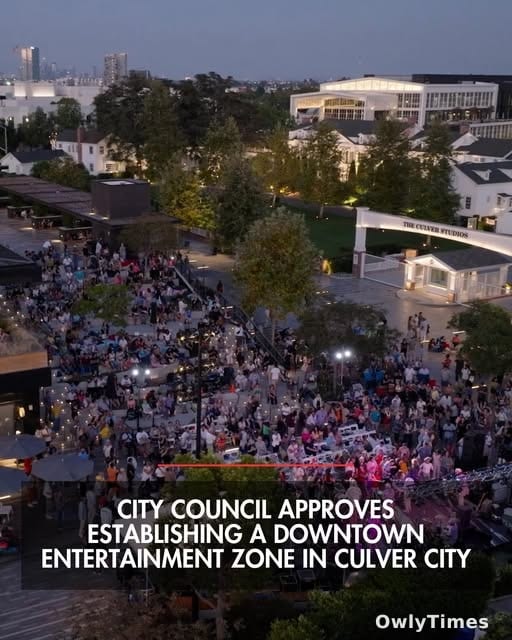

The sun dips behind the storefronts of Downtown Culver City, and for years, the rhythm of the evening has been dictated by rigid municipal lines. You finish a drink at a local bistro, you pay your tab, and you stay put. But a quiet, unanimous shift in the chambers of City Hall this week suggests that the future of our urban social life is about to become a lot more fluid. By introducing an ordinance to create a formal "Entertainment Zone," city leaders are betting that loosening the leash on public space will do more than just sell a few extra pints—it’s an attempt to recalibrate the very DNA of the local visitor experience.
Rethinking the Public Pour
The plan, crafted in tandem with the Downtown Business Association (DBA), isn’t just about convenience; it is a calculated bid to inject kinetic energy into the downtown core. Under the proposed model, patrons will be able to purchase alcohol from participating businesses and carry it within a specific, permitted boundary during special events. The goal is to drive foot traffic and foster a more seamless, festival-like atmosphere that keeps visitors lingering on the sidewalks rather than anchored to a single barstool.
This isn't just a policy tweak; it’s a recognition that modern entertainment districts thrive on permeability. By amending the Municipal Code to allow for controlled, open-container consumption, the city is essentially turning the downtown corridor into an extension of the businesses themselves. While council members have emphasized that existing laws regarding public safety remain ironclad, the shift signals a move toward a more European-style pedestrian culture, where the street is a living room rather than just a thoroughfare.
A Leaner Approach to Civic Oversight
While the Entertainment Zone represents an expansion of public freedom, the council’s simultaneous move regarding security staffing highlights a parallel drive toward administrative efficiency. The city’s contract with Good Guard Security, Inc., which has been the standard presence at council meetings, is officially on the clock. Following a review of security requirements, the council voted to trim the security detail at their own public meetings from four guards down to three.
This decision, backed by the Culver City Police Department, suggests a move toward a "balanced" security posture rather than one defined by sheer numbers. It is a subtle but significant signal: the city is looking to tighten its fiscal belt and reallocate resources where they might have a greater impact. With Mayor Freddy Puza, Vice Mayor Bubba Fish, and Council Members Albert Vera and Dan O’Brien voting in favor of this transition—and Council Member Yasmine-Imani McMorrin abstaining—the message is clear. The current contract will be allowed to expire, and the city will move to issue a Request for Proposals for future services.
The Metrics of Future Success
The transition away from the current security contract and toward a new procurement process marks a departure from the status quo. By opening the security contract to a competitive bid, the city is forcing a re-evaluation of what public safety looks like in a modern municipal setting. It’s a pragmatic pivot that mirrors the broader, ongoing assessment of the Entertainment Zone pilot.
Ultimately, these two stories are linked by a singular theme: the desire to modernize the city’s operational footprint. Whether it is through the controlled freedom of an entertainment district or the strategic reduction of security overhead, Culver City is in a state of active experimentation. As the city staff prepares to bring forward a new, competitive procurement process for security, the next reading of the contract proposals will serve as the primary indicator of whether the city’s vision for a leaner, more vibrant downtown can truly hold up under the weight of fiscal and operational reality.