
The air hangs thick and heavy, not with the crisp, bracing chill of the Tasmanian coast, but with a cloying humidity that clings to skin and breeds a perpetual sheen of sweat. That’s the immediate sensation hitting viewers in the newly released trailer for Deadloch Season 2, and it’s a deliberate shift that speaks to a larger trend in television: the embrace of discomfort, both physical and thematic. Forget picturesque mysteries; this season, Kate McCartney and Kate McLennan’s darkly comedic crime drama is trading in postcard views for the sweltering, often unsettling, reality of Australia’s Northern Territory. The first two episodes drop globally on Prime Video March 20, and the move isn’t just about a change of scenery. It’s about a change of perspective.
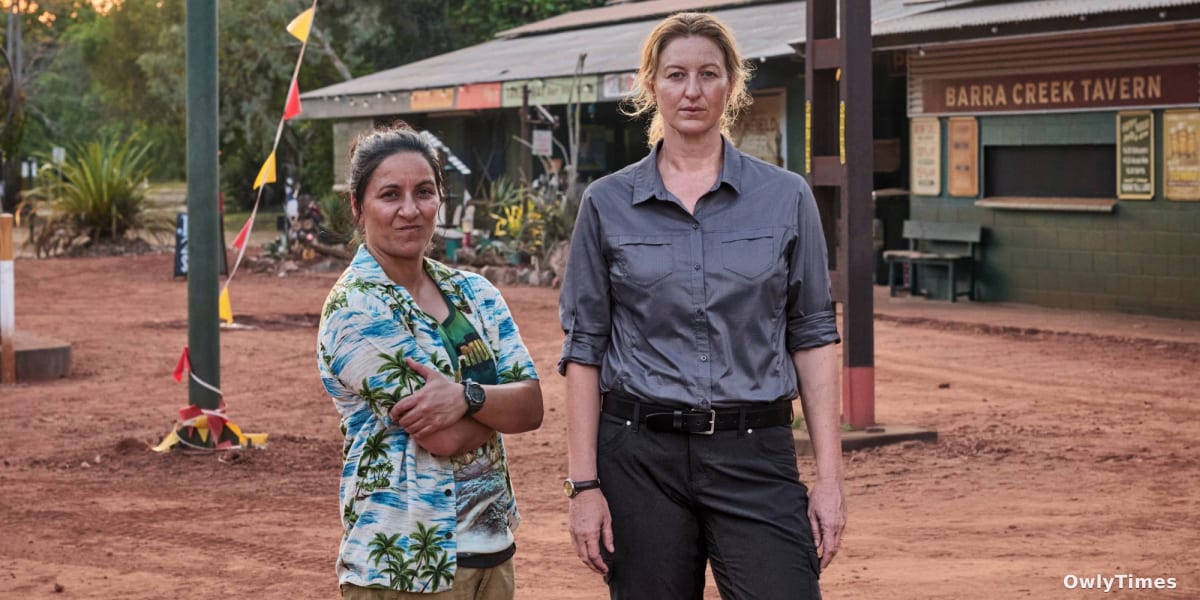
Season 1 of Deadloch was a surprise hit, cracking the top 10 TV shows on Prime Video in over 165 countries – a remarkable feat for an Australian production. It snagged five AACTA Awards, including Best Acting for Kate Box as Detective Dulcie Collins, and even a nomination for an International Emmy. But beyond the accolades, Deadloch tapped into a cultural hunger for female-led narratives that weren’t afraid to be messy, flawed, and genuinely funny. The success wasn’t simply that it was good, but how it was good – a pointed skewering of true crime tropes delivered with a distinctly Australian sensibility. Now, with Season 2, the creators are doubling down on the discomfort, relocating the action to the “Top End” and introducing a new set of challenges for detectives Collins and Madeleine Sami’s Eddie Redcliffe.
The premise is deceptively simple: Dulcie Collins and Eddie Redcliffe are dispatched to Darwin to investigate the death of Eddie’s former partner, “Bushy.” But the discovery of a body part in the remote town of Barra Creek throws their plans into disarray, forcing them to navigate a landscape dominated by crocodile tourism, underfunded Indigenous ranger programs, and a local population wary of outsiders. This isn’t a quaint village harboring a dark secret; it’s a place where the environment itself feels like a threat, where the heat and the humidity amplify every tension. The addition of new cast members like Luke Hemsworth, Shari Sebbens, and Steve Bisley adds layers to this already complex dynamic, hinting at a web of interconnected stories and hidden agendas.
This article draws on reporting from aboutamazon.com.
But Deadloch’s move to the Northern Territory isn’t just a stylistic choice; it’s a pointed commentary on Australia’s ongoing reckoning with its colonial past and the challenges faced by Indigenous communities. The series description notes the detectives will be dealing with “overstretched Indigenous rangers,” a subtle but significant acknowledgement of the systemic issues facing these vital protectors of the land. While the trailer leans into the comedic elements – the detectives battling thrush infections, the absurdity of crocodile-fueled tourism – the underlying tension suggests a deeper exploration of power dynamics and cultural clashes. This is a crucial shift, particularly as Australian television increasingly grapples with representation and the need to tell stories from diverse perspectives. The fact that Prime Video is investing in this kind of nuanced storytelling, and amplifying it to a global audience, is a significant indicator of changing industry priorities.
Sarah Christie, head of Australian and New Zealand originals at Amazon MGM Studios, emphasized the series’ ability to “transcend borders,” calling it a “cultural phenomenon.” That’s a bold claim, but one that feels increasingly plausible. Deadloch isn’t just a crime comedy; it’s a reflection of a broader cultural moment – a moment where audiences are demanding authenticity, complexity, and a willingness to confront uncomfortable truths. The question now isn’t just whether Season 2 can live up to the hype of its predecessor, but whether it can continue to push boundaries and spark conversations. Will Deadloch demonstrate that a darkly funny, culturally aware crime drama can not only succeed on a global scale, but also contribute to a more nuanced understanding of Australia and its place in the world? That’s the sticky, sweaty, and potentially groundbreaking question hanging in the Top End air.