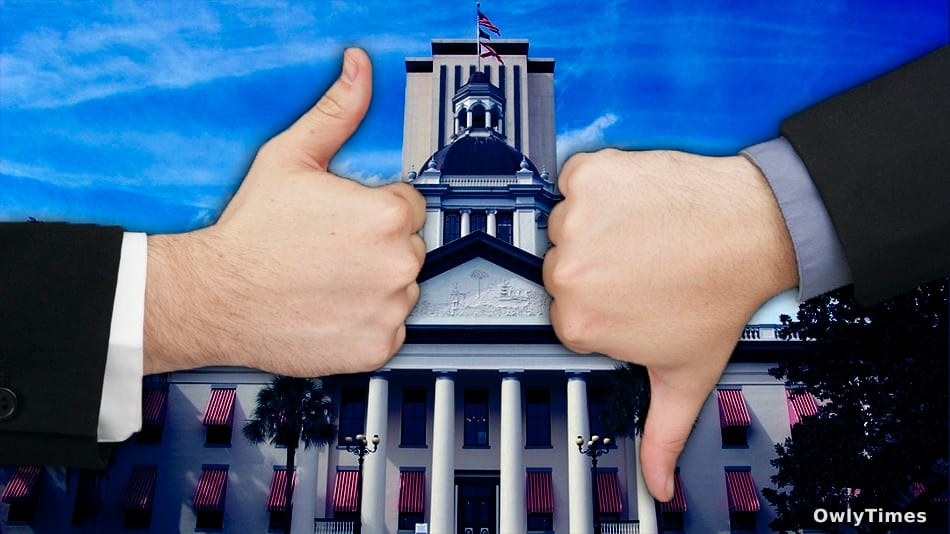

The current legislative climate in Florida is defined by a singular, calculated strategy: the subordination of long-term governance to the immediate consolidation of partisan power. By treating the legislative calendar as a "rolling sequel" of Special Sessions—shifting from the completed redistricting effort to the upcoming May 12 budget session and a looming June push for property tax relief—Governor Ron DeSantis has effectively shifted the Capitol into a permanent state of political maneuvering. This is not merely an exercise in policy-making; it is a demonstration of how a dominant executive branch can bypass the friction of traditional legislative deliberation by prioritizing speed and top-down mandates over consensus.
The Calculus of "Details Later, Votes Now"
The strategic logic undergirding the Governor’s approach to property tax relief is to control the narrative before the opposition can solidify. By signaling a phased approach to tax changes, DeSantis attempts to mitigate the political fallout of failing to deliver on a "repeal" promise that is rhetorically potent but procedurally difficult. The risk for the administration is the emergence of "entrenched interests" opposing the plan, yet the Governor appears to be betting that the Legislature’s recent behavior—specifically the willingness to pass a redistricting map with almost zero lead time—proves that party discipline will override procedural concerns.
Who benefits from this environment? Clearly, the Republican leadership, which has successfully weaponized the calendar to keep Democratic opponents in a constant state of reaction. Who loses? The institutional integrity of the legislative process itself, as well as any stakeholder—such as the residents of Pinellas County—whose regional interests are sacrificed to satisfy broader partisan math.
Redrawing the Map as a Power Play
The recent redistricting process serves as a stark precedent for the state’s current power dynamics. By pushing through a map that aims to grow the existing 20-8 Republican advantage in the congressional delegation, the architects of this plan have signaled a disregard for the judicial hesitancy that has historically tempered gerrymandering. Much like the legislative shifts seen in other states, this is an admission that the objective is not representation, but survival.
The strategy creates a dual-front war for Democrats: they are forced to navigate both the loss of core metropolitan strongholds and the potential for "ugly intraparty collisions" as incumbents like Jared Moskowitz, Debbie Wasserman Schultz, and Kathy Castor find their districts either dismantled or significantly diluted. The practical reality is that lawsuits challenging these lines are unlikely to provide relief before the 2026 election cycle, effectively insulating the Republican gains from immediate legal consequence.
Municipal Exceptions to the Rule
While the state Capitol focuses on consolidation, the St. Cloud City Council offers a counter-narrative, proving that localized governance can occasionally favor liberalized social policies over restrictive ones. By expanding outdoor alcohol consumption to seven days a week in its downtown entertainment district, the council has prioritized foot traffic and economic vitality over the traditional caution of municipal oversight. This shift is a notable deviation from the broader trend of top-down regulatory tightening; it suggests that when local officials treat their constituents as capable of managing their own environments, the result is an increase in economic activity, bolstered by the anecdotal success of local business owners reporting higher engagement.
Legislative Frictions and Future Triggers
The failure to pass the "conscience objection" vaccine legislation, championed by Joseph Ladapo, highlights the limits of even a powerful executive’s reach. Despite being revived during the redistricting Special Session, the bill was ultimately stalled by House Speaker Daniel Perez, who prioritized concerns over school-mandated immunizations. This indicates that while the executive can dictate the pace of the session, the internal political friction within the Republican caucus remains a live variable.
The next reading of the legislative calendar will provide the clearest signal of whether this aggressive strategy holds. As lawmakers prepare for the May 12 budget session, the upcoming developments in the potential property tax relief Special Session—specifically the arrival of formal, written referendum language—will indicate whether the Governor’s "details later" strategy can withstand the scrutiny of a full legislative debate.





