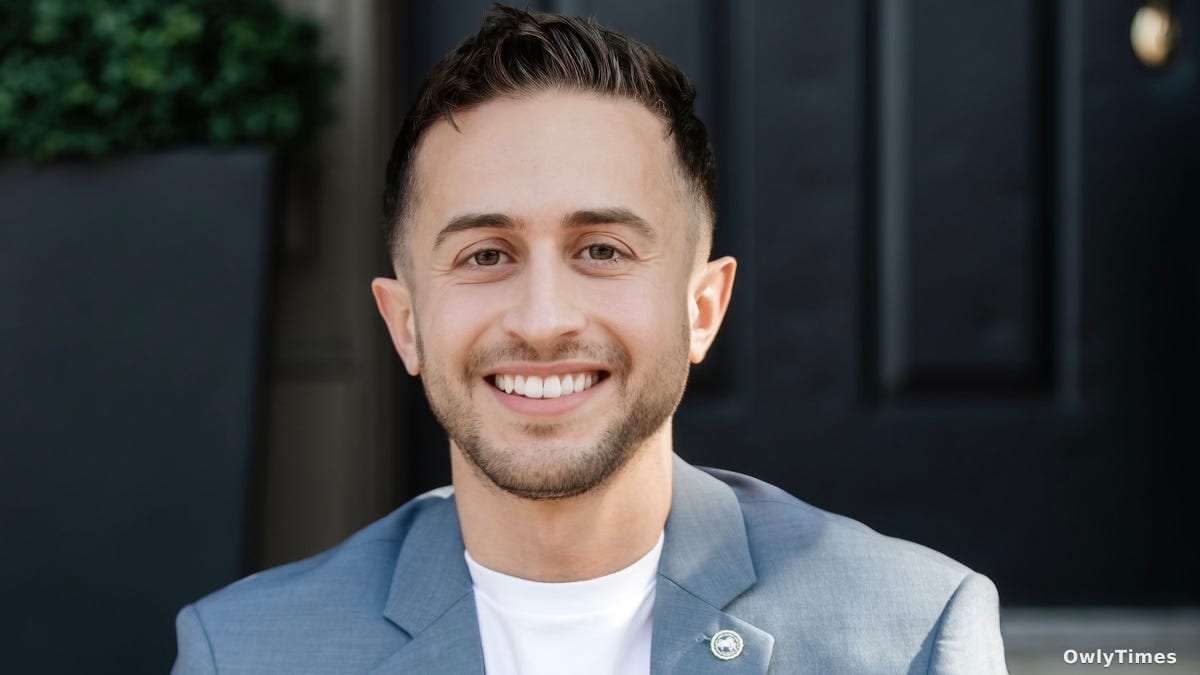

The appointment of Ali Abazeed as Detroit’s new Chief Public Health Officer isn’t simply a personnel change; it’s a deliberate signal that the city is shifting its approach to public health from reactive response to proactive, systemic intervention. While headlines focus on the “health in all policies” mantra – a phrase gaining traction in public health circles – the real story lies in the acknowledgement that traditional healthcare models are insufficient to address the deeply entrenched social determinants of health in a city like Detroit. This isn’t about adding more doctors, but fundamentally altering how city government functions to improve resident wellbeing.
Abazeed’s background is central to understanding this shift. Coming to the role from Dearborn, where he established the city’s first Department of Public Health and previously worked at the National Institutes of Health, he brings a blend of administrative experience and scientific rigor. His personal history – as the child of Syrian refugees – also informs his perspective. During Monday’s press conference, Abazeed recounted his father’s experience transitioning from a professorship in Syria to driving a cab in Detroit for 25 years, highlighting the physical and dignitary toll of labor. This anecdote wasn’t merely biographical; it underscored his understanding that health isn’t confined to clinical settings, but is inextricably linked to economic opportunity and working conditions. He articulated the widely accepted, yet often overlooked, statistic that 90% of life expectancy is determined by factors outside of medical care – where people live, learn, work, and play.
See the original The Detroit News story for the full account.
The timing of this appointment is particularly noteworthy. Detroit is experiencing a concerning rise in poverty, with the 2024 rate reaching 34.5%, the highest since 2017, despite a slight increase in median household income to $39,209. This widening gap – more residents experiencing poverty even as overall income inches up – suggests that economic growth isn’t reaching all segments of the population. Mayor Mary Sheffield’s parallel efforts to restructure city departments, including the creation of a Department of Youth and Education and an office for community-driven violence programs, demonstrate a coordinated strategy to address these root causes. Sheffield specifically tasked Abazeed with tackling chronic diseases, maternal and infant health, and the city’s exceptionally high asthma rates – conditions disproportionately affecting low-income communities.
However, the ambitious scope of this “health in all policies” approach raises legitimate questions about feasibility, particularly given the current budgetary constraints. While Sheffield maintains that these changes add “little to no new costs” through grant funding and internal reallocation, this reliance on external sources and financial maneuvering introduces instability. Abazeed’s salary was not disclosed, adding to the opacity surrounding the financial implications of these departmental shifts. The Detroit Health Department already manages a broad portfolio – from food safety to disaster preparedness – and expanding its mandate to encompass the social determinants of health without a corresponding increase in resources could strain its capacity.
It’s also crucial to understand what this appointment doesn’t mean. Abazeed is replacing Denise Fair Razo, who led the Health Department through the immense challenges of the COVID-19 pandemic. While Sheffield praised Abazeed’s “vision” based on his work in Dearborn – specifically, the city’s first community health needs assessment – the scale and complexity of Detroit’s challenges are significantly greater. A successful needs assessment is a starting point, not a solution. Furthermore, the “health in all policies” framework, while conceptually sound, requires genuine inter-departmental collaboration, a notoriously difficult undertaking in any large municipal government.
Looking ahead, the critical question isn’t whether Abazeed can implement this vision, but whether Detroit’s existing infrastructure – and its funding mechanisms – can support it. Residents should watch for concrete changes in how city services are delivered, specifically how departments like police, fire, parks and recreation, and even water and sewage, begin to integrate health considerations into their operations. The true measure of success won’t be in press conferences or policy statements, but in demonstrable improvements in health outcomes, particularly in the communities most burdened by poverty and chronic disease. Will Detroit see a measurable decrease in asthma rates, improved maternal health outcomes, and a narrowing of the life expectancy gap between its wealthiest and poorest neighborhoods? That’s the benchmark against which this ambitious new approach must be judged.





