
The Unexpected Independence of Juvenile Dinosaurs
For decades, popular depictions of dinosaurs have leaned heavily on imagery of protective parents shepherding their young – a narrative mirroring mammalian behavior. But a growing body of evidence, culminating in a recent study published in Current Biology by Dr. Clint Boyd and colleagues at the University of Texas at Austin, challenges this long-held assumption. The research doesn’t simply suggest dinosaurs weren’t as attentive parents as, say, lions; it proposes something far more radical: that young dinosaurs may have largely fended for themselves, operating as a functionally distinct ecological group. This isn’t a story about negligent parenting, but about a surprisingly efficient and perhaps necessary division of labor within complex prehistoric ecosystems. The implications extend beyond revising textbook illustrations, forcing paleontologists to reconsider how we interpret fossil assemblages and reconstruct ancient environments.
Dietary Divergence as a Key to Independence
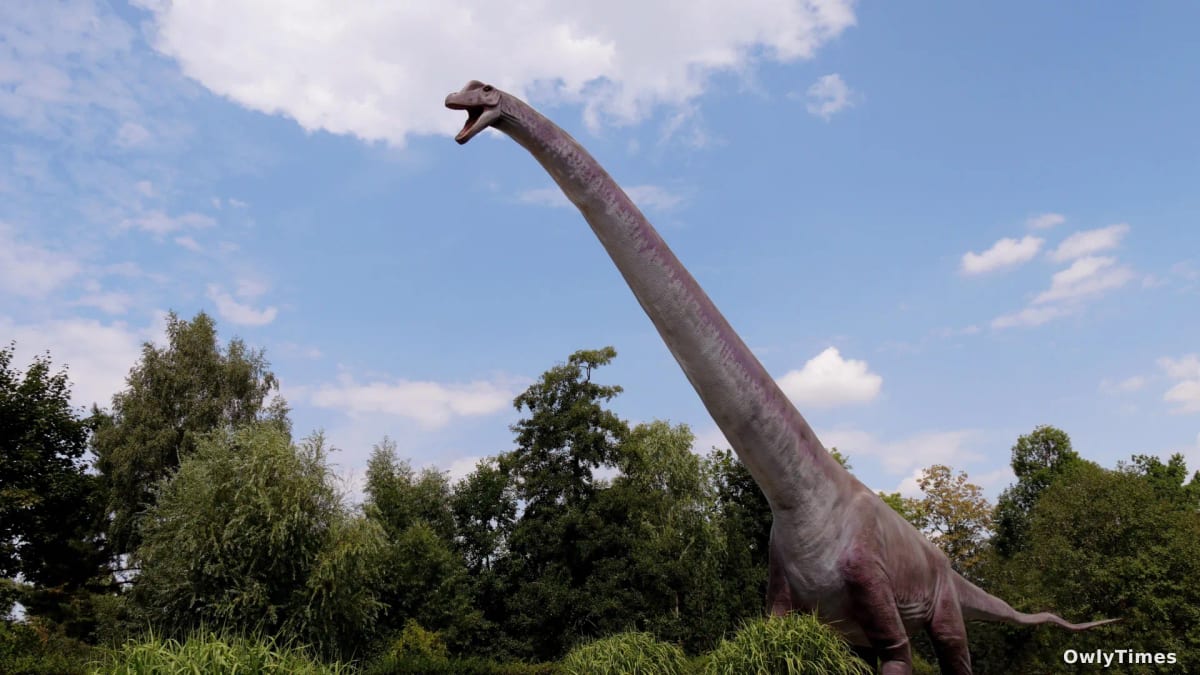
The core of Boyd’s team’s argument rests on the observation of ecological partitioning – the idea that species coexist by utilizing resources in different ways. They focused on fossil evidence from the Late Jurassic Morrison Formation in western North America, a remarkably well-preserved ecosystem teeming with sauropods, ornithopods, and theropods. Analyzing fossilized teeth and bone fragments, the researchers discovered a significant overlap in the types of plants consumed by adult sauropods (long-necked herbivores like Brachiosaurus and Apatosaurus) but a stark difference in the diet of their juvenile counterparts. Young sauropods, it appears, favored ferns and low-lying vegetation, while adults browsed on higher-reaching conifers and cycads. This dietary divergence isn’t merely a matter of preference; it’s a fundamental separation in resource use.
See the original sciencedaily.com story for the full account.
This finding is particularly compelling when contrasted with modern mammals. Mammalian parents typically ensure their offspring have access to the same food sources, often pre-chewing or providing easily digestible options. The dinosaur data suggests a different strategy. By consuming different plants, juvenile and adult sauropods minimized direct competition for food, allowing a larger overall population to thrive in the same area. Dr. Boyd estimates that this separation could have supported up to 80% more individuals within a given habitat, a substantial advantage in a resource-limited environment. It’s a strategy that prioritizes population density over intensive parental care. Headlines have often framed this as “dinosaurs abandoned their young,” but the study itself doesn’t support that framing. It’s more accurate to say that the ecological pressures favored a system where early independence was beneficial, even necessary.
Predator Avoidance and Habitat Preference
The dietary split wasn’t the only factor driving this independence. The research also points to differences in habitat preference and predator vulnerability. Juvenile dinosaurs, being smaller and more agile, likely occupied different microhabitats than their massive parents – dense undergrowth, forest edges, and areas offering better cover. This spatial separation reduced the risk of juveniles being trampled by their parents and, crucially, exposed them to a different suite of predators. While adult sauropods were largely immune to attack, young dinosaurs would have been vulnerable to smaller theropods and other opportunistic hunters.
This creates a fascinating picture of a multi-tiered ecosystem. Adults acted as a kind of mobile “umbrella” providing a degree of protection simply through their size, while juveniles formed their own, more vulnerable but equally important, ecological niche. The team’s analysis of fossil distribution supports this idea, showing that juvenile remains are often found in areas distinct from those dominated by adult fossils. This isn’t simply a matter of preservation bias; the researchers controlled for taphonomic factors (processes affecting fossilization) to ensure the observed patterns were genuine ecological signals.
Limitations to Consider and Future Research
It’s important to acknowledge the limitations of this study. The fossil record is inherently incomplete, and reconstructing the behavior of extinct animals relies on inference. While the dietary analysis is robust, based on microscopic wear patterns on teeth, determining the precise nature of parental care is far more challenging. The study focuses primarily on sauropods; extending these findings to other dinosaur groups will require further investigation. Furthermore, the Morrison Formation represents a single time and place. Dinosaur parenting strategies may have varied across different species and geographic locations.
However, the strength of this research lies in its methodological rigor and its ability to integrate multiple lines of evidence – dietary analysis, spatial distribution, and predator-prey relationships. The next crucial step, as Boyd’s team outlines, is to apply similar analytical techniques to other dinosaur-bearing formations and to incorporate geochemical data to further refine our understanding of juvenile dinosaur diets and habitat use. Specifically, researchers are now looking at stable isotope analysis of bone collagen to pinpoint the exact types of plants consumed by both juveniles and adults. Perhaps the most compelling question now is whether this pattern of early independence was a widespread phenomenon across all dinosaur groups, or a unique adaptation of sauropods to the specific challenges of the Late Jurassic environment. Answering that will require a fundamental shift in how we approach paleontological research – moving beyond a focus on individual specimens to a more holistic understanding of ancient ecosystems and the complex interactions within them.