
Are we really celebrating “financial empowerment” while ignoring the fact that millions of women are financially trapped – not by lack of opportunity, but by fear? The endless stream of fintech apps and “girlboss” mantras feels particularly hollow when you consider the stark reality: for a staggering 98% of domestic violence situations, financial abuse is also present. The real story here isn't about democratizing investing – it’s about the systemic vulnerability that keeps women tethered to abusive relationships, and the quiet work being done to dismantle that control.
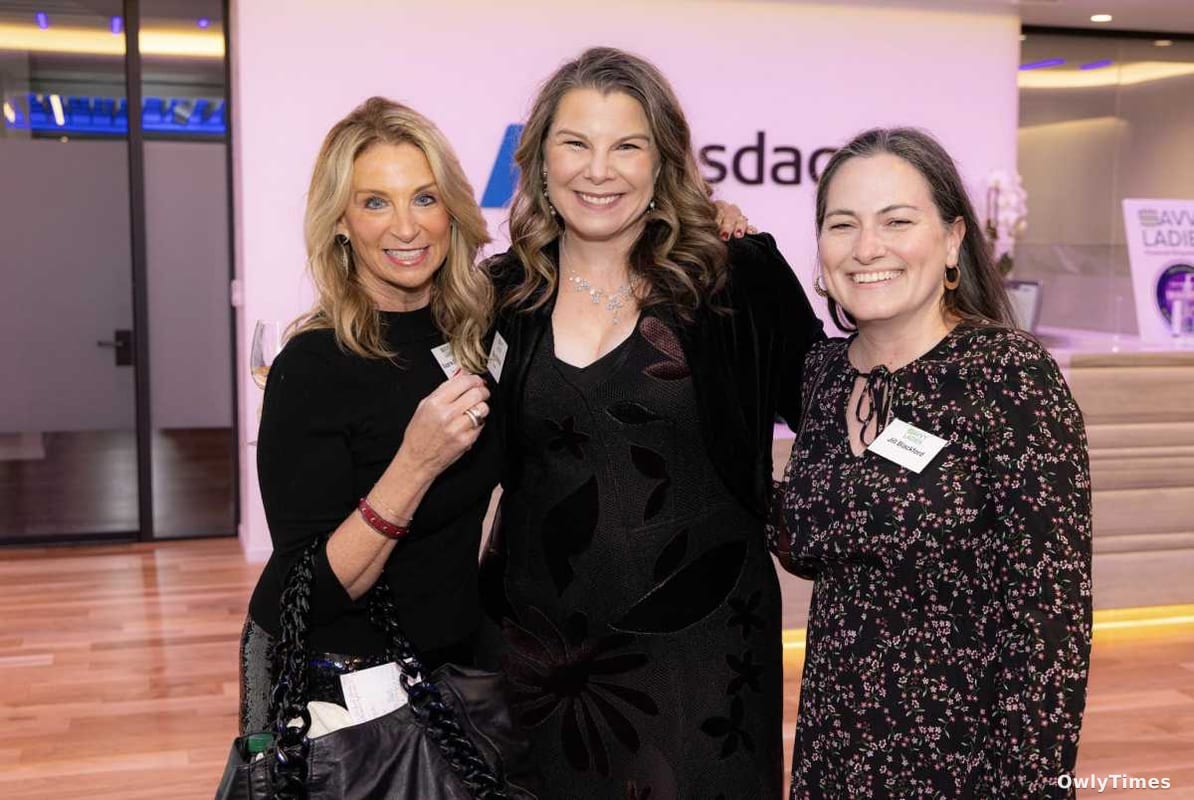
Stacy Francis, founder of the nonprofit Savvy Ladies, understands this vulnerability intimately. Her grandmother’s tragic death at the hands of her husband fueled a decades-long mission to equip women with the financial literacy they need to break free. “When I asked her why she stayed, she shared that it was because she felt financially trapped,” Francis recounts. “Because of that, I lost my grandmother at a young age.” Savvy Ladies, born from that grief in 2003, isn’t about teaching women to day trade; it’s about providing a lifeline, a safe space to ask the questions they’re often too afraid to ask anyone else.
This article draws on reporting from amny.com.
What began as monthly meetings in Francis’s living room, staffed by volunteer financial analysts and attorneys, has blossomed into a projected $1 million organization serving at least 5,000 women annually. Judy Herbst, Savvy Ladies’ executive director, emphasizes that this funding isn’t for expansion into flashy new products, but for scaling free resources – a chat feature on their website and app, a growing library of digital tools, and increasingly sophisticated programming. This isn’t venture-backed disruption; it’s a deliberate, needs-based approach to a deeply entrenched problem.
The questions women bring to Savvy Ladies are rarely about maximizing returns. They’re about survival. Twenty percent of inquiries relate directly to divorce – not about investment strategies, but about understanding marital assets, navigating legal proceedings, and envisioning a financially independent future. As Lisa Zeiderman, a matrimonial attorney and chair of Savvy Ladies’ board, points out, simply knowing what assets exist is half the battle. “An attorney who knows what money exists between a couple will be more successful in obtaining more spousal and child support than one who’s operating without a full financial picture.”
This isn’t just about legal strategy, though. It’s about addressing a pervasive pattern of financial disengagement. Francis notes that many women, particularly those who become stay-at-home mothers, effectively outsource their financial lives to their spouses. They may manage the household budget, but lack a comprehensive understanding of long-term investments, retirement accounts, or even the details contained within their own tax returns. Zeiderman has seen this firsthand: “So many women come into my office who really had no real concept of what their finances were…or even to the point where some signature page was put in front of them and they would just sign it, and they would have absolutely no idea what the tax returns included.” This isn’t negligence; it’s a consequence of societal expectations that often position women as secondary financial actors.
Savvy Ladies fills a critical gap, offering not just answers, but empowerment. They provide a safe space to ask “dumb” questions, to understand the intricacies of Roth IRAs versus traditional IRAs, to assess the financial implications of keeping the marital home. They’re not replacing legal counsel, but equipping women with the knowledge they need to be active, informed participants in their own financial destinies. And crucially, they’re reaching women before they’re in the midst of a crisis, offering preventative education on identifying financial abuse and taking control of their finances.
The success of Savvy Ladies, however, highlights a larger failure. Why is it that a nonprofit, fueled by volunteers and modest funding, is shouldering the burden of financial literacy for a demographic systematically underserved by the financial industry? The glossy marketing campaigns of major banks and investment firms ring hollow when so many women are still operating in the dark. The focus on “fintech for all” misses the point entirely if it doesn’t address the underlying power imbalances that leave women vulnerable.
Here’s what to watch for: in the next 18 months, expect to see a surge in demand for specialized financial advice geared towards women navigating divorce or separation. As Savvy Ladies’ model proves, simply providing access to information isn’t enough. Women need trusted advisors who understand the unique challenges they face, and who can translate complex financial concepts into actionable strategies. The firms that recognize this need – and prioritize empathy and education over profit – will be the ones that truly empower the next generation of financially independent women.