
The strategic calculus behind the Department of Justice’s establishment of a $1.8 billion “anti-weaponization” fund suggests an attempt to centralize executive control over federal litigation settlements, bypassing traditional legislative oversight. By utilizing the existing judgment fund, the administration is attempting to create a streamlined mechanism to resolve claims that align with its political agenda, effectively turning administrative discretion into a shield for its allies. This maneuver places the executive branch in direct conflict with its own congressional flank, forcing a public reckoning over the limits of executive power.
The Fitzpatrick Resistance
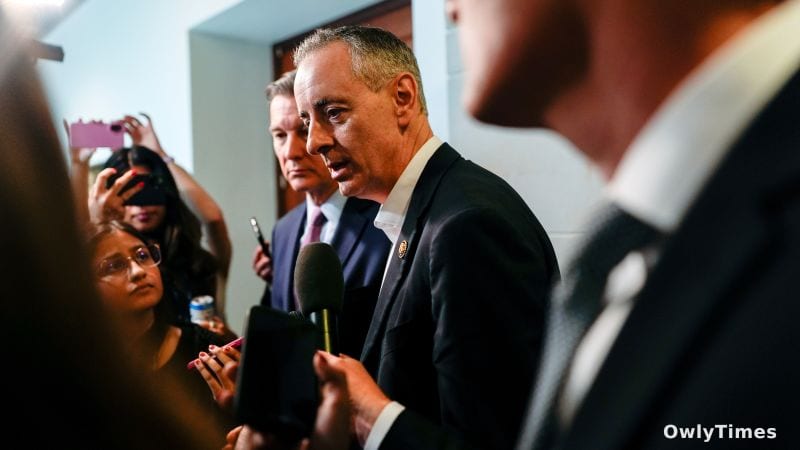
Brian Fitzpatrick, a Pennsylvania Republican representing a district that supported Kamala Harris in the 2024 presidential election, has emerged as the first member of his party to openly challenge the initiative. Fitzpatrick’s decision to vow “100%” opposition to the fund, as detailed in the CNN report, carries significant political risk. Having already defied President Donald Trump on funding for an East Wing ballroom, Fitzpatrick is signaling that his legislative independence is non-negotiable, even at the cost of potential primary challenges. His demand for legislative text to block the funding source reflects a broader anxiety among rank-and-file Republicans who were kept entirely in the dark regarding the fund's inception.
A Crisis of Congressional Oversight
The lack of transparency surrounding the fund has created a rare, albeit disorganized, friction between the White House and Capitol Hill. While acting Attorney General Todd Blanche defended the fund during a Tuesday hearing, characterizing it as “unusual” but “not unprecedented,” key legislative figures remain skeptical. Senate Appropriations Chair Susan Collins has already begun pressing for granular data—demanding the legal basis for payouts and transparency on claim disclosures—a move that underscores the lack of trust currently permeating the relationship between the Department of Justice and its oversight committees.
The political winners here are the executive branch officials attempting to bypass the slow gears of the legislative process to secure their own legal interests. The losers are the institutional norms of the Republican caucus, as leaders like House Speaker Mike Johnson and House Oversight Chair James Comer admit to being caught off guard by a policy shift of this magnitude. This disconnect illustrates a widening gap between the administration’s aggressive use of executive authority and the traditional prerogatives of the legislative branch, which has been left to scramble for information long after the policy was finalized.
Historical Precedents and Fiscal Control
This tension mirrors the historical friction often seen when the executive branch attempts to unilaterally reallocate or prioritize funds that traditionally require congressional authorization. While the administration points to the existing judgment fund—a permanent appropriation for settling federal cases—as its legal foundation, the political optics of creating an “anti-weaponization” vehicle have triggered a defensive response from fiscal hawks. Senate Majority Leader John Thune has explicitly framed the path forward through the appropriations process, suggesting that the primary venue for this battle will be the budget cycle for the next fiscal year.
The next reading of the appropriations process will show whether the Republican leadership is willing to exert its power of the purse to curtail the executive branch's reach. As House Appropriations Chair Tom Cole continues to review whether legislative action is required to check the fund's authority, the immediate focus shifts to the upcoming legislative markup sessions. These sessions will serve as the true barometer for whether the party intends to rein in the administration or merely observe as the $1.8 billion mechanism takes root.