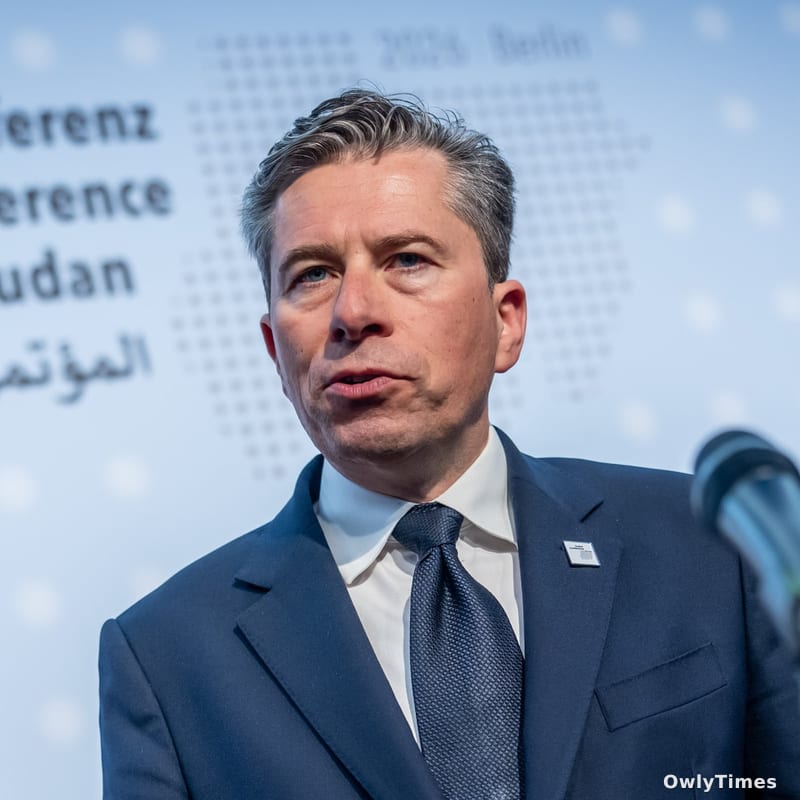

The global humanitarian apparatus is currently facing a fundamental shift in how international aid is valued and financed, moving away from established institutional frameworks toward a more transactional, personality-driven geopolitical landscape. At the center of this tension is Tom Fletcher, the undersecretary-general for humanitarian affairs and emergency relief coordinator at the Office for the Coordination of Humanitarian Affairs (OCHA). Speaking at Chatham House in London, Fletcher highlighted a stark economic reality: the $2 billion (£1.5 billion) per week expenditure on the conflict in Iran stands in direct contrast to his own operational needs. His office is currently $10 billion short of its $23 billion target—a "hyper-prioritized" plan intended to save more than 87 million lives.
The discourse surrounding these figures often focuses on the sheer scale of the funding gap, yet the underlying scientific and logistical challenge is how to maintain global stability when the mechanisms of aid are being systematically dismantled. Fletcher noted that his budget has suffered a 50% cut, a decline that threatens to erode the very infrastructure of emergency relief. When analyzing these numbers, it is critical to observe the ripple effect on global markets. With food and fuel inflation currently reaching close to 20%, the immediate economic pressure is expected to force significant populations in sub-Saharan and east Africa into deeper poverty, a trend that will likely persist for years regardless of short-term diplomatic fluctuations.
What the study of this crisis reveals, beyond the headlines regarding budget shortfalls, is a clash of two distinct philosophies: traditional "statecraft" versus what Fletcher characterizes as "real-estatecraft." The latter, a hallmark of the current Donald Trump administration, prioritizes personal relationships and unpredictable deal-making over the stable, process-oriented protocols that have governed international relations for decades. While the former relies on institutional certainty, the latter views disorder as a tactical advantage. This creates a difficult environment for agencies like the UN, which operate on the assumption of predictable international law and, in this case, a consistent funding stream from the United States, which historically provided 40% to 45% of humanitarian aid.
Limitations to consider include the difficulty of separating ideological shifts from broader economic austerity. While Fletcher points to the "vandalizing" of soft power assets—including aid commitments, the BBC, and creative industries—the trend is not unique to the U.S. Across Europe, the abandonment of long-standing commitments, such as the UK’s former promise to spend 0.7% of gross national income on overseas aid, suggests a systemic retreat from internationalism. For the humanitarian sector, this means that the next reading of global aid disbursements will act as a primary indicator of whether the international community remains committed to a collective response or if it has fully transitioned into an era of isolated, transactional policy.
The danger, according to Fletcher, is not merely financial but linguistic. He warned that the normalization of violent rhetoric—such as the threat to "bomb Iran back to the stone ages"—lowers the threshold for autocrats globally to ignore international law and target civilian infrastructure. With over 1,000 humanitarian workers killed in the last three years, the human cost of this rhetoric is already measurable. The next phase of this crisis will depend on whether humanitarian organizations can navigate the moral hazards of accepting aid tied to restrictive conditions, or whether the current model of international relief will collapse under the weight of these new, narrow demands.





