
The Tariff Endgame: Beyond Legal Victory to the Politics of Repayment
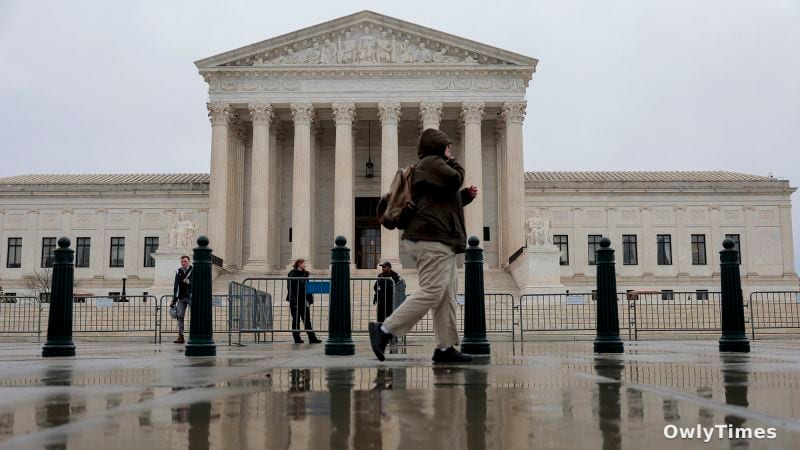
The Supreme Court’s ruling against Donald Trump’s tariffs, striking down the use of emergency economic powers to justify sweeping trade duties, wasn’t a victory for free trade as much as it was a strategic opening move in a far more complex game. The immediate legal challenge – convincing six justices that the Trump administration overstepped its authority – proved the simpler task. The real battle, now unfolding, centers on the $134 billion in tariffs collected from roughly 300,000 businesses, and the political calculus surrounding its potential return. This isn’t simply about refunds; it’s about control of a massive economic lever and the narrative surrounding who ultimately benefits from its release.
See the original CNN story for the full account.
The promise of refunds, issued both formally and informally by the Trump administration, now rings hollow without a clear mechanism for execution. Justice Brett Kavanaugh’s dissenting opinion, warning of “significant consequences for the US Treasury,” wasn’t a legal argument against the ruling, but a pointed observation about the fiscal realities at play. The Court deliberately avoided dictating how refunds should be handled, a calculated move that shifts the onus – and the political fallout – onto the executive and legislative branches. This inaction isn’t a flaw in the ruling, but a feature, allowing each branch to position itself strategically in the ensuing debate.
The immediate consequence is a surge in litigation. As Ted Posner of Baker Botts succinctly put it, companies now face “more waiting,” specifically for rulings from the Court of International Trade. This isn’t a streamlined process; each importer will likely need to file individual lawsuits, creating a logistical and legal quagmire. The government maintains meticulous records of tariff payments, yet access to those records – and the adjudication of claims – will be a protracted and expensive process. This favors larger corporations with the resources to navigate the legal complexities, potentially exacerbating existing inequalities within the business landscape. The parallel to the 1998 tariff refund case, which took two years and involved $730 million, feels almost quaint given the current scale of $134 billion.
Treasury Secretary Scott Bessent’s public statements reveal a clear skepticism about the entire refund process. While claiming the agency has sufficient funds, his pointed questions about whether companies like Costco – which proactively sued for a refund – would pass savings onto consumers betray a deeper concern. Bessent’s suggestion that the “American people won’t see it” isn’t an accidental remark; it’s a framing device, positioning the potential refunds as a “corporate boondoggle” rather than a benefit to consumers. This narrative is crucial. The administration is preemptively attempting to control the public perception, anticipating criticism if the funds are perceived as enriching corporations without tangible benefits for ordinary citizens.
The economic reality reinforces this skepticism. Stephanie Roth of Wolfe Research accurately points out the unlikelihood of price reductions. Retailers aren’t likely to retroactively issue checks to customers for tariffs already paid, and the competitive pressures to absorb the savings are minimal. This creates a fundamental tension: the legal right to a refund exists, but the economic incentive to pass those savings on is virtually nonexistent. The situation highlights a broader issue in trade policy – the disconnect between legal frameworks and real-world economic outcomes. The beneficiaries, therefore, are likely to be corporations who can retain the refunded amounts as increased profit margins, while consumers continue to bear the indirect cost of past tariffs.
The political chess move to watch next isn’t a court ruling, but a legislative maneuver. Will Congress attempt to legislate a specific refund mechanism, potentially dictating how the funds are distributed and ensuring some portion reaches consumers? Or will they allow the process to play out through the courts, effectively ceding control to the executive branch and allowing the narrative to be shaped by figures like Bessent? The answer will reveal not only the fate of $134 billion, but also the evolving power dynamics between the branches of government and the priorities of the current political landscape.