
The Tariff Backlash: A Test of Executive Power and Economic Leverage
The Supreme Court’s recent ruling striking down Donald Trump’s tariffs levied on imported goods isn’t simply about trade policy; it’s a calculated reassertion of Congressional authority over the executive branch, and a demonstration of how past precedents regarding presidential overreach can be weaponized in the present. The immediate fallout – the question of roughly $1.8 billion in collected tariffs – is significant, but the strategic implications extend far beyond a simple refund. This decision isn’t merely about money returned to importers; it’s about establishing boundaries for future presidential actions regarding economic policy and the limits of executive power when circumventing established legislative processes.
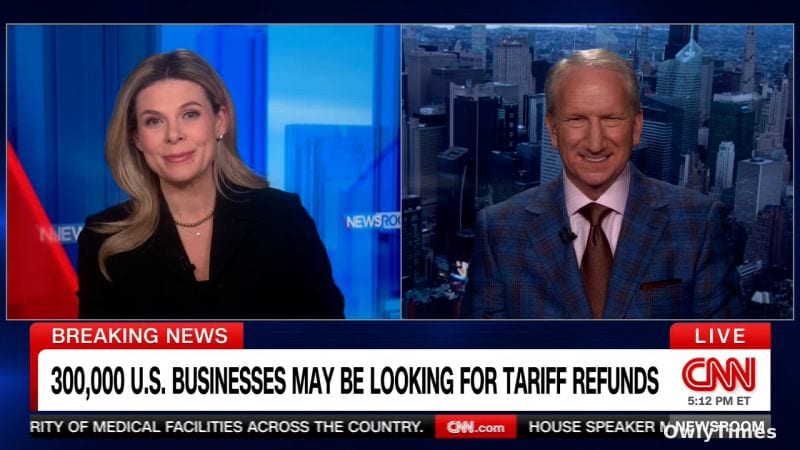
The core of the dispute, as highlighted by reactions from figures like Andrew Yang, centers on the “mismanagement of the economy” and the precedent set by unilaterally imposing tariffs without Congressional approval. The case stemmed from challenges brought by importers, including a toy company CEO featured on CNN, who argued the tariffs – ostensibly imposed for national security reasons – were unconstitutional. The Court agreed, effectively curtailing a key tactic Trump employed throughout his presidency to exert economic pressure, particularly on China. Who benefits and who loses is immediately clear: importers and domestic businesses reliant on those imports gain a reprieve, while the executive branch loses a tool for swift, unilateral economic action. However, the long-term beneficiaries could be Congressional committees seeking to regain control over trade negotiations.
Reporting from CNN informs this analysis.
This isn’t an isolated incident. The invocation of “national security” to justify economic measures echoes historical parallels, most notably the 1971 decision by Richard Nixon to impose a 10% import surcharge, also framed as a national security measure. While Nixon’s action was ultimately temporary and aimed at forcing trade negotiations, it similarly sparked concerns about executive overreach. The key difference lies in the speed and scale of Trump’s tariffs, implemented across a wider range of goods and with a more explicitly confrontational tone. The Supreme Court’s ruling, therefore, can be seen as a corrective, drawing a line in the sand against the expansion of executive power in the economic sphere. Senator Elizabeth Warren’s statement – “SCOTUS said ‘this is the law and it applies to Donald Trump’” – underscores the significance of the ruling as a reaffirmation of the rule of law, even for former presidents.
The immediate practical consequence is the looming question of refunds. The Biden administration now faces the task of determining how to return the collected tariffs, a process that will inevitably be fraught with legal and logistical challenges. More importantly, the ruling forces a reassessment of current trade policy. While the Biden administration has largely maintained many of Trump’s tariffs, particularly those targeting China, this decision weakens the legal justification for those measures. The administration will likely need to seek Congressional authorization for any new tariffs imposed on national security grounds, a process that will inevitably be slower and more politically contentious.
The political chess move to watch next isn’t whether the Biden administration will appeal – that seems unlikely. Instead, the critical question is whether Congressional Republicans, many of whom initially supported Trump’s tariff policies, will use this ruling as leverage to demand greater oversight of the administration’s trade agenda. Will they seize the opportunity to reassert Congressional authority, or will partisan loyalty trump concerns about executive overreach? The answer will reveal whether this Supreme Court decision is a genuine turning point in the balance of power between the executive and legislative branches, or merely a temporary setback for presidential ambition.





