
The Supreme Court’s decision to strike down Donald Trump’s tariffs wasn’t simply a defeat for his economic agenda; it was a fracturing of the conservative legal project and a revealing demonstration of how readily principle yields to political calculation. While presented as a narrow ruling on statutory interpretation, the case exposed deep fissures within the Court regarding the “major questions doctrine” – a legal theory poised to reshape the balance of power between the executive and legislative branches, and one that both parties are now actively weaponizing. The strategic calculus is clear: control of this doctrine dictates the scope of presidential authority, and the Court’s internal debate signals a willingness to apply it selectively, based on who occupies the White House.
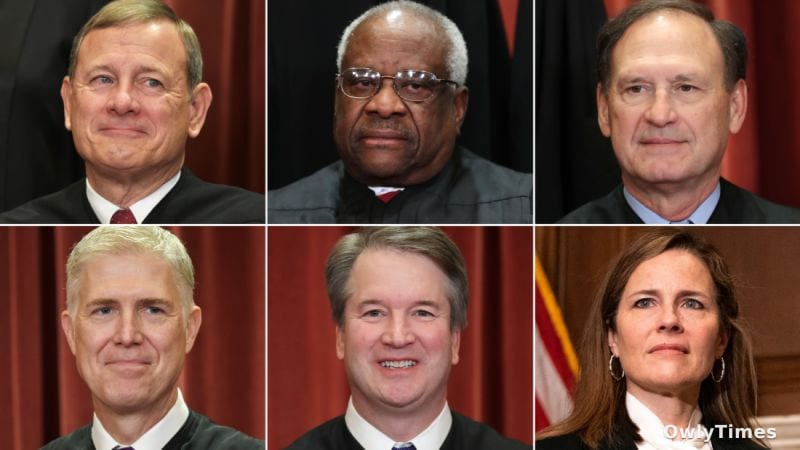
The core of the dispute revolves around the idea that Congress must explicitly authorize any presidential action with “major” economic or political consequences. Chief Justice Roberts, writing for the majority, asserted that the 1977 trade law Trump relied upon lacked this clear authorization, effectively imposing a $134 billion tax without congressional approval. However, the unusually lengthy and contentious opinions – Justice Gorsuch’s dissent ran more than twice the length of Roberts’ majority opinion – reveal a far more complex struggle. This wasn’t about tariffs; it was about establishing the boundaries of presidential power in an era of increasingly broad statutory language. Who benefits and who loses hinges on whether the Court prioritizes textual clarity or perceived congressional intent, and the emerging pattern suggests the answer is fluid.
Source material: CNN.
The irony is stark. Conservatives, long champions of strict textualism, are now grappling with the implications of a doctrine that allows judges to invalidate laws based on their assessment of “major” consequences – a subjective standard ripe for judicial overreach. Justices Kavanaugh, Alito, and Thomas argued for a more deferential approach, suggesting Congress often intends to grant presidents flexibility through broad language. This position, however, directly contradicts their recent use of the doctrine to dismantle President Biden’s policies, from student loan forgiveness to environmental regulations. The inconsistency isn’t accidental; it’s a reflection of the doctrine’s inherent vulnerability to partisan manipulation. The 2023 decision blocking Biden’s student loan plan, based on the same doctrine, serves as a potent counterpoint, demonstrating how readily the “major questions” framework can be deployed to curtail Democratic initiatives.
This selective application echoes a historical pattern. Throughout American history, expansions of executive power have often been justified by appeals to necessity or national security, only to be later curtailed when the political winds shifted. The post-9/11 expansion of surveillance powers under the Patriot Act, initially framed as essential for national security, faced increasing scrutiny and legal challenges as concerns about civil liberties grew. Similarly, the use of executive orders during the New Deal era, while initially accepted as a response to the Great Depression, were later challenged as exceeding presidential authority. The current debate over the major questions doctrine is simply the latest iteration of this ongoing tension between executive prerogative and congressional oversight.
Justice Gorsuch’s scathing critique of his colleagues, accusing both liberals and conservatives of hypocrisy, underscores the depth of the divide. He argued that the liberals’ opposition to the doctrine when applied by Trump was inconsistent with their reasoning in this case, while simultaneously accusing the dissenting conservatives of creating exceptions that would undermine the doctrine’s integrity. This internal conflict isn’t merely academic; it has real-world consequences. As Steve Vladeck of Georgetown University Law Center points out, the Court’s internal division will likely matter more for future presidents relying on older statutes to implement their agendas. The doctrine’s “neutrality,” as Stephanie Barclay suggests, is increasingly questionable.
The political chess move to watch next isn’t a legal challenge, but a legislative one. The Court’s decision effectively compels Congress to explicitly authorize any future tariffs. The question is whether a deeply divided Congress can – or will – do so. A failure to act will leave the door open for future presidents to exploit ambiguities in existing trade law, potentially triggering a new round of trade wars. More importantly, the ongoing struggle over the major questions doctrine will likely force Congress to revisit the scope of presidential authority across a wide range of policy areas, potentially leading to a broader re-evaluation of the balance of power in the American system of government. Will Congress seize this opportunity to clarify its intentions, or will it allow the executive branch to continue operating in a gray area, subject to the whims of judicial interpretation?