
The calculus behind President Trump’s announcement of a rescued airman from Iranian territory wasn’t simply about saving a life; it was a deliberate escalation of signaling, a demonstration of capability intended to recalibrate the risk assessment in Tehran. The highly publicized rescue operation, involving “dozens of aircraft” and a complex intelligence and special forces deployment, wasn’t merely a response to a downed F-15E Strike Eagle – it was a message delivered through action, asserting the reach and resolve of US power despite decades of strained relations. The incident, the first US fighter jet downed by enemy fire in over 20 years, immediately triggered a chain of calculations about deterrence and the boundaries of acceptable risk.
The downing of the F-15E on Friday over southern Iran initiated a 72-hour crisis defined by a stark asymmetry. While the pilot was quickly recovered, the fate of the weapons systems officer became a focal point, with Iran openly offering a bounty of £50,000 ($66,100) for his capture. This wasn’t simply about intelligence gathering; it was a calculated attempt to leverage a captured American for political concessions, a tactic employed by numerous state and non-state actors throughout history. The US response – a full-scale, covert rescue operation – fundamentally altered the equation. Who benefits and who loses here is clear: the US reasserts its commitment to its personnel, even at significant operational cost, while Iran faces the humiliation of a successful incursion into its sovereign territory.
Source material: the BBC.
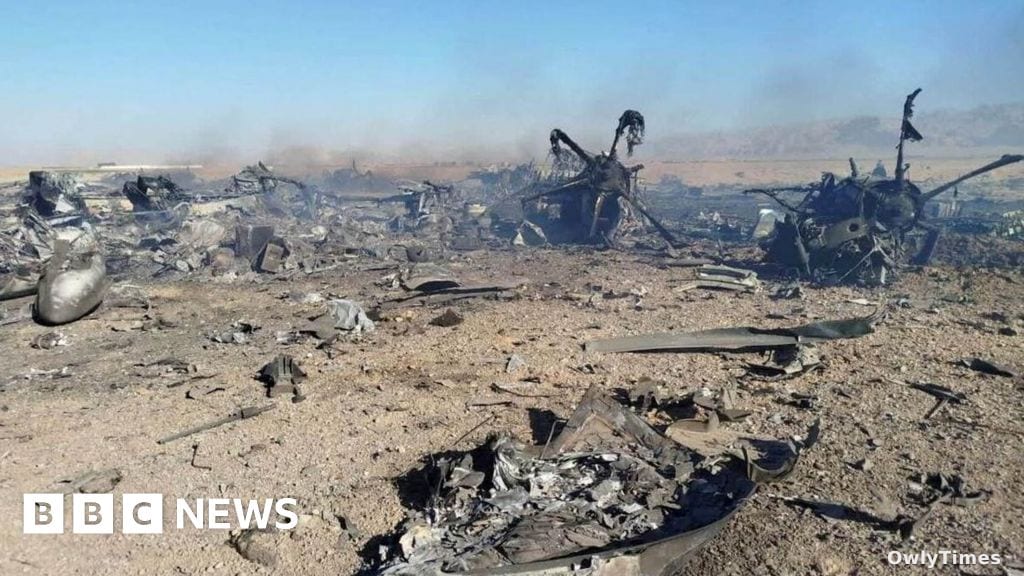
The operation’s complexity, as detailed by US media, reveals a layered strategy. The CIA played a pivotal role, not only in pinpointing the airman’s location in a mountain crevice – a testament to their intelligence gathering capabilities – but also in executing a deception campaign to mislead Iranian forces. This echoes historical precedents like the 1979 Operation Eagle Claw, the failed attempt to rescue American hostages in Iran, where misinformation was similarly employed, albeit with disastrous results. The key difference here is the success of the operation, and the deliberate messaging surrounding it. The destruction of two US C-130 transport planes and two Black Hawk helicopters, claimed by Iran, represents a significant material loss for the US, but General Frank McKenzie, former commander of US Central Command, frames it as a worthwhile trade: “It takes a year to build an aircraft – it takes 200 years to build a military tradition where you don't leave anybody behind.” This framing is crucial; it prioritizes the symbolic value of rescuing a comrade over the tangible cost of equipment.
The Iranian response, predictably, centers on damage control. Official statements insist the operation was a “failure,” claiming emergency landings and thwarted infiltration attempts. This narrative, amplified by state media, is aimed at preserving domestic legitimacy and preventing the perception of weakness. However, the very fact that Ebrahim Zolfaghari, a spokesman for Iran’s main military command, felt compelled to address the rescue directly underscores the operation’s success in breaching Iranian defenses. The claim of shooting down a US drone over Isfahan, while unconfirmed, further illustrates Iran’s attempt to demonstrate a robust defense posture. The tension here is palpable: Iran seeks to portray strength while simultaneously attempting to avoid further escalation.
The political chess move to watch next isn’t about immediate military retaliation, but about the signaling that will follow. Will the Biden administration – inheriting this escalation – attempt to de-escalate through diplomatic channels, or will it build upon the assertive posture established by President Trump? The key indicator will be the US response to Iran’s continued rhetoric and any attempts to further probe US red lines in the region. Specifically, monitor the level of US military presence in the Persian Gulf and the frequency of joint military exercises with regional allies. The rescue operation wasn’t a standalone event; it’s a new data point in a long-running strategic competition, and the next move will reveal whether both sides are seeking a return to a precarious status quo, or a further descent into confrontation.





