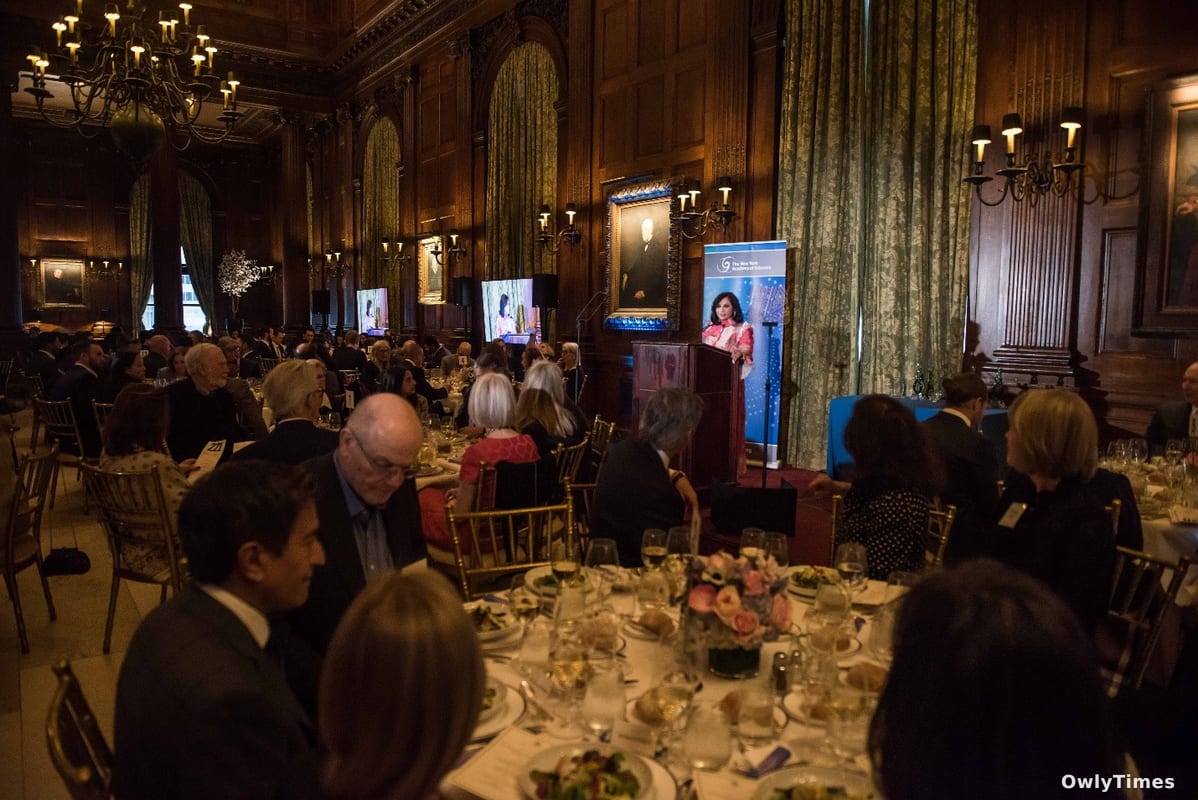

How do we ensure that the engine of scientific discovery continues to turn when the traditional gears of institutional trust and federal funding are grinding to a halt? This was the central, unspoken question hanging over the New York Academy of Sciences’ second annual 2026 Spring Soirée, held on April 21, 2026. While the event served as the Academy’s flagship fundraiser, the gathering of academic, industry, and philanthropic leaders signaled a shift in how the scientific community is attempting to self-sustain its future in an era of deepening skepticism.
Reimagining the Bridge Between Capital and Inquiry
The event, chaired by Seema Kumar, CEO of CURE and member of the Academy’s Board of Governors, emphasized that the Academy’s 200-year legacy is no longer just about discovery—it is about advocacy. Nicholas Dirks, the Academy’s President and CEO, framed the challenge bluntly: scientific progress is currently threatened by global uncertainty and a systemic decline in public trust.
The introduction of the Inaugural Constellation Award, presented to Josh Lerner, PhD, of Harvard Business School, highlights the specific methodology the Academy is testing to bypass current funding stagnation. By honoring Lerner for his work on the HBS Private Capital Project, the Academy is explicitly signaling that it views private capital as a necessary, if complex, partner in scientific advancement. Dirks noted that the goal is to forge stronger links between knowledge and private investment, particularly because federal support for science has become increasingly unpredictable.
What the Gala Achieved vs. The Broader Reality
Headlines surrounding the Soirée naturally focus on the prestige of the awardees and the high-profile nature of the auction, which featured items ranging from rare space mission collectibles to dinners with Nobel Laureates. However, the substance of the event was less about the pageantry and more about the strategic realignment of the "talent pipeline."
The establishment of the Cognizant STEM Teacher of the Year and Cognizant STEM Mentor of the Year awards—conferred upon Rocheli Apilan and Samay Garg, PhD, respectively—is a concrete indicator of where the organization is placing its bets. Rather than focusing solely on high-level breakthroughs, the Academy is prioritizing the cultivation of local educational ecosystems. By partnering with corporations like Cognizant, the Academy is attempting to solve the "belonging" gap in STEM, acknowledging that discovery is useless if the next generation of researchers feels alienated from the institutions meant to support them.
Limitations to Consider
While the event successfully convened a powerful network, it remains an exercise in institutional optimism. The reliance on private philanthropy and corporate partnerships—evidenced by the long list of sponsors including The Simons Foundation, IBM, and Pfizer—creates a delicate tension. While these funds are vital for programming and education, they do not replace the scale or stability of public federal funding. The Academy’s model effectively creates a "private-sector bridge," but it cannot fully shield the broader scientific community from the macro-level instability that Dirks acknowledged in his opening remarks. The efficacy of this strategy depends entirely on whether these private entities remain committed to the Academy’s vision during future economic contractions.
Future Signals and Next Steps
The significance of the 2026 Spring Soirée will be measured not by the funds raised on April 21, but by the tangible expansion of the Academy’s STEM education programs over the coming year. The next reading of the participation metrics for these Academy-led initiatives will serve as a primary indicator of whether this "private-capital-plus-mentorship" model can effectively counteract the decline in institutional trust. As the Academy continues to navigate a landscape where science must justify its value to both the public and private investors, the success of awardees like Apilan and Garg in the classroom and the lab will determine if this new model is a sustainable path forward or merely a temporary stopgap.





