
Beyond Bedside Manner: How Tele-ICU is Redefining Critical Care Access in Eastern North Carolina
The question of equitable healthcare access is rarely framed as a logistical one, but increasingly, it is. For residents of rural eastern North Carolina, distance from specialized care has long been a significant barrier – a barrier that’s now being actively challenged not by building new hospitals, but by extending the reach of existing expertise through virtual technology. The story isn’t simply about doctors appearing on screens, as Amanda Moore described witnessing with her 81-year-old father, Horace Carter’s, care at ECU Health Beaufort Hospital in Washington; it’s about a fundamental shift in how critical care is delivered, and a careful calculation of when – and whether – a patient needs to be physically transferred to a larger medical center.
Source material: witn.com.
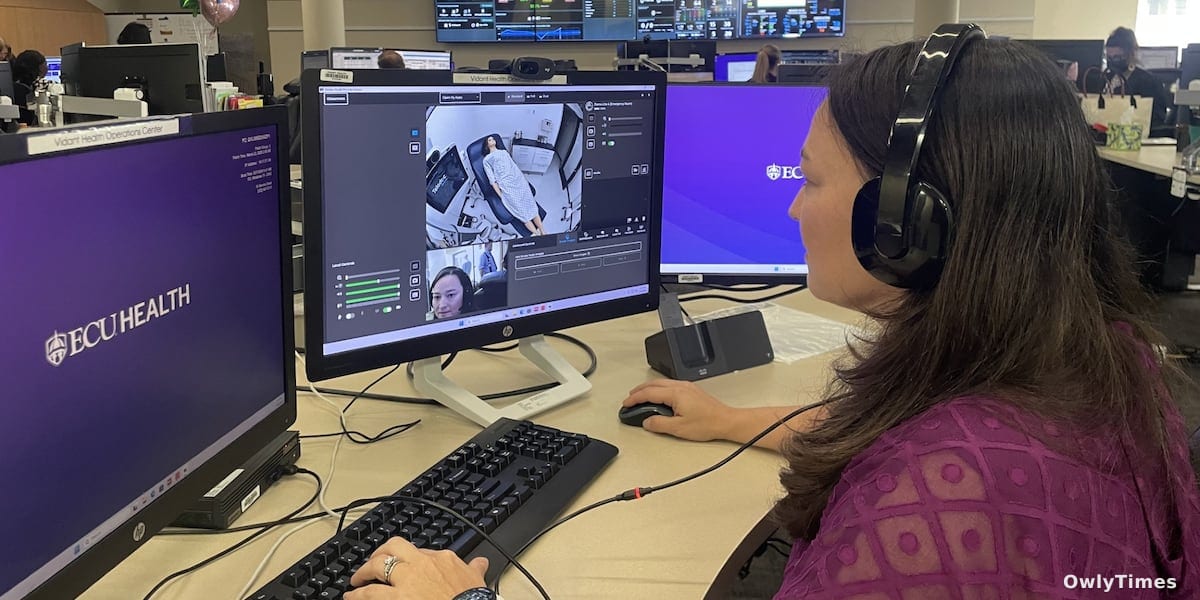
ECU Health’s Tele-ICU program, centered at its Greenville facility, exemplifies this approach. It’s not a replacement for bedside care, but an augmentation. Dr. Jennifer Stahl, a Tele-ICU physician, explains the system allows for “instant” connection to patients, nurses, and families via video technology. This isn’t about remote diagnosis from afar; it’s about a centralized team of critical care specialists actively monitoring and intervening in the care of patients across multiple hospitals, reviewing vital signs, and even assisting with life-support equipment. The program’s impact, according to ECU Health data, is substantial: approximately 90% of Tele-ICU consultations prevent the need for patient transfer. This figure is particularly noteworthy when considering that transfer itself carries risk and separates patients from vital social support networks. In a region where travel distances can easily exceed an hour, avoiding a transfer can mean preserving family presence during a profoundly stressful time.
The success at ECU Health isn’t isolated. CarolinaEast Health System in New Bern is also expanding virtual care, partnering with Access TeleCare to provide round-the-clock access to neurologists and psychiatrists. This is especially crucial for stroke patients, where the window for effective treatment is notoriously narrow. Dr. Michael Davis, CarolinaEast’s Chief Medical Officer, highlights the time sensitivity: “There is a window of opportunity between the onset of symptoms and when recovery from a stroke is limited.” The expansion into psychiatric care addresses a separate, but equally pressing, need. Jim Davis, CarolinaEast’s Chief Nursing Officer, points to the difficulty of recruiting psychiatrists, making virtual access a vital solution for maintaining 24/7 service availability. This dual approach – bolstering critical care and expanding specialist access – suggests a broader strategy of leveraging technology to address systemic healthcare shortages.
However, it’s crucial to understand what these programs don’t claim. The narrative often focuses on the “coolness” of a “robot doctor,” as Dr. Stahl recounted a patient’s family member saying, but this glosses over the complexities. Tele-ICU isn’t a panacea for all healthcare disparities. It requires robust infrastructure – reliable internet connectivity, trained personnel to operate the technology, and established protocols for seamless integration with bedside teams. It also relies on a degree of digital literacy among both healthcare providers and patients, which isn’t universally available.
Limitations to consider include the potential for misinterpretation of non-verbal cues during virtual assessments, the challenges of building rapport with patients remotely, and the ongoing need for equitable access to the technology itself. While 90% of consultations avoid transfer, that leaves 10% who still require it – and for those patients, the benefits of the Tele-ICU program are less directly apparent. Furthermore, the long-term cost-effectiveness of these programs needs continued evaluation, balancing the investment in technology against the savings from reduced transfers and improved patient outcomes.
The next critical research step isn’t simply to demonstrate that Tele-ICU works, but to understand how it works best. Future studies should focus on identifying the specific patient populations who benefit most from virtual care, refining protocols for remote assessment and intervention, and developing strategies to mitigate the potential drawbacks. Perhaps most importantly, researchers need to investigate how to integrate Tele-ICU seamlessly into existing workflows, ensuring it enhances – rather than disrupts – the vital human connection at the heart of patient care. Will we see a future where virtual specialists are proactively embedded in rural hospital teams, rather than called in reactively during crises? That’s the question healthcare leaders in eastern North Carolina – and beyond – are now actively working to answer.