
Beyond the Numbers: Why Valdosta’s New Residents Signal a Shift in Rural Healthcare Training
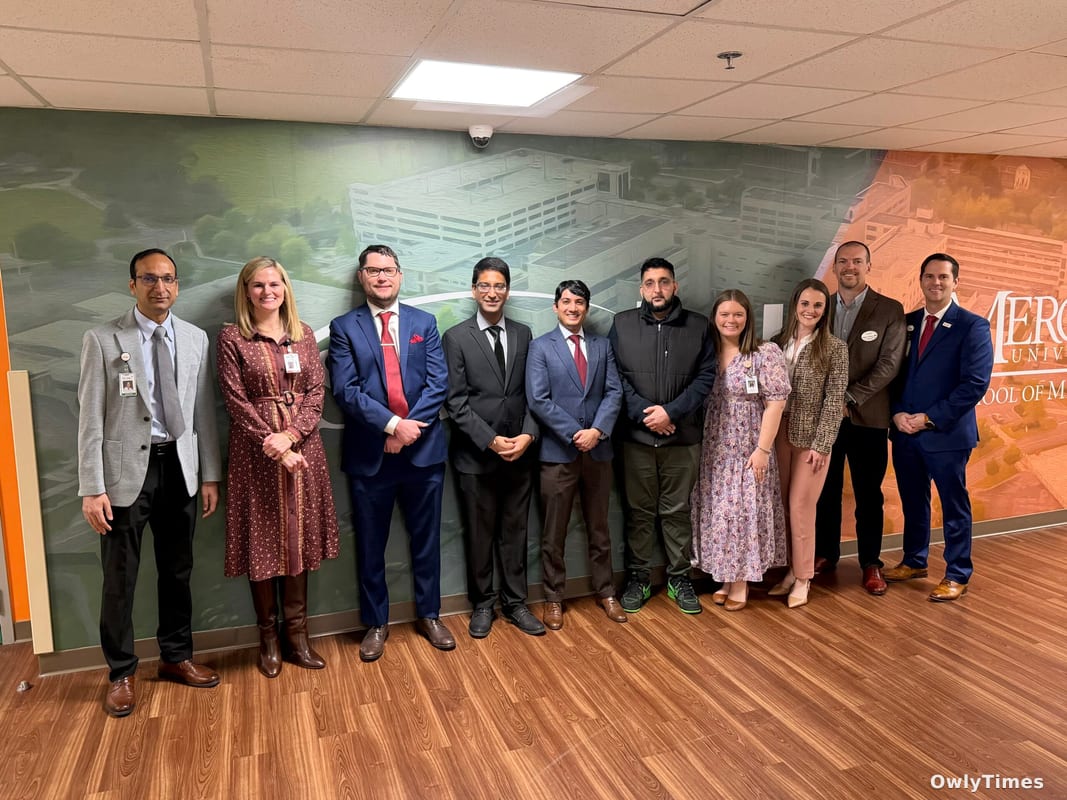
The arrival of four new Family Medicine residents – Alexander Gardner, DO; Omid Hassanpour, MD; Varoon Kakiaya, MD; and Akshay Patel, DO – at SGMC Health isn’t simply a local hospital welcoming new staff. It’s a strategic response to a national crisis in primary care access, particularly acute in rural areas like South Georgia. While headlines focus on the number of incoming physicians, the more significant story lies in how SGMC Health is building a training pipeline specifically designed to address this imbalance, and what this approach reveals about the evolving landscape of medical education. The fact that these physicians are transferring from existing programs, rather than entering directly from medical school, is a particularly noteworthy detail often overlooked.
Based on the original sgmc.org report.
SGMC Health’s decision to expand its Graduate Medical Education (GME) program, in partnership with Mercer University School of Medicine (MUSM), isn’t happening in a vacuum. The United States faces a projected shortage of up to 124,000 physicians by 2034, according to the Association of American Medical Colleges. Family Medicine consistently ranks among the specialties facing the most significant gaps, and these shortages disproportionately impact rural communities. SGMC Health, as the region’s largest academic medical center, is positioning itself not just as a provider of care, but as a cultivator of the physicians needed to sustain that care long-term. Pankaj Agrawal, MD, Senior Vice President & Chief Medical Officer, frames this as a commitment to “grow the physician pipeline,” but the underlying implication is a recognition that relying on traditional training models isn’t sufficient to meet the needs of underserved populations. The transfer students, having completed their intern year elsewhere, bring a level of experience and focused commitment that can accelerate the program’s impact.
The Appeal of Continuity: A Model for Rural Retention
What distinguishes SGMC Health’s approach is its emphasis on continuity and community-based training, as highlighted by Madison Hill, DO, Family Medicine Program Director. Family Medicine, unlike many specialties, requires physicians to manage a broad spectrum of health needs across all age groups – from pediatrics to obstetrics and gynecology. This demands a different skillset and a different mindset than focusing on a narrow subspecialty. Dr. Hill’s statement that the program aims to provide a “stable, supportive training environment” speaks to a growing understanding that physician retention in rural areas is directly linked to the quality of their training experience. Physicians who feel connected to a community and supported in their professional development are far more likely to remain and practice there long-term. The program’s structure, developed in collaboration with MUSM, is intentionally designed to foster these connections.
Beyond Recruitment: Addressing Systemic Challenges
It’s crucial to acknowledge that simply increasing the number of residents isn’t a panacea. Systemic challenges, such as lower reimbursement rates for primary care services and the burden of administrative tasks, continue to discourage physicians from choosing Family Medicine and practicing in rural areas. SGMC Health’s investment in GME is a positive step, but it must be coupled with broader policy changes to address these underlying issues. Furthermore, the fact that these residents are transferring suggests potential limitations within other programs – were they dissatisfied with the training environment, the patient population, or the career support offered elsewhere? Understanding these factors is critical to ensuring SGMC Health’s program provides a genuinely attractive and sustainable alternative.
Looking Ahead: Tracking the Impact of a Targeted Approach
SGMC Health will welcome another class of residents this July through Match Day, further expanding its GME program. The real measure of success, however, won’t be the number of residents trained, but the number who choose to remain in practice in South Georgia after completing their residency. Will SGMC Health be able to track the career trajectories of its graduates and demonstrate a tangible impact on access to care in the region? This data will be essential not only for justifying continued investment in GME, but also for informing best practices in rural physician training nationwide. The question now isn’t just whether SGMC Health can attract talented residents, but whether it can cultivate a cohort of physicians who are not only well-trained, but deeply committed to serving the unique needs of South Georgia’s communities for years to come.