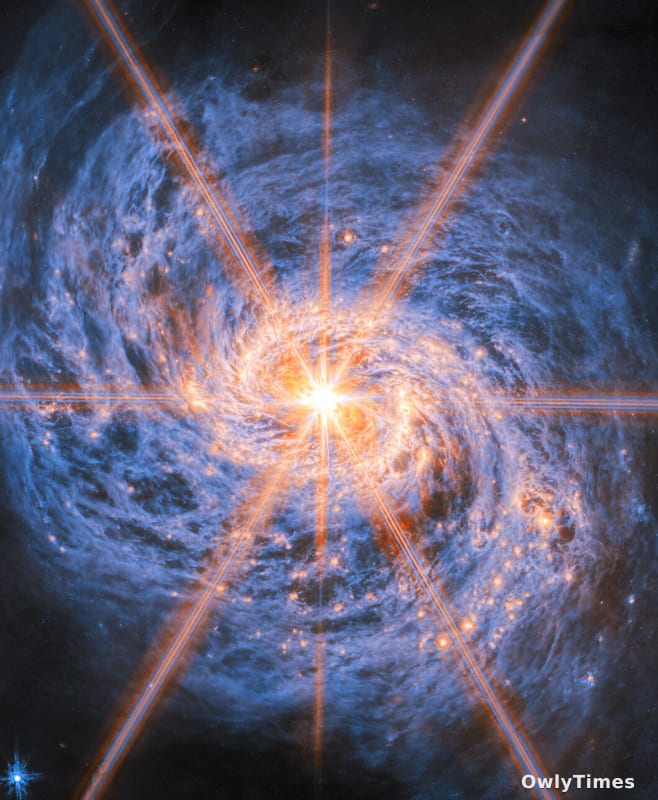

The chipped Formica of the diner booth felt cool under my elbows as I scrolled through the news, another story about the James Webb telescope revealing impossibly distant galaxies. Beautiful, humbling…and utterly reliant on a framework of physics that, for all its success, feels increasingly like a house built on sand. We celebrate these images, these confirmations of Einstein’s theories, while a quiet revolution brews in labs like the one at TU Wien, where physicists are daring to ask: what if Einstein wasn’t quite complete? It’s a question that doesn’t make headlines like a newly discovered exoplanet, but it strikes at the heart of our understanding of reality, and the implications, should they prove true, are staggering. This isn’t just about tweaking equations; it’s about confronting the possibility that the universe operates on principles we haven’t even begun to grasp.
The Cracks in the Cosmic Foundation
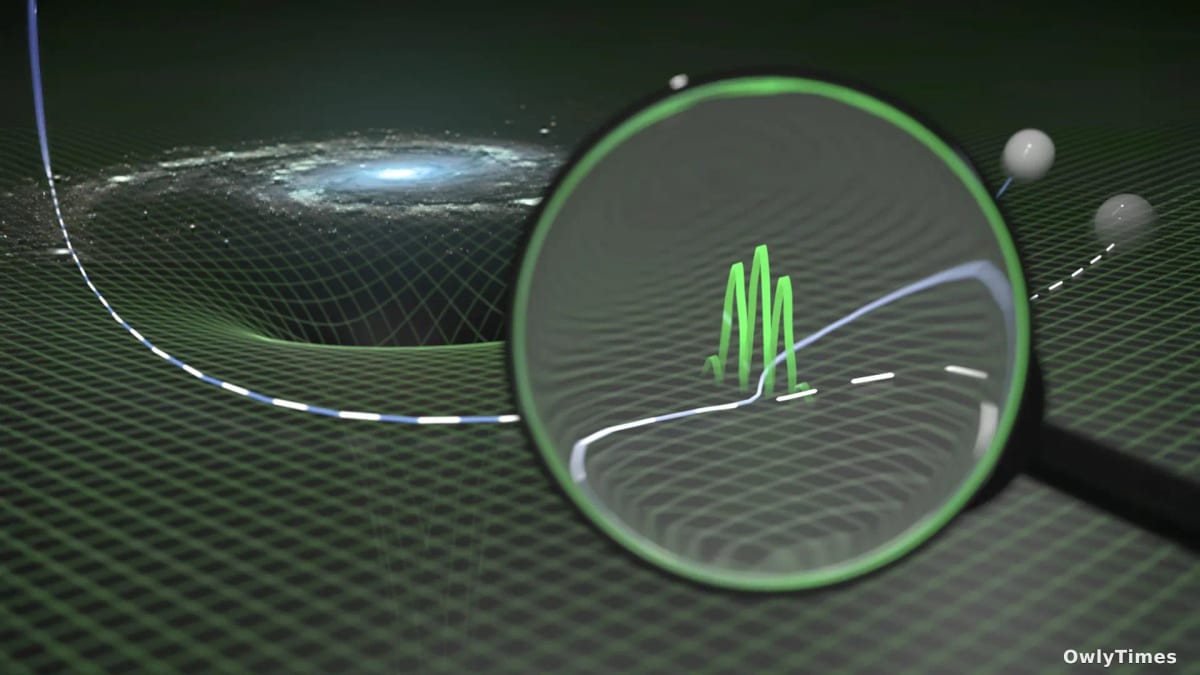
For over a century, Albert Einstein’s theory of general relativity has been the bedrock of cosmology. It elegantly describes gravity not as a force, but as a curvature of spacetime caused by mass and energy. Objects follow the curves – geodesics – like marbles rolling around a bowling ball on a stretched sheet. This explains everything from the orbits of planets to the bending of light around massive objects. But general relativity breaks down when applied to the incredibly small, the realm of quantum mechanics. Quantum mechanics governs the behavior of particles at the atomic and subatomic level, and its rules are…weird. Particles can exist in multiple states at once, tunnel through barriers, and become entangled with each other across vast distances. Attempts to reconcile these two pillars of modern physics have consistently hit a wall, leading physicists to suspect that something fundamental is missing. The problem isn’t just academic; it’s that our current models fail to explain phenomena like black holes and the very early universe.
Rewriting the Rules of Motion
The team at TU Wien, led by Professor Magdalena Zych, didn’t attempt to overhaul either quantum mechanics or general relativity directly. Instead, they focused on geodesics – the paths particles take through spacetime. They asked: what happens if you apply the principles of quantum mechanics to the geodesics themselves? The result is the “q-desic equation,” a mathematical framework that describes how particles might move through a “quantum” spacetime. What they found is subtle, but potentially revolutionary. Particles, according to the q-desic equation, wouldn’t follow perfectly defined paths as predicted by classical relativity. Instead, they would experience a slight “fuzziness” or deviation, a quantum uncertainty in their trajectory. “It’s not that gravity disappears,” explains Zych in a press release, “but that it becomes probabilistic at the quantum level.” This isn’t a dramatic departure from Einstein, but a refinement, a suggestion that his theory is an approximation that works well on large scales, but breaks down when quantum effects become significant.
Based on the original sciencedaily.com report.
Beyond the Headlines: The Search for Quantum Gravity
The implications of this work extend far beyond theoretical physics. For decades, the search for a theory of quantum gravity – a unified framework that combines general relativity and quantum mechanics – has been the holy grail of physics. String theory and loop quantum gravity are two prominent contenders, but both face significant challenges. The q-desic equation offers a different approach, one that doesn’t necessarily require abandoning either existing theory, but rather modifying our understanding of how they interact. This is particularly relevant as we push the boundaries of observation with instruments like the James Webb telescope and increasingly sensitive gravitational wave detectors. These tools are allowing us to probe the universe in ways previously unimaginable, and they may soon reveal phenomena that our current models simply can’t explain. The team at TU Wien estimates the deviations predicted by the q-desic equation are incredibly small, but potentially detectable with future experiments.
A Universe of Possibilities, and a Question of Detection
The real test, of course, will be experimental verification. Detecting these subtle quantum deviations in spacetime will require incredibly precise measurements, likely involving advanced interferometry or observations of the behavior of particles in extreme gravitational fields. But even the possibility of detecting these effects is a major step forward. It provides a concrete prediction that can be tested, a roadmap for future research. What’s truly fascinating is the cultural resonance of this moment. We live in an age obsessed with certainty, with algorithms promising to predict our behavior and AI claiming to understand our thoughts. Yet, at the deepest level, the universe seems to be fundamentally probabilistic, uncertain, and open to interpretation. The work at TU Wien isn’t just about physics; it’s a reminder that our understanding of reality is always provisional, always subject to revision. The question now isn’t if Einstein needs updating, but when will we have the tools to see just how much the universe is still hiding from us? And, perhaps more importantly, what will we do with that knowledge when it arrives?