
Tesla’s 10-Day Window: A Calculated Risk in the EV Truck Market
$59,990. That’s the price point Elon Musk dangled before potential Cybertruck buyers on February 20, 2026, a figure representing a dramatic, though potentially fleeting, shift in Tesla’s strategy for its polarizing electric pickup. But the immediate follow-up – a ten-day ordering window – isn’t a marketing tactic; it’s a signal of deeper pressures within Tesla, specifically around demand and production capacity, and a calculated gamble to recalibrate market perception. Follow the money, and the story isn’t about affordability, it’s about inventory and a need to jumpstart sales momentum.
The announcement of a “most affordable Cybertruck yet” arrives after a year of underwhelming sales. Tesla moved just 20,237 Cybertrucks in the US during 2025, according to Cox Automotive data, a significant drop from the 40,476 units sold in 2024. This isn’t merely a slowdown; it’s a 50% year-over-year decline, sharply contrasting with Musk’s ambitious 2023 projection of 250,000 annual sales. The current base price of $79,990, while down from nearly $100,000 in 2024, still positions the Cybertruck as a premium offering. The new $59,990 version, with a reduced towing capacity of 7,500 pounds (compared to 11,000 pounds for higher trims) and downgraded interior features like textile seats and first-row-only heating, is clearly designed to hit a price point and broaden appeal.
This article draws on reporting from Business Insider.
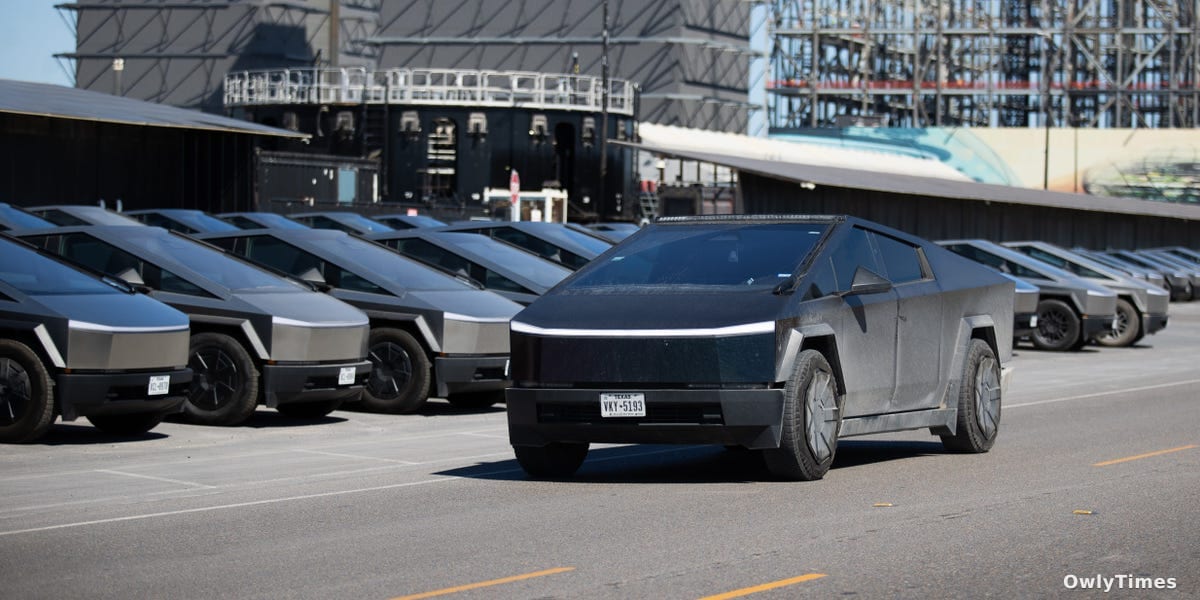
However, the ten-day limitation is the crucial detail. This isn’t a limited-edition offering designed to create artificial scarcity. It’s a test – a rapid-fire market experiment to gauge demand at this lower price without committing to a long-term production overhaul. Tesla is likely facing a build-up of inventory, particularly of components geared towards the higher-end models. Offering a stripped-down version allows them to utilize existing parts and production lines, clearing space for future iterations and avoiding costly storage fees. The limited window allows Musk to assess order volume and adjust production accordingly, minimizing the risk of oversupply. This strategy mirrors tactics seen in the broader automotive industry during periods of softening demand, but is particularly notable given Tesla’s historically direct-to-consumer, build-to-order model.
The positioning of the Cybertruck as a competitor to the Ford F-150, which starts at $39,330, remains a rhetorical stretch even at $59,990. The F-150 benefits from decades of brand loyalty, a vast dealer network, and a well-established service infrastructure. The Cybertruck, despite its futuristic design and electric powertrain, is still navigating a perception problem – it’s seen as a niche vehicle, plagued by early production issues like recalls related to the rearview camera, windshield wipers, and accelerator pedals. The “tough as nails” marketing tagline attempts to address this, but the reality is that the Cybertruck’s reliability record is still being established. The contrast between Musk’s earlier “apocalypse-proof” claims and the documented recalls highlights a tension between marketing hype and real-world performance.
What this means for your wallet: Don’t assume this $59,990 price is permanent. The ten-day window is a critical indicator. If orders flood in, Tesla may extend the offer, but likely at a reduced margin. If demand is tepid, the price will almost certainly rise. The key question for potential buyers isn’t just if they want a Cybertruck, but when they should buy one. Watch closely for order numbers released after February 29, 2026 – they will reveal whether Tesla’s gamble to reposition the Cybertruck as a “working man’s” truck has paid off, or if it’s simply a temporary measure to manage inventory and maintain the illusion of momentum.





